
Tools
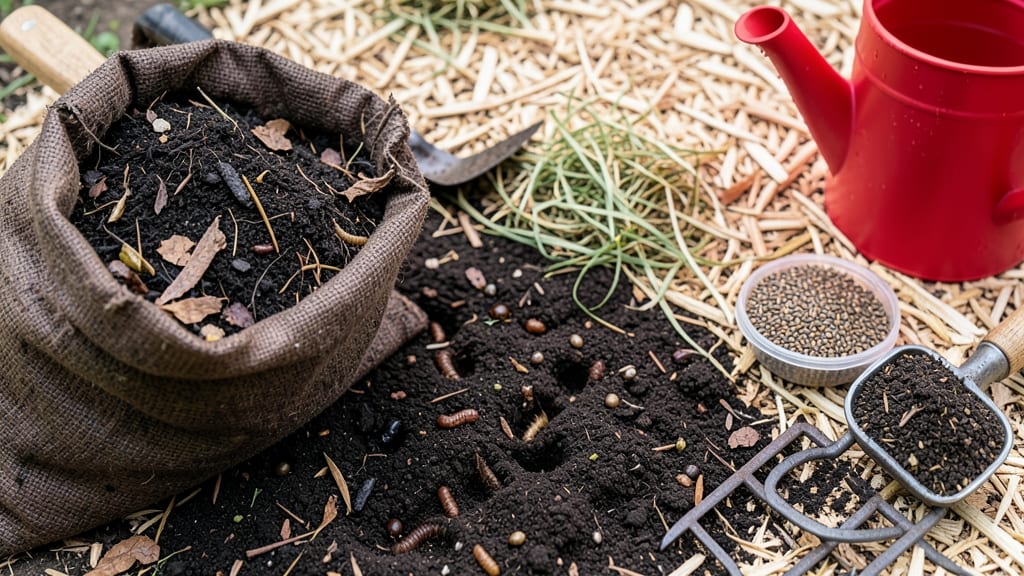
Attracting earthworms to your garden starts with creating a moist, nutrient-rich soil environment by adding organic matter like compost or leaf litter. Avoid chemical pesticides, plant cover crops or mulch for shade and food, and maintain consistent moisture with a balanced pH (6-7) to encourage their natural presence.
Earthworms are nature's soil engineers, breaking down organic material and aerating the ground as they move through it. 🌱 The key to luring them lies in mimicking their ideal habitat—think of it as creating a five-star hotel for these beneficial creatures.
I've found that simply adding a 2-inch layer of well-aged compost or chopped leaves in garden beds works wonders, as it provides both food and shelter while improving soil structure.
What's fascinating is how earthworms respond to these changes within weeks, especially when combined with reduced tilling, which preserves their burrows and encourages deeper soil exploration.
Beyond the basics, consider adding worm castings (their nutrient-rich waste) to your soil mix—this not only attracts earthworms but also jumpstarts plant growth. The secret sauce is consistency: earthworms thrive in environments where moisture levels stay between 40-60% and where they can find both surface debris and deeper organic layers.
Even a small garden can become a thriving ecosystem with these simple adjustments.
💡 In This Article
- Why Earthworms Thrive in Specific Soil Conditions
- Best Organic Materials to Lure Earthworms Fast
Why earthworms thrive in specific soil conditions
Earthworms are highly sensitive to soil chemistry and physical structure, which is why they actively seek out environments that meet their biological needs.
At the core, their survival depends on microbial activity—organic matter like compost or leaf litter feeds beneficial bacteria and fungi, creating a food web that worms can't resist. These microbes break down complex plant materials into simpler compounds, releasing nutrients that worms consume directly or through their gut.
Think of it like a buffet: the more diverse and abundant the microbial life, the more appealing the soil becomes to earthworms. 🌱
The ideal soil for earthworms has a 40-60% moisture content, which maintains oxygen availability while keeping their delicate bodies hydrated. Too dry, and they'll burrow deeper to escape; too wet, and they risk suffocation.
Aeration is equally critical—earthworms need loose, well-structured soil to move efficiently. Their bodies secrete mucus to lubricate tunnels, but compacted soil makes this process difficult. That's why adding coarse organic materials like shredded bark or straw improves soil porosity, creating perfect pathways for their movement.
The texture difference between sandy loam (ideal for worms) and heavy clay (which repels them) is dramatic—worms prefer soils with 10-30% organic matter by volume.
pH balance plays a surprising role in earthworm attraction, with most species thriving in slightly acidic to neutral conditions (6.0-7.0). At these levels, essential minerals like calcium and magnesium become more bioavailable, supporting both microbial activity and worm health.
A pH outside this range can make soil toxic—lime-loving worms (like Lumbricus terrestris) avoid acidic soils, while others may struggle in alkaline conditions.
Testing your soil's pH with a simple kit ($10) reveals whether you need to adjust with wood ash (to raise pH) or elemental sulfur (to lower it).
Earthworms are also opportunistic feeders, meaning they'll migrate toward areas with abundant, easily digestible food sources. Their diet consists of 50-60% decomposed plant material, with the rest being microbes and small soil particles.
This is why mulching with leaf litter or grass clippings works so well—it provides both immediate food and long-term soil improvement. The decomposition process releases heat (up to 15°F warmer than surrounding soil), which further stimulates microbial growth.
This creates a positive feedback loop: more microbes attract more worms, which then improve soil structure even further. 🔥
One often-overlooked factor is the role of soil temperature. Earthworms are cold-blooded and become sluggish below 50°F, while temperatures above 85°F can be lethal. This is why mulching isn't just about food—it also insulates soil, maintaining stable temperatures year-round.
In my own garden, I've noticed that earthworm activity peaks in spring and fall when soil temps hover around 60-70°F, making these seasons ideal for introducing organic amendments. The key is creating a microclimate that mimics their natural forest-floor habitat, where they can thrive without extreme fluctuations.
Finally, chemical-free environments are non-negotiable. Earthworms have sensitive skin that absorbs toxins directly from the soil. Even residual herbicides or synthetic fertilizers can repel them for years. The solution? Focus on natural amendments like composted manure (especially from herbivores like cows or horses) or worm castings.
These materials not only provide nutrients but also introduce beneficial microbes that worms recognize as "safe." The contrast between a chemically treated garden (which may take 5+ years to recover) and an organic one (where worms appear within weeks) is staggering. 💫