
Pruning
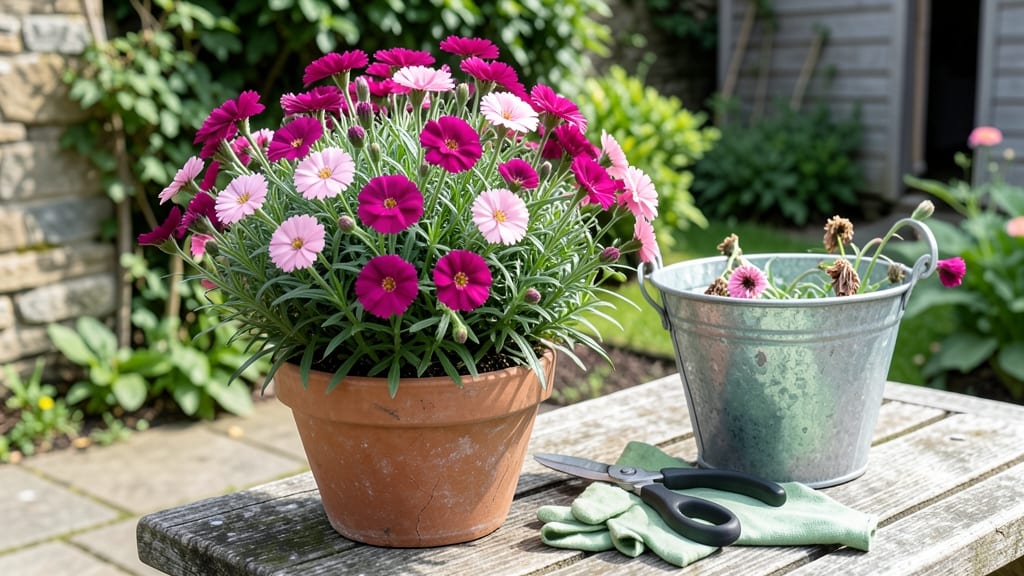
Your dianthus in pots could be blooming twice as long. ✨ Deadheading isn't just about looks—it's the secret to keeping those pretty pink, red, or white flowers coming all season. The best part? It takes just a few minutes and transforms your containers from "meh" to "showstopper" in no time.
You only need three things: sharp pruners (or clean scissors), a small bucket for spent blooms, and about 10 minutes of your time. The key is cutting just above the next set of leaves or buds—never the bare stem.
This tiny detail makes all the difference between a plant that peters out and one that keeps producing vibrant blooms until frost.
After deadheading, you'll notice fresh new buds forming within days. The plants stay compact in pots, stay healthy longer, and resist disease better. Plus, your containers will look fuller and more intentional—like you actually know what you're doing (even if you don't).
This works for all dianthus varieties in pots, whether you're growing them on a balcony, patio, or windowsill. The only rule? Never skip it after the first flush of blooms, or you'll miss out on that second wave of color that makes deadheading worth every second.
📚 In This Guide
- What you need
- Instructions
- Tips and common mistakes
- Wrapping up and next steps
What you need
- ● Pruning shears or sharp scissors – Clean, sharp tools prevent damage (1 pair, bypass-style preferred).
- ○ Gloves (optional but recommended) – Thorny stems? Protect your hands! (1 pair, gardening or cut-resistant).
- ● Small container or bucket – For clippings (1, 5+ gallon capacity).
- ○ Compost or mulch (optional) – Repurpose clippings as fertilizer! (1 bag or access to yard waste).
- ● Healthy, blooming dianthus plants – Deadhead only after flowers fade but buds remain.
- ● Sunny weather (or shade) – Avoid deadheading in extreme heat or rain.
- ● Time of day – Morning or late afternoon (1–2 hours before sunset).
Step-by-step instructions for deadheading dianthus in pots
Here's how I keep my potted dianthus flowering all season long—no fancy tools, just a few simple moves.
✂️ Step 1: Wait for the Right Time to Deadhead
Deadhead your dianthus only after at least 30% of the blooms open fully. This gives you fresh flowers to enjoy while encouraging more buds to form. I wait until the petals start to fade at the edges—usually 5-7 days after opening—before making the first cut.
Never deadhead when flowers are still vibrant. You'll know it's time when the center of the bloom looks slightly browned or the petals begin to curl. This signals the plant is redirecting energy away from producing new flowers.
✂️ Step 2: Use the Right Technique for Clean Cuts
Grab your pruners or clean, sharp scissors and cut just above the first set of healthy leaves below the faded bloom. This ensures you're not leaving a stub that could rot. I angle my cuts slightly to prevent water from pooling on the stem.
Don't cut too close to the base of the plant—you want to leave enough stem to support new growth. If you're unsure where to cut, look for the small leaf nodes where new buds form. These are your visual guideposts for where to make the clean snip.
✂️ Step 3: Remove Only the Spent Blooms, Not the Stem
Dianthus produces flowers along the stem, so never cut the entire stem back. Instead, focus on removing just the faded bloom cluster. This encourages the plant to produce more flowers along that same stem. I pinch off any side buds that are already fading to redirect the plant's energy.
If you notice leggy stems with no new buds forming, it's a sign your plant needs more light. Move it to a sunnier spot immediately—dianthus thrives in full sun (6+ hours daily) and will reward you with more blooms if given enough light.
💧 Step 4: Water and Fertilize After Deadheading
After deadheading, give your dianthus a deep watering to help it recover. Water until the soil is moist 2-3 inches down—you'll know it's enough when water runs out the drainage holes. This encourages strong root growth, which supports more blooms.
Feed your potted dianthus with a balanced liquid fertilizer (10-10-10) diluted to half strength. I apply this every 4-6 weeks during the growing season to keep the flowers coming. Avoid over-fertilizing, though—too much can lead to lush foliage but fewer blooms.
⏰ Step 5: Repeat Weekly for Continuous Blooms
Deadheading isn't a one-time task—it's an ongoing process. I check my potted dianthus every 5-7 days and remove any faded blooms immediately. This keeps the plant focused on producing new flowers instead of seeding.
By the end of the season, you'll have a bushy, vibrant plant covered in fresh blooms. The key is consistency—stay on top of deadheading, and your dianthus will reward you with nonstop color all season long.
Tips & tricks for deadheading dianthus in pots
These little tricks will turn your potted dianthus into a blooming powerhouse with minimal effort.
Timing is Everything: I can't stress this enough—morning is the best time to deadhead. The blooms are fully open, and you can easily spot which ones are truly spent. If you're unsure whether a bloom is ready, wait until the petals have completely dropped or turned brown. This ensures you're not cutting off potential buds that are still developing.
Tool Prep Makes All the Difference: Before you start, sanitize your pruning shears with rubbing alcohol. This simple step prevents the spread of disease between plants. I also like to keep a small bowl of water nearby to rinse the blades between cuts—it helps maintain sharpness and keeps the tools clean. A dull blade can crush stems instead of making clean cuts.
Visual Cues for Perfect Cuts: When making your ½-inch cut below the faded bloom, look for the first set of healthy leaves below the spent flower. This is your target spot. The cut should be clean and angled—this prevents water from pooling on the stem, which could lead to rot. Think of it like making a tiny roof on the stem to keep moisture away.
Seasonal Adjustments: During peak bloom season (spring to early fall), stick to the 2-3 times per week routine. But as days shorten in late summer, reduce your deadheading frequency. By fall, you can trim back leggy stems to just 2-3 inches above the soil. This winter prep gives your plant a strong foundation for next year's blooms.
Pro Tips for Deadhead Dianthus In Pots
- These little tricks will turn your potted dianthus into a blooming powerhouse with minimal effort.
- Timing is Everything: I can't stress this enough—morning is the best time to deadhead.
- Tool Prep Makes All the Difference: Before you start, sanitize your pruning shears with rubbing alcohol.
Frequently asked questions
about deadheading dianthus in pots—because even the best gardeners need a little clarity! Here are answers to the most common questions to keep your plants thriving.When is the best time of day to deadhead dianthus?
Deadhead dianthus in the morning when blooms are dry and dew has evaporated. This reduces stress on the plant and prevents fungal diseases. Avoid evening sessions, as damp petals can invite pests or rot. A quick 10-minute check during your morning watering routine works perfectly!
How often should I deadhead dianthus in pots?
For continuous blooms, deadhead every 2–3 days during peak flowering (spring to fall). If you’re busy, aim for at least once a week. Regular maintenance encourages new buds and prevents seed formation, which drains the plant’s energy. Think of it like trimming your hair—consistency keeps it looking fresh!
Can I reuse cut dianthus flowers after deadheading?
Snip spent blooms just above a leaf node, and you’ve got free floral arrangements. Place stems in water immediately to extend their vase life. For extra longevity, trim stems at an angle and remove lower leaves. Bonus: Dianthus petals last longer than many cut flowers—up to 10–14 days with proper care!
Should I deadhead dianthus in winter?
Nope! Stop deadheading in late fall (around October–November, depending on your climate) to let the plant focus on root growth over winter. Prune only dead or diseased foliage. Resume in early spring when new growth appears. Think of it as giving your dianthus a cozy blanket to rest under!
What if my dianthus stops blooming after deadheading?
Check these fixes:
- Light: Ensure 6+ hours of sunlight daily—dianthus is a sun-worshipper!
- Water: Keep soil evenly moist but not soggy (pots dry out faster).
- Fertilizer: Use a balanced, low-nitrogen feed (like 10-10-10) every 4–6 weeks.
- Overcrowding: If roots are bound, repot into a slightly larger container.
Wrapping up and next steps
Deadheading your potted dianthus is a simple yet powerful way to keep those vibrant blooms thriving all season long!
By removing spent flowers regularly, you encourage lush, continuous growth and prevent energy waste. With just a few minutes of care, your dianthus will reward you with bold, healthy blooms that steal the show.
Now that you’re equipped with the know-how, grab those pruners and get pruning! 🌸 Try experimenting with different varieties or even mixing dianthus with other low-maintenance pot plants for a stunning container garden. Happy gardening!