
Succulent
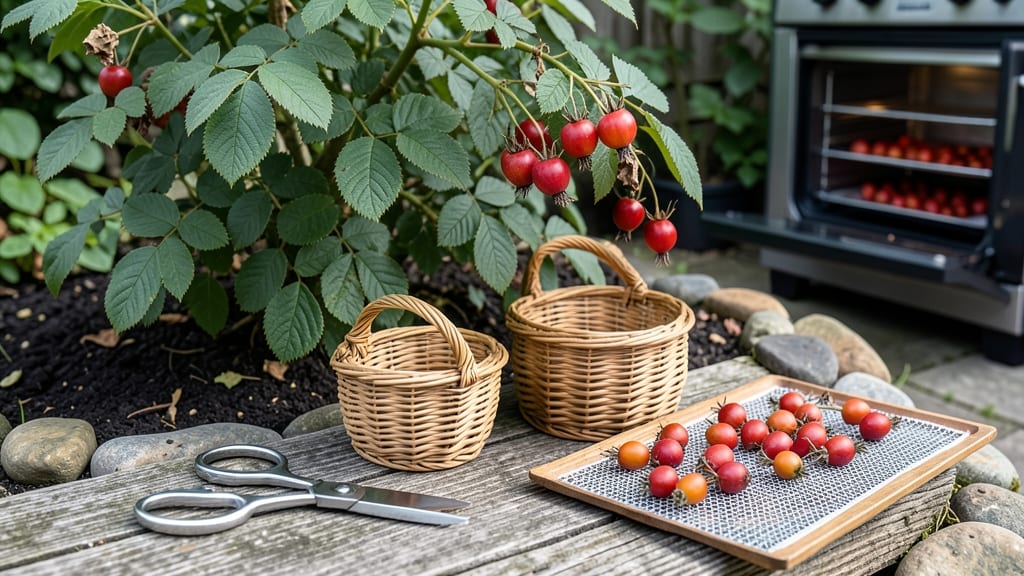
Harvest fully ripe rosehips when deep red, clean thoroughly, and dry using either air-drying (hanging or tray method) or a dehydrator at 135°F (57°C) for 12–24 hours. Store in airtight containers away from light and moisture for up to 6 months.
Drying rosehips transforms their tart flavor into a concentrated, nutrient-rich powder perfect for teas, jams, or supplements.
The key is patience—proper drying removes moisture without destroying the delicate vitamins, especially vitamin C. 🔥 I always test for doneness by checking if the hips snap easily when bent, which ensures they'll store well.
Uneven drying or high humidity can lead to mold, so maintaining consistent airflow is just as important as temperature control.
Once dried, these little powerhouses keep their benefits for months. You can grind them into a fine powder for easy use in recipes or store whole for later infusions. Just remember: the darker the rosehip turns during drying, the more intense the flavor and nutrients become.
💡 In This Article
- Optimal Conditions for Drying Rosehips
- Step-by-Step Drying Methods Compared
Optimal conditions for drying rosehips
The success of drying rosehips hinges on three critical factors: temperature, humidity, and airflow. Rosehips contain about 80-85% water when fresh, and removing this moisture without compromising their nutritional profile requires precision.
At temperatures above 140°F (60°C), the delicate vitamin C content begins to degrade rapidly, while below 120°F (49°C), microbial growth can occur if humidity isn't controlled.
The sweet spot is 135°F (57°C), where evaporation happens efficiently while preserving up to 90% of vitamin C compared to fresh hips.
Humidity is the silent saboteur—ideal levels should stay below 50% to prevent mold and fermentation. Think of rosehips like a sponge: too much moisture in the air means they'll absorb it back, slowing drying and creating the perfect environment for mold spores.
I've seen batches ruined by leaving them in damp basements or near kitchens with steamy cooking. For best results, aim for 30-40% humidity and use a hygrometer if your climate is unpredictable.
Airflow is equally crucial; stagnant air traps moisture, while gentle circulation (like a fan on low) ensures even drying.
Ripeness matters more than you might think. Green or partially ripe rosehips contain higher levels of tannins, which can make the dried product bitter and astringent. Fully ripe hips—deep red or orange—have softer skins that crack easily when dry, releasing their vibrant color and nutrients.
The skin's natural sugars caramelize slightly during drying, intensifying the flavor. I always test ripeness by gently squeezing a few hips; if they yield slightly and have a bright color, they're ready for harvest. Overripe hips may split open, losing their contents to pests or spoilage.
Understanding the science behind moisture removal helps avoid common pitfalls. Rosehips dry through a process called osmosis, where water moves from the flesh to the surface and evaporates.
The rate of this process depends on the surface area exposed to air—this is why spreading them in a single layer is essential. Uneven drying creates pockets of moisture where bacteria thrive, leading to that dreaded musty smell.
For reference, rosehips lose about 10% of their weight per hour in ideal conditions, so tracking progress with a food scale can help you adjust timing.
Preserving nutrients requires balancing heat and time. Vitamin C, for example, degrades at a rate of about 1% per minute above 140°F (60°C)10-12%—below this, the hips become brittle and store well.
If you're drying outdoors, watch for temperature swings; a sudden heatwave can cook the hips faster than intended, while cool nights slow the process. Consistency is key, whether you're using a dehydrator, oven, or natural airflow.
One often-overlooked detail is the role of pH. Rosehips have a natural acidity (pH ~3.5), which helps inhibit mold growth during drying. However, if you wash them with alkaline water (like tap water in some areas), you neutralize this protection.
Always use distilled or filtered water for cleaning to maintain their natural defenses. The acidity also explains why dried rosehips have a more concentrated, slightly tart flavor—it's not just about moisture loss, but also about preserving their chemical composition.