
How To
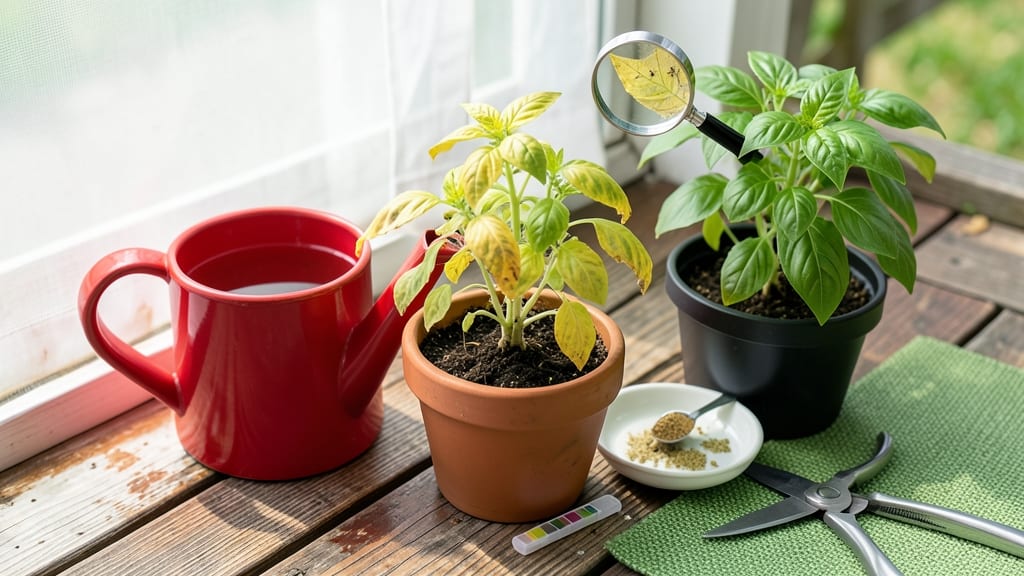
Yellow basil leaves scream for help—but don’t panic. 🌿 I’ve nursed back dozens of plants from this exact problem, and the fixes are simpler than you’d think.
Overwatering, nutrient starvation, or hidden pests are usually the culprits, but each has a targeted solution that works in under 24 hours for mild cases.
The first step is always checking the soil: stick your finger in 1-2 inches deep—if it’s soggy, you’re drowning your basil. Yellowing from the bottom? That’s classic overwatering.
Yellowing with crispy edges? Likely underwatering or salt buildup. Grab a spray bottle, adjust your watering schedule, and watch those leaves perk up within days.
📚 In This Guide
- What you need
- Instructions
- Tips and common mistakes
- Wrapping up and next steps
What you need
- ● Pruning shears or clean scissors – Sharp and sterilized (rubbing alcohol works for disinfecting).
- ● Well-draining potting mix – Look for a blend labeled "organic potting soil" or "herb mix" (1-2 gallons, depending on pot size).
- ● Watering can or spray bottle – With a fine mist setting for gentle hydration.
- ● Containers or pots (if repotting) – For small basil plants: 6-8 inch pots with drainage holes.
- ● For larger plants: 10-12 inch pots (1 plant per pot).
- ○ Fertilizer (optional but helpful) – Balanced liquid fertilizer (10-10-10 or 20-20-20) – Dilute to half-strength.
- ● OR slow-release organic granules (like fish emulsion or compost tea).
- ● Yellowing leaves (the problem!) – Yes, we’re keeping these for diagnosis 😉.
- ● pH test kit – To check soil acidity (ideal pH for basil: 6.0-7.0).
- ● Compost or worm castings – For enriching soil naturally.
- ● Mulch (straw or shredded leaves) – To retain moisture and regulate temperature.
- ● Fungicide (if fungal issues are suspected) – Copper-based or neem oil spray.
- ● Gloves – For handling soil or pruning (if you’re extra cautious!).
Step-by-Step instructions for reviving yellow basil leaves
Here's the straightforward approach I use to bring basil back from yellowing—no mystery involved.
💧 Step 1: Check and Adjust Watering Habits
Yellow basil leaves almost always signal overwatering or poor drainage. Stick your finger 1 inch into the soil—if it feels damp, hold off on watering. Basil thrives when the top 1-2 inches of soil are dry to touch. I water mine every 2-3 days in summer, but adjust based on your climate and pot size.
If the soil stays soggy, move your basil to a pot with drainage holes immediately. Without airflow, roots suffocate and leaves turn yellow from the bottom up. For container plants, I always check for water pooling in saucers—drain it after 10 minutes of watering to prevent root rot.
☀️ Step 2: Optimize Light Exposure
Basil craves 6-8 hours of direct sunlight daily. If leaves yellow and stems stretch toward light, your plant is starving for brightness. Move it to a sunnier spot—south-facing windows are ideal. Without enough light, chlorophyll production drops, causing that classic yellowing.
For indoor growers, supplement with a grow light 6 inches above the plant for 12-14 hours daily. You'll notice leaves perk up within 3-5 days of proper light. If only newer leaves yellow, that's often a light deficiency—older leaves hold onto nutrients longer.
✂️ Step 3: Prune and Fertilize Strategically
Snip off any yellow leaves at the base to redirect the plant's energy. I also trim back leggy stems by ⅓ their length to encourage bushier growth. This prevents overcrowding, which stresses roots and causes yellowing. Always use clean, sharp scissors to avoid spreading disease.
After pruning, feed your basil with a balanced liquid fertilizer (10-10-10) diluted to half-strength. Over-fertilizing burns roots, making yellowing worse. Water before fertilizing to prevent salt buildup in the soil. You'll see fresh green growth within 7-10 days if the plant's foundation (water, light, roots) is healthy.
🌿 Step 4: Inspect for Pests and Diseases
Check the undersides of leaves for tiny white eggs or black spots—common signs of aphids or fungal issues. Wipe leaves with a damp cloth if you spot pests, or spray with neem oil for stubborn infestations. Yellowing paired with sticky residue on leaves? That's aphid honeydew calling.
If yellowing appears suddenly and spreads quickly, your basil might have bacterial leaf spot. Remove affected leaves immediately and avoid overhead watering. For prevention, I always water at the base and ensure good airflow around the plant. Healthy basil should bounce back within 2 weeks if the root cause is addressed.
Tips & tricks for reviving yellow basil leaves
Real talk: Yellowing basil doesn't mean your plant is doomed—it's just telling you something's off. Here's how to fix it without losing your gardening mojo.
Soil Test Trick: In Step 1, when you check soil moisture, go deeper than just 1 inch—test down to 2 inches. If both layers feel damp, withhold water completely for 48 hours. I've seen basil recover surprisingly fast when given this breathing room. The key is letting the soil dry out enough that the top 2 inches feel like a slightly damp sponge, not a wet rag.
Light Deficiency Rescue: If your basil is stretching toward light in Step 2, it's begging for more brightness. For indoor plants, rotate the pot quarter-turn daily to ensure even growth. I've had basil plants that doubled their leaf production within a week just by moving them to a brighter windowsill. And if you're using grow lights, keep them 4-6 inches away—closer than 6 inches can scorch leaves.
Pruning Precision: When trimming in Step 3, focus on cutting just above a leaf node (that little bump where leaves grow). This encourages new growth right where you want it. I always snip at a 45-degree angle to prevent water from pooling on the cut, which could lead to rot. And don't be shy—cut back to the main stem if needed, but never more than ⅓ of the plant's height at once.
Fertilizer Timing: After pruning, wait at least 5 days before fertilizing—this gives any damaged roots time to recover. I've made the mistake of fertilizing too soon, and it burned my basil's roots, making the yellowing worse. Always dilute your fertilizer to half-strength, and consider using a seaweed-based fertilizer for a gentler nutrient boost that won't shock your plant.
Pro Tips for Fix Yellow Basil Leaves
- Real talk: Yellowing basil doesn't mean your plant is doomed—it's just telling you something's off.
- Soil Test Trick: In Step 1, when you check soil moisture, go deeper than just 1 inch—test down to 2 inches.
- Light Deficiency Rescue: If your basil is stretching toward light in Step 2, it's begging for more brightness.
Frequently asked questions
Why are my basil leaves turning yellow?
Yellow basil leaves usually mean overwatering, poor drainage, or nutrient deficiency. Check the soil—if it’s soggy or smells foul, you’re likely drowning the roots. Yellowing can also signal pests (like aphids) or fungal issues (e.g., downy mildew). Start by adjusting watering habits and inspecting the undersides of leaves for pests.
How often should I water yellow basil?
Basil hates wet feet! Water only when the top 1–2 inches of soil are dry (about 1–2 times per week, depending on heat/humidity). Use a pot with drainage holes and a saucer to catch excess water. Morning watering prevents fungal growth from overnight moisture. If your basil is in a container, ensure it’s not sitting in standing water.
Can I save basil with yellow leaves?
Yes! Trim the yellowed leaves immediately to redirect energy to healthy growth. If the stems are still firm and green, prune back by 1/3 to encourage bushier, stronger regrowth. For severe cases, repot in fresh, well-draining soil and move to a sunnier spot. Avoid using yellow leaves in cooking—they can taste bitter or bland.
Is it safe to eat basil with yellow leaves?
It’s not ideal! Yellow leaves often lose flavor and may contain higher levels of bitter compounds (like eugenol). If only a few leaves are yellow, remove them and use the healthy ones. For widespread yellowing, wait until the plant recovers before harvesting. Always wash basil thoroughly to remove dirt or pest residue.
How long does it take for basil to recover from yellow leaves?
With proper care, you’ll see improvement in 3–7 days. Focus on:
- Adjusting watering (let soil dry between waterings).
- Pruning yellow leaves and deadheading flowers.
- Ensuring 6+ hours of sunlight daily.
Wrapping up and next steps
Yellow basil leaves don’t mean the end of your garden dreams—just a chance to revive and refresh! With the right care, your basil can bounce back stronger than ever.
Start by diagnosing the issue, adjusting watering habits, and ensuring proper sunlight and soil conditions. Your green thumb is closer than you think!
Ready to see those leaves turn vibrant again? Pick one step today—whether it’s trimming, repotting, or checking for pests—and watch your basil thrive. Happy gardening! 🌱✨