
Aphids
How to get rid of aphids on outdoor plants—those sticky leaves and curled new growth? I’ve fought these sap-sucking pests for years, and this foolproof spray—made with ingredients you already have—knocks them out in hours, not weeks. The secret isn’t complicated: aphids hate the taste of soapy water and neem oil, and they can’t survive without their sticky honeydew. A quick spray in the morning disrupts their life cycle, and you’ll see them dropping off within 24 hours. No harsh chemicals, no waiting for weeks of regrowth. By evening, your plants will look refreshed, and the aphids? Gone. The key is consistency—check for new clusters every few days until they’re completely eliminated. Your roses, tomatoes, and basil will thank you with vibrant green leaves and no more sticky residue. This method works for all outdoor plants, from vegetables to flowers, and even keeps new aphids from moving in. Here’s exactly how to mix it and apply it without harming your plants. Let’s get started!
Why it happens
If your outdoor plants are suddenly hosting tiny, sap-sucking aphids, you’re not alone—these pests thrive in specific conditions. Understanding why they show up is the first step to kicking them off for good. Below, we break down the science behind aphid attraction, from plant chemistry to environmental triggers.
Aphids are like uninvited dinner guests—they zero in on plants that are already struggling. When plants are weak, their defenses drop, making them an easy meal. Here’s why:
- Nutrient Deficiencies: Aphids love plants deficient in nitrogen, phosphorus, or potassium. These nutrients are critical for plant health, and when lacking, aphids detect the "distress signal" through volatile organic compounds (VOCs) released by the plant. Think of it like a plant screaming, "Help! I’m weak—eat me!"
- Overcrowded Roots: Root-bound plants or those in overly compacted soil struggle to absorb water and nutrients. This stress makes them more susceptible to aphid attacks, especially on new growth where aphids feed most aggressively.
- Disease or Pest Damage: If your plants are already battling fungal infections (like powdery mildew) or other pests (e.g., spider mites), aphids will move in to exploit the weakened state. They often follow ant trails, which "farm" aphids for their honeydew secretions.
💡 Pro Tip: Boost plant resilience by fertilizing with compost tea or a balanced organic fertilizer (like 10-10-10) before aphids arrive. Healthy plants repel pests naturally!
Aphids are cold-blooded (literally—they’re insects!) and rely on external temperatures to thrive. Their life cycle accelerates in:
| Condition | Why Aphids Love It | How It Helps Them Spread |
|---|---|---|
| Warm Temperatures (60–85°F) | Metabolism speeds up; aphids reproduce asexually (no males needed!) every 7–10 days. | One aphid can become 1,000+ in a month. |
| High Humidity (60%+) | Prevents desiccation (drying out); ideal for their soft bodies. | Encourages honeydew production, which attracts sooty mold (a black fungal growth). |
| Still Air | Reduces natural predators (like ladybugs) that rely on wind for movement. | Traps aphids near their food source (your plants). |
🌡️ Heat Hack: If aphids strike during a heatwave, mist plants early morning to create a temporary humidity barrier they dislike. Just avoid wetting leaves at night to prevent fungal growth.
Aphids have a sweet tooth—literally. They target:
- Tender New Leaves: Young, soft tissue is easier to pierce with their stylets (mouthparts). The high sugar content in new growth fuels their rapid reproduction.
- Flower Buds: Aphids often colonize buds because they’re packed with phloem sap (the plant’s "blood"), which is their favorite snack.
- Succulent Stems: Plants like roses, basil, and squash produce thick, juicy stems that aphids can’t resist. These areas also hide them from predators.
✂️ Pruning Strategy: Regularly trim new growth to deprive aphids of their favorite buffet. Remove infested tips immediately and dispose of them in a sealed bag (not your compost!).
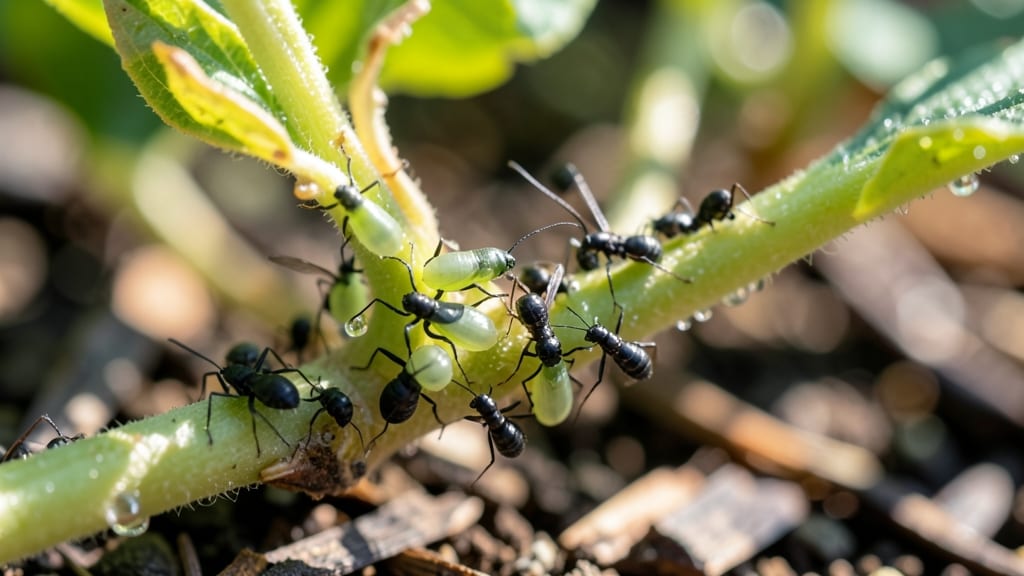
Here’s a shocking truth: ants "farm" aphids. They don’t eat the aphids themselves but herd them like cattle, stroking their bodies to stimulate honeydew production. This mutualism explains why you often see ants crawling up plants covered in aphids.
- How It Works:
- Ants recruit aphids to a plant by following pheromone trails .
- They "milk" aphids by tapping them with their antennae, forcing honeydew to drip onto the ants’ mouths.
- In return, ants defend aphids from predators (like ladybugs) and even carry aphid nymphs to new feeding sites.
- Result: Aphid populations explode because ants remove their natural enemies. Without intervention, one plant can become a aphid colony in weeks.
🐜 Ant Control Tip: Disrupt this relationship by applying diatomaceous earth to ant trails or using borax bait stations (mix 1 part borax + 3 parts sugar + water) near the base of infested plants. This breaks the aphid-ant alliance.
Quick Fixes for Aphid Infestations
Aphids may seem like a tiny, harmless nuisance, but their damage adds up fast—sticky honeydew, weakened plants, and even disease spread. The good news? You don’t need harsh chemicals to kick them out.
Below, we’ll break down targeted solutions based on the root cause of your aphid problem, plus prevention tips to keep them from crashing your garden party again.
Aphids love weak, crowded plants because they’re easier to feed on. If your garden looks like a jungle, it’s time to thin out and boost plant health.
🔥 Step 1: Prune Infested Areas
- 👨🍳 Trim away heavily infested leaves or stems (especially new growth where aphids cluster).
- 🔪 Use clean, sharp pruners to avoid spreading pests.
- 🌡️ Dispose of clippings in a sealed trash bag (not your compost—aphids can survive there!).
💡 Pro Tip:
If aphids are on flowers or buds, snip them off early to protect pollinators and prevent honeydew buildup.
🌿 Step 2: Boost Plant Resilience
- 💧 Water deeply at the base (not overhead) to encourage strong roots.
- 🍽️ Feed with compost or balanced fertilizer (aphids hate healthy, vigorous plants!).
- ✨ Space plants properly—good airflow reduces aphid hiding spots.
When aphids are everywhere, you need a fast, physical intervention before they multiply.
🔥 Step 1: Blast with Water (The Non-Toxic Power Wash)
- 💦 Use a strong spray nozzle (or even a hose) to knock aphids off leaves.
- 🌧️ Focus on undersides of leaves (their favorite hiding spot!).
- ⏰ Repeat every 2–3 days until they’re gone.
💡 Pro Tip:
Do this early in the morning so plants dry quickly, reducing fungal risks.
🕷️ Step 2: Introduce Natural Predators
- 🐞 Ladybugs, lacewings, and parasitic wasps (like Aphidius colemani) love aphids.
- 🛒 Buy them online or release them from local garden centers.
- 🌿 Plant companion flowers (like dill, fennel, or marigolds) to attract them.
Honeydew isn’t just gross—it attracts ants (which protect aphids) and promotes sooty mold. Time to break the cycle.
🔥 Step 1: Wipe Down Leaves
- 🧼 Use a damp cloth or sponge to remove honeydew and aphids.
- 🧴 Add a drop of mild dish soap (like Castile soap) to water for extra cleaning power.
💡 Pro Tip:
A 50/50 water-vinegar spray (1 part white vinegar to 1 part water) can dissolve honeydew and deter ants.
🐜 Step 2: Block Ant Trails
- 🛡️ Apply petroleum jelly or diatomaceous earth to plant stems to stop ants from "farming" aphids.
- 🌿 Plant mint or cloves nearby—ants hate these scents.
Once you’ve won the battle, lock in the victory with these long-term strategies:
| Problem | Solution | How to Do It |
|---|---|---|
| Weak plants | Strengthen with nutrients | Use compost tea or fish emulsion. |
| Ants protecting aphids | Disrupt their relationship | Use ant barriers or natural repellents. |
| Overwatering | Reduce moisture stress | Water at soil level, not leaves. |
| No predators around | Attract beneficial insects | Plant nectar-rich flowers like alyssum. |
| Late-season infestations | Use neem oil spray (preventative) | Mix 1 tbsp neem oil + 1 tsp soap per liter of water. |
🎯 Ultimate Prevention Hack:
🌿 Plant aphid-resistant varieties like:
- Rosemary (instead of roses)
- Zinnias (instead of marigolds)
- Basil (instead of parsley)
If aphids keep coming back despite your efforts, it might be time for a natural but stronger spray:
- 🍯 Neem oil spray (disrupts aphid life cycle)
- 🌿 Insecticidal soap (kills on contact, safe for most plants)
- 🌱 Pyrethrin spray (derived from chrysanthemums, fast-acting)
⚠️ Test sprays on a small leaf first—some plants (like lavender) are sensitive!
Aphids may be stubborn, but consistency wins. Combine physical removal, natural predators, and plant care, and you’ll have a aphid-free garden in no time—without harsh chemicals. 🌟
(Next up: DIY Sprays That Work in Hours—because sometimes you need a quick win!)
Frequently asked questions
Why do aphids always return even after I spray them?
Aphids reproduce asexually and can multiply rapidly—just one pregnant female can produce 75 offspring in a week! They also hitchhike on wind, insects, or tools. To break the cycle, combine sprays with physical removal (pruning) and natural predators like ladybugs. Check for hidden eggs on stems too.
Is soapy water safe for all plants?
Most vegetables, herbs, and flowering plants tolerate mild soapy water (1 tsp Castile soap per quart of water), but avoid delicate plants like lavender, azaleas, or rhododendrons. Always test a small leaf first—some plants develop brown spots. Rinse thoroughly after spraying.
How do I know if my plants are recovering from aphids?
Look for new green growth (not curled or sticky), fewer ants (they avoid healthy plants), and no honeydew on leaves. If aphids are gone but leaves stay yellow, your plants may need fertilizer (aphids drain nutrients). Monitor for 2 weeks—if pests return, repeat treatment.
Can I use neem oil in hot weather?
Neem oil works best between 50–85°F, but it can still help in heat—just apply early morning or late evening to prevent leaf burn. If temps exceed 90°F, switch to insecticidal soap or water blasting instead. Always mix neem with 1 tsp soap per quart for better adhesion.
What’s the fastest way to stop ants from protecting aphids?
Create a physical barrier by coating plant stems with petroleum jelly or diatomaceous earth—ants can’t cross it! For stubborn trails, use borax bait (1 part borax + 3 parts sugar + water) near their entry points. Avoid killing ants directly; disrupt their "aphid farming" instead.