
Size
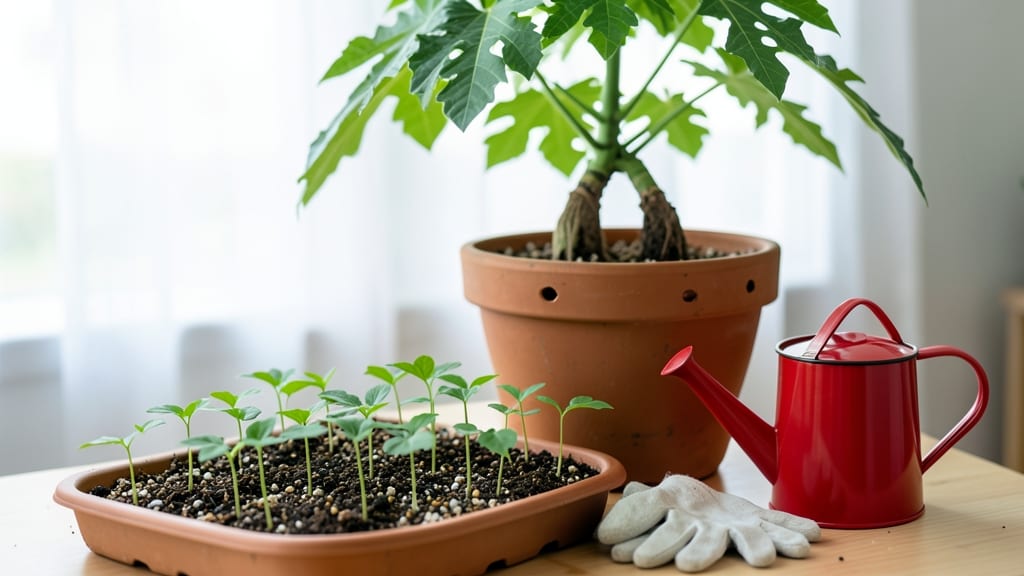
How to grow papaya plants in pots feels like cheating the system—tropical fruit without a tropical climate. 🌿 I’ve grown papayas in 15-gallon containers on my balcony, and with the right setup, you can too. The key? Mimicking their native conditions in a space-efficient way.
You’ll need a well-draining mix of potting soil and perlite (50/50), a pot with drainage holes that’s at least 18 inches deep, and a sunny spot getting 6+ hours of direct light daily.
Papayas thrive in warmth—indoors near a sunny window or outdoors in zones 10-12, but they’ll adapt with grow lights if needed.
Water when the top inch of soil feels dry, but avoid soggy roots—papayas hate wet feet. Within 3-4 months, you’ll see those signature lobed leaves, and with patience, you could harvest fruit in 12-18 months. The first harvest is sweet victory after months of nurturing.
For beginners, start with dwarf varieties like ‘SunUp’ or ‘Red Maradol’—they’re more compact and reliable in containers. And here’s the secret: prune aggressively to keep the plant bushy, or it’ll grow leggy and fruitless. Worth every pinch of effort for that first papaya!
📚 In This Guide
- What you need
- Instructions
- Tips and common mistakes
- Wrapping up and next steps
What you need
- ● Pot: A 5-gallon (or larger) container with drainage holes (minimum 18" diameter for mature plants). Pro tip: 💡 Opt for fabric pots for better aeration!
- ● Well-draining potting mix: A blend of 60% coconut coir/peat moss, 30% perlite/vermiculite, and 10% compost (sterilized). Avoid garden soil!
- ● Papaya seeds or seedling: Start with 1-2 healthy seeds (or a nursery-bought plant if you’re impatient!). Choose a dioecious variety (like 'Solo' or 'SunUp') for guaranteed fruit.
- ● Fertilizer: A balanced liquid fertilizer (10-10-10) or organic options like fish emulsion or worm castings.
- ● Support: A bamboo stake or trellis (3-4 ft tall) to train the vine as it grows.
- ● Pruning shears (for trimming leaves or dead growth).
- ● Spray bottle (for misting seedlings or humidifying air).
- ● pH test kit (ideal soil pH: 6.0–7.0).
- ○ Mulch (optional): Straw or shredded leaves to retain moisture.
- ○ Grow lights (optional): If indoors, use full-spectrum LEDs for 12+ hours/day.
Step-by-step instructions for growing papaya plants in pots
Here's how I grow papayas in containers—tropical fruit thrives when you mimic its native humidity and warmth.
🌱 Step 1: Select the Right Container and Soil Mix
Choose a 5-gallon or larger pot with drainage holes—papayas need room for their sprawling roots. I use terra cotta because it breathes better than plastic, preventing root rot in the humid conditions these plants love. Fill the bottom third with orchid bark mix for aeration, then add 3 parts potting soil to 1 part perlite for drainage.
Moisten the mix until it's damp but not soggy—papayas hate wet feet. A soil test kit helps here; aim for pH 6.0-6.5. If your tap water is chlorinated, let it sit out for 24 hours before using. The reason for this mix? Papayas grow best in well-draining, slightly acidic soil that mimics their jungle origins.
🌿 Step 2: Plant the Seedling at the Correct Depth
Dig a hole twice as wide as the root ball but only as deep as the container it came in. Papaya seedlings are delicate—handle them by the leaves, never the stem. Place the seedling in the hole and backfill with soil, pressing gently to remove air pockets. The top of the root ball should sit ½ inch below the pot rim to prevent water from spilling over the roots.
After planting, water deeply until it drains from the bottom. You'll know it's right when water runs out the drainage holes but stops within 5 minutes. This ensures the roots get a strong start without drowning. I like to add a slow-release fertilizer (10-10-10) at this stage—just sprinkle it around the base and water it in.
☀️ Step 3: Provide Warmth, Humidity, and Bright Light
Papayas need full sun (6+ hours daily) and warmth (70-85°F)—they won’t fruit if temperatures dip below 60°F. Place your pot in the sunniest spot you have, like a south-facing patio or balcony. If you're in a cooler climate, a grow light on a timer (14 hours/day) will help, but natural light is best.
Humidity is key—these plants thrive in 60-80% humidity. If your air feels dry, mist the leaves daily or place the pot on a pebble tray filled with water. You'll see the difference within a week: leaves stay glossy and vibrant instead of crisping at the edges. A fan on low circulation also prevents powdery mildew, a common issue in stagnant air.
💧 Step 4: Water and Fertilize for Optimal Growth
Water when the top 2 inches of soil feel dry—papayas are drought-tolerant once established but need consistent moisture when young. I check by sticking my finger in the soil; if it's dry past the first knuckle, it's time to water. Always water at the base, not overhead, to prevent fungal diseases. Let excess water drain completely before adding more.
Fertilize every 4-6 weeks with a balanced liquid fertilizer (like 20-20-20) diluted to half strength. Papayas are heavy feeders, but too much fertilizer burns roots. I switch to a potassium-rich fertilizer (like 5-10-10) once flowers appear to encourage fruiting. Stop fertilizing in late summer to let the plant focus on setting fruit rather than new growth.
✂️ Step 5: Prune and Support for Fruit Production
Papayas grow fast—prune leggy stems to encourage bushier growth. Cut back new shoots that grow from the base to redirect energy to the main plant. When flowers appear, thin them to 3-5 per plant—too many flowers mean small, underdeveloped fruit. You'll know a flower is viable if it opens fully and has a thick, green ovary at the base.
Use a small trellis or bamboo stake to support the plant as it grows. Papayas can get top-heavy with fruit, and a sudden breeze can snap the stem. Tie the main stem loosely to the support with soft plant ties every 6 inches up the stem. Harvest fruit when it turns fully yellow—they won’t ripen further off the plant. Twist gently to avoid damaging the stem.
Tips & tricks for growing papaya plants in pots
These insider tricks will help you avoid common pitfalls and maximize your tropical harvest in containers.
Container Size Matters: While a 5-gallon pot is the minimum, I've found that 7-10 gallon containers provide better stability and fruit production. Papayas develop extensive root systems—larger pots prevent root binding, which can stunt growth. If you must use smaller pots, upgrade to 12-15 gallon containers after the first fruiting season. The extra space lets the plant focus energy on producing larger fruit rather than competing for root space.
Soil pH Precision: That pH 6.0-6.5 range is critical but often overlooked. Test your soil mix before planting—many potting soils are neutral (pH 7.0). If your mix tests higher, add sphagnum peat moss or elemental sulfur to lower pH gradually. I've seen papayas struggle in slightly alkaline soil, even with perfect drainage. The acidity mimics their jungle habitat, unlocking nutrient availability for those vibrant tropical leaves.
Temperature Tolerance: Remember those 70-85°F ideal temperatures? Papayas will show stress if temps drop below 60°F—leaves yellow, growth stalls, and flowers drop. In cooler climates, move pots indoors during nighttime chills. I've used a space heater with a thermostat near my patio setup during spring/fall transitions, creating a microclimate that keeps temps stable. A simple thermometer probe in the soil helps monitor root-zone temps too.
Harvesting Timing: Those fully yellow fruits won't ripen further once picked, so timing is everything. I check for three key indicators:
- Color change from green to uniform yellow,
- Slight softness when gently squeezed, and
- A sweet aroma at the stem. If you harvest too early, the fruit will be bland and seedy. For indoor growers, place harvested papayas in a paper bag with a banana to speed up ripening—ethylene gas from the banana triggers the process.
Pro Tips for Grow Papaya Plants In Pots
- These insider tricks will help you avoid common pitfalls and maximize your tropical harvest in containers.
- Container Size Matters: While a 5-gallon pot is the minimum, I've found that 7-10 gallon containers provide better stability and fruit production.
- Soil pH Precision: That pH 6.0-6.5 range is critical but often overlooked.
Frequently asked questions
Got questions about growing papaya in pots? You’re not alone! Here are answers to the most common queries to help you grow like a pro—even in small spaces.
How long does it take for a papaya plant to bear fruit in a pot?
A papaya plant grown in pots typically takes 12–18 months to produce fruit, depending on the variety and growing conditions. Dwarf varieties like ‘Solo’ may fruit faster (as early as 9–12 months), while larger types could take longer. Patience is key—consistent warmth, sunlight, and care speed up the process!
Can papaya plants grow in small pots, or do they need large containers?
Papayas thrive in pots at least 12–18 inches deep and wide to support their root system and fruit weight. Smaller pots (under 10 inches) may stunt growth or limit fruit production. If space is tight, choose dwarf varieties and repot every 1–2 years for better yields.
What are the most common pests or diseases for potted papayas, and how do I prevent them?
Watch for aphids, mealybugs, and root rot—especially in humid conditions. Prevent pests with neem oil sprays and ensure pots have drainage holes. Overwatering or poor airflow can cause fungal issues; let soil dry slightly between waterings. Keep plants healthy with balanced fertilizer to boost their natural defenses!
Can I grow papayas indoors year-round, or do they need outdoor conditions?
Papayas love warmth and sunlight—they struggle indoors without a south-facing window or grow lights (12+ hours of light daily). If indoors, maintain temps above 60°F (15°C) and supplement with artificial light. For best results, move pots outdoors in summer (if possible) for stronger growth and fruiting.
What can I do if my papaya plant’s leaves turn yellow or wilt?
Yellow leaves often signal overwatering, nutrient deficiency, or root stress. Check soil moisture (let it dry between waterings) and adjust fertilizer (use a balanced, citrus-friendly mix). Wilted leaves may also mean underwatering or heat stress. Trim damaged leaves and ensure pots have proper drainage to revive your plant.
Wrapping up and next steps
Growing papaya in pots is a rewarding way to enjoy tropical fruit even in small spaces!
With the right container, soil, sunlight, and care, you’ll soon be harvesting sweet, vibrant papayas from your balcony or patio. 🌱 Start small, stay patient, and soon you’ll be savoring homegrown fruit that’s fresher—and tastier—than anything you’ve ever bought.
Ready to take the next step? Plant your seeds today and watch your little papaya plant grow into a thriving, fruiting treasure! 🌟