
Size
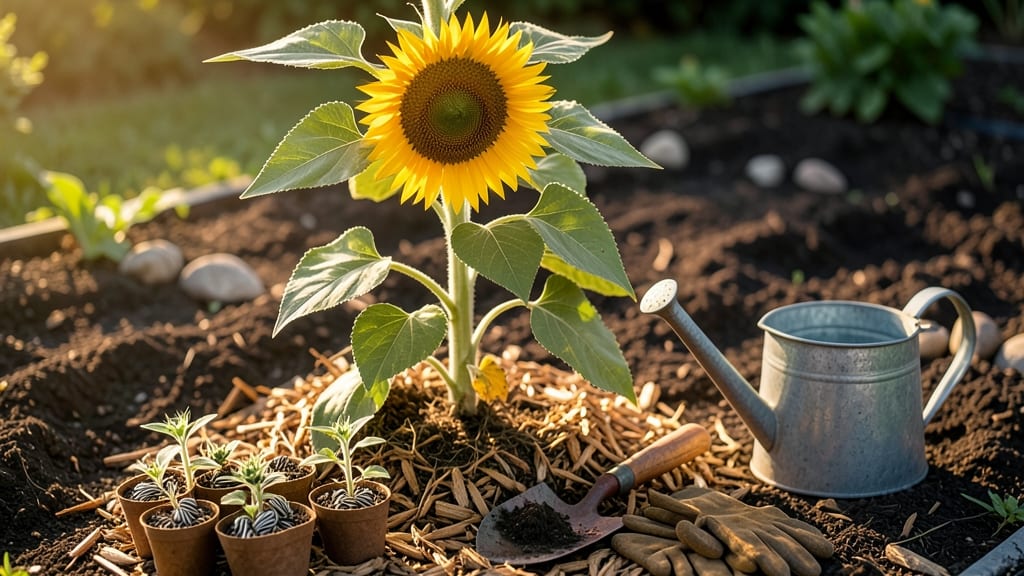
How to grow sunflowers in Florida will leave you in awe—some varieties reach staggering heights over 12 feet, their blooms outshining even the brightest days. 🌻 The key? Choosing heat-tolerant varieties like 'Russian Giant' or 'Mammoth' that thrive in our long summers without bolting. I’ve grown them here for years, and the secret isn’t complicated—just match the right variety to Florida’s climate and give them space to stretch their legs.
Start seeds indoors 8-10 weeks before last frost (or direct-sow after soil warms to 70°F), but here’s the Florida twist: you can plant year-round with proper spacing and shade cloth for seedlings.
Sunflowers need full sun (6+ hours daily) and well-draining soil—amend heavy clay with compost to prevent root rot, which is a common pitfall in our humid summers. Water deeply 2-3 times per week, but let the soil dry slightly between waterings to avoid fungal issues.
By mid-summer, you’ll have sunflowers that rival palm trees in your landscape, their golden blooms attracting pollinators and adding drama to any space.
The tallest varieties need staking or trellising to prevent flopping in storms, but the payoff is worth it—imagine fresh-cut blooms lasting weeks in a vase or seed heads that birds will love through winter. Even in Florida’s heat, these giants stay productive if you keep them happy.
Pro tip: Harvest seeds when the back of the bloom turns yellow, then dry them in a well-ventilated bag for next year’s plants. And if you’re worried about pests, neem oil sprays work wonders on aphids or spider mites—no harsh chemicals needed.
With these adjustments, your sunflowers will outshine every other garden in the neighborhood.
📚 In This Guide
- What you need
- Instructions
- Tips and common mistakes
- Wrapping up and next steps
What you need
- ● Sunflower seeds: Choose Florida-friendly varieties like 'Mammoth' (10-12 ft), 'Russian Giant' (12-15 ft), or 'Autumn Beauty' (5-6 ft, multi-colored).
- ● Well-draining potting mix or garden soil: 5+ gallons per plant (or 1 cubic yard for in-ground planting). Mix in compost (1 part compost to 4 parts soil) for nutrients.
- ● Organic fertilizer: A balanced 10-10-10 or 5-5-5 NPK (1 tbsp per plant at planting time).
- ● Watering can or hose with a gentle spray nozzle: Sunflowers need 1-2 inches of water per week (more in Florida’s heat!).
- ● Garden trowels or transplanter: For digging holes (6–8 inches deep).
- ○ Stakes or trellis (optional): 6–8 ft tall for tall varieties to prevent toppling in Florida’s wind.
- ● Mulch (straw or pine needles): 2–3 inches to retain moisture and suppress weeds.
- ● Gloves & knee pads: Because Florida gardening can get messy!
- ● Full sun location: At least 6–8 hours of direct sunlight daily (Florida’s climate is perfect for this!).
- ● Warm soil: Wait until after the last frost (mid-March) or plant in containers for year-round growing.
- ● Disease-resistant seeds: Opt for varieties labeled "disease-resistant" to combat Florida’s humidity.
Step-by-step instructions for growing sunflowers in Florida
Florida’s warm climate lets you grow sunflowers year-round—here’s how to coax those towering blooms from seed to sky.
🌱 Step 1: Select the Right Variety for Florida’s Climate
Florida’s heat demands heat-tolerant varieties like ‘Moulin Rouge’ (giant, deep red) or ‘Russian Giant’ (12+ feet). Avoid short-day varieties—they won’t bloom reliably in Florida’s long daylight. Start with certified organic seeds to avoid weak, disease-prone plants that struggle in humidity.
I always check the seed packet for “heat-tolerant” labels—these varieties handle Florida’s summer temperatures better. Plant in late summer or fall for winter blooms, or early spring for summer flowers. The key is avoiding peak summer heat when germination slows and seedlings wilt.
☀️ Step 2: Prepare the Soil and Plant at the Right Time
Sunflowers need well-draining soil with a pH of 6.0–7.0. Mix 2 inches of compost into the top 6 inches of soil to improve fertility and drainage. Florida’s clay-heavy soils often compact, so add 1 part perlite to 3 parts native soil if your garden feels dense.
Plant seeds ½ inch deep and 6 inches apart in rows 2 feet apart to give roots room to spread. Florida’s humidity means seeds rot if planted too deep—stick to that ½-inch rule. Water lightly after planting, but don’t soak the soil until germination (about 7–10 days).
💧 Step 3: Water Deeply and Protect from Florida’s Elements
Water once every 2–3 days until the top 2 inches of soil feel dry. Sunflowers hate soggy roots, but they also need consistent moisture—especially in Florida’s dry spells. Use a drip irrigation system or soaker hose to deliver water at the base without wetting leaves (which invites fungal diseases).
Watch for squirrels and birds—they love sunflower seeds! Cover newly planted rows with wire mesh until sprouts reach 4 inches tall. Mulch with 2 inches of straw to retain moisture and suppress weeds. Florida’s summer storms can knock over young plants, so stake 6-foot-tall varieties early with 3-foot bamboo stakes tied loosely.
✂️ Step 4: Fertilize and Prune for Maximum Height
Feed plants with a balanced 10-10-10 fertilizer when they reach 1 foot tall, then again when buds form. Florida’s sandy soils leach nutrients fast, so side-dress with compost tea monthly. Avoid high-nitrogen fertilizers—they produce lush foliage but fewer blooms.
Pinch off side buds when the main stem reaches 3 feet to encourage a single, towering bloom. This is critical for giant varieties like ‘Russian Giant’—without pruning, energy splits between multiple flowers, stunting height. Deadhead spent blooms to redirect energy into new growth.
🌿 Step 5: Harvest and Enjoy Year-Round Blooms
Cut flowers when the back of the petals faces outward and the stem feels firm. Harvest in the early morning for the longest vase life. In Florida, you can grow two crops annually: plant in late summer for winter blooms, then again in early spring for summer flowers.
Save seeds from your tallest plants for next year’s garden. Dry them on a window sill (not in direct sun) until crisp, then store in a paper envelope in a cool, dark place. Florida’s heat means seeds lose viability quickly—plant them within 6 months for best germination.
Tips & tricks for growing towering sunflowers in Florida
Florida’s unique climate demands a few strategic tweaks to grow sunflowers that reach their full potential. Here’s what I’ve learned from years of experimenting with these giants.
Selection Strategy: When choosing seeds, prioritize varieties labeled for "tropical" or "heat-tolerant" climates beyond just the height claims. I’ve found ‘Russian Giant’ performs best in Florida’s heat, but its seeds are often sold as "Russian Mammoth" elsewhere—double-check the heat tolerance on the packet. The difference in bloom height can be as much as 3 feet between varieties that look identical on the shelf.
Soil Science: Florida’s clay-heavy soils need that 1:3 perlite mix to prevent compaction, but don’t overdo it—too much perlite can make the soil too porous and dry. I test my soil’s drainage by pouring water on it: if it pools after 30 minutes, you need more perlite; if it disappears in seconds, add some compost to retain moisture. The goal is that sweet spot where water drains in 15-20 minutes.
Timing Tactics: The 7-10 day germination window can stretch to 14 days in Florida’s peak summer heat (90°F+). To speed things up, soak seeds overnight in lukewarm water before planting—this mimics the natural spring rains that trigger germination. Just don’t let them dry out during soaking, or they’ll lose viability. I plant mine in late August for winter blooms, when temperatures are still warm enough for growth but not scorching.
Pest Prevention: The wire mesh protection against squirrels and birds is non-negotiable, but I’ve found that adding a layer of reflective mulch film around the plants creates an extra barrier. The flashing sunlight confuses pests while also helping to deter fungal diseases by reducing leaf moisture. Just bury the edges to prevent weeds from growing through.
Pro Tips for Grow Sunflowers In Florida
- Florida’s unique climate demands a few strategic tweaks to grow sunflowers that reach their full potential.
- Selection Strategy: When choosing seeds, prioritize varieties labeled for "tropical" or "heat-tolerant" climates beyond just the height claims.
- Soil Science: Florida’s clay-heavy soils need that 1:3 perlite mix to prevent compaction, but don’t overdo it—too much perlite can make the soil too porous and dry.
Frequently asked questions
Got questions about growing sunflowers in Florida’s unique climate? You’re not alone! Here are answers to the most common queries—from timing to troubleshooting—so you can grow those towering blooms with confidence.
When is the best time to plant sunflowers in Florida?
Sunflowers thrive in Florida’s warm winters and springs. Start seeds indoors 2–3 weeks before your last frost (usually mid-February to early March) or direct-sow outdoors after soil warms to 55°F+ (March–April). For fall blooms, plant seeds in August–September. Pro tip: Florida’s long growing season lets you try year-round planting with shade cloth in extreme heat!
Can sunflowers survive Florida’s heat and humidity?
Yes! Sunflowers are heat-tolerant, but afternoon shade (via row covers or partial shade cloth) prevents wilting in 90°F+ temps. Ensure well-draining soil and water deeply at the base early in the morning to avoid fungal issues. Watch for: powdery mildew (spray with neem oil) or sunflower moths (handpick or use row covers).
What’s the fastest-growing sunflower variety for Florida?
For speed, try ‘Moulin Rouge’ (60–70 days) or ‘Autumn Beauty’ (55–60 days). If you want giant varieties (10+ feet), opt for ‘Russian Giant’ (90–120 days) or ‘Mammoth’—but stake them early! Florida’s humidity may slow growth slightly, so start seeds indoors for a head start.
Why aren’t my sunflowers blooming in Florida?
Common culprits:
- Too much nitrogen (focus on phosphorus/potassium for blooms).
- Overcrowding (space seeds 12–24" apart).
- Late planting (sunflowers need long daylight hours—aim for spring/fall planting).
- Pests/disease (check for aphids or fungal spots; treat with copper fungicide if needed).
Fix it: Prune lower leaves for airflow and fertilize with low-N, high-P (like 5-10-10) when stems reach 12".
Are there dwarf sunflower varieties for small Florida spaces?
Try these space-saving picks:
Variety
Height
Days to Bloom
‘Teddy Bear’
1–3 feet
50–60
‘Little Becka’
2–3 feet
55–65
‘Pocket Sun’
1–2 feet
45–55
Perfect for containers, balconies, or pollinator gardens! Plant in well-draining mixes with 30% compost for best results.
Wrapping up and next steps
Growing sunflowers in Florida is a rewarding journey—especially when you choose the right tall varieties for year-round blooms! 🌻 With the perfect soil, sunlight, and care, you’ll enjoy vibrant flowers that attract pollinators and add beauty to your space.
Whether you’re a beginner or a seasoned gardener, these tips make it simple to cultivate sunflowers that thrive in Florida’s climate.
Now that you’re equipped with the knowledge, take the next step—pick your favorite variety, grab your tools, and start planting! Watch your garden transform into a sunflower paradise in no time. Happy growing! 🌱