
Size
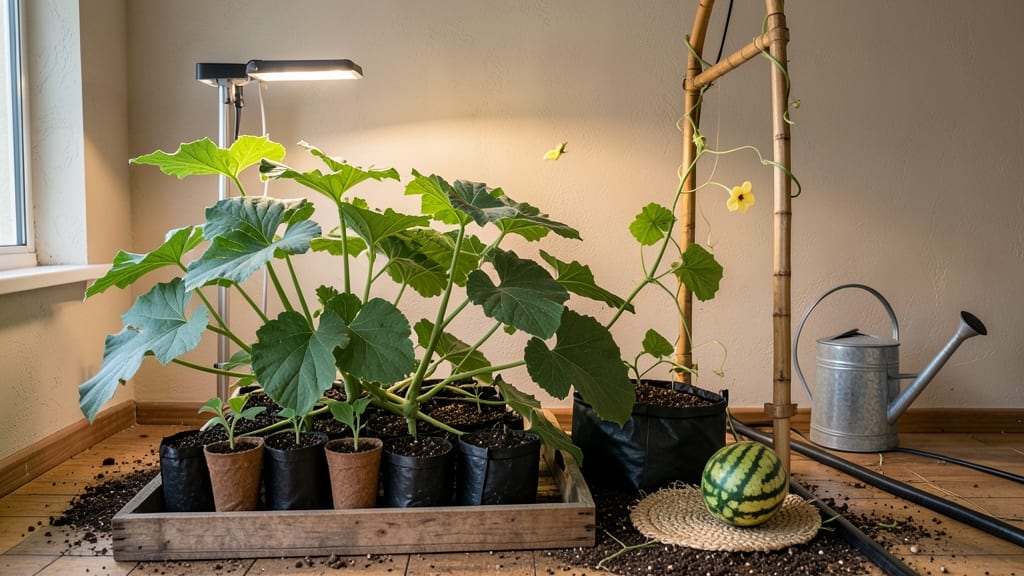
How to grow watermelon inside defies all expectations—until you try it. 🌱 I've grown these sweet giants in my sunroom for three summers now, and the secret isn't magic—it's choosing the right varieties and giving them exactly what they need. Compact vines and small fruits make this surprisingly doable in even the tiniest spaces.
The key starts with 5-gallon containers and dwarf varieties like 'Sugar Baby' or 'Tiny Tim,' which stay manageable. You'll need a sunny window or grow lights (14+ hours daily), well-draining soil mix, and a sturdy trellis to keep vines contained.
Most people underestimate how much space watermelons need to sprawl—this method keeps them from taking over your living room.
By midsummer, you'll be harvesting 3-5 pound melons with the same sweetness as outdoor ones. The real trick is hand-pollination (just transfer pollen with a paintbrush) and keeping humidity high enough to prevent blossom drop.
Yes, it takes patience, but the first bite of that indoor-grown watermelon makes every effort worth it.
Works in apartments, greenhouses, or even a well-lit basement. The only limit is your creativity with space—just don't skimp on light or you'll end up with bitter, undersized fruits. Here's how to make it work without sacrificing flavor or space.
📚 In This Guide
- What you need
- Instructions
- Tips and common mistakes
- Wrapping up and next steps
What you need
- ● Watermelon seeds: Choose compact or dwarf varieties like 'Sugar Baby,' 'Tiny Tim,' or 'Black Diamond' (3-5 seeds per plant).
- ● Containers: At least 5-gallon pots (or larger) with drainage holes—one per plant. Fabric grow bags or self-watering containers work great!
- ● High-quality potting mix: A well-draining blend with compost (avoid garden soil—it’s too dense!). Aim for 10-20 lbs per pot.
- ● Grow lights (if no natural sunlight): A full-spectrum LED grow light (12-16 hrs/day) or a sunlight simulator like a 6000K bulb.
- ● Support system: A trellis, cage, or stakes (4-6 ft tall) to guide vines upward—watermelons can sprawl 10+ ft!
- ● Fertilizer: A balanced liquid fertilizer (10-10-10 or 5-5-5) or organic options like compost tea or worm castings.
- ○ Mulch or pebbles: To retain moisture and regulate temperature (optional but helpful).
- ● Self-watering system: Drip irrigation or a moisture meter to keep soil consistently damp.
- ● Humidity tray: A shallow tray with pebbles and water to boost humidity in dry climates.
- ● Pruning shears: For trimming excess vines or leaves to focus energy on fruit.
- ● Pollination aid: A small paintbrush or handheld vibrator to help pollinate flowers (if no bees are around!).
- ● Grow tent or reflective foil: To maximize light efficiency in tight spaces.
Step-by-step instructions for growing watermelon indoors
Here’s how to coax sweet, compact watermelons from your windowsill—no greenhouse needed.
🌱 Step 1: Select the Right Variety and Start Early
Not all watermelons thrive indoors. Choose a compact, bush-type variety like 'Sugar Baby,' 'Tiny Tim,' or 'Black Diamond'—these produce 4-8 pound fruits on vines that max out at 6-8 feet. Start seeds 8-10 weeks before your last frost date (or now if you’re growing year-round indoors).
Sow 2-3 seeds per 5-inch pot (you’ll thin later) in sterile seed-starting mix—never garden soil, which compacts and suffocates roots. Press seeds ½ inch deep and label pots immediately. Watermelons are finicky about temperature: keep soil at 80-85°F for germination using a seedling heat mat. Expect sprouts in 7-14 days—patience is key here.
☀️ Step 2: Provide Full-Spectrum Light and Airflow
Watermelons demand 12+ hours of bright light daily. A south-facing window won’t cut it—supplement with a 24-inch LED grow light mounted 4-6 inches above the plants. Raise the light as vines grow to maintain that gap. Without enough light, vines stretch leggy and produce bitter, small fruit.
Place a small oscillating fan on low near the plants to mimic outdoor airflow. This strengthens stems and prevents powdery mildew, a common indoor problem. Rotate pots a quarter turn daily so vines grow evenly toward the light. You’ll notice thick, dark green leaves and sturdy stems—this means your light and airflow are dialed in.
💧 Step 3: Train Vines and Manage Watering
Once seedlings have 3-4 true leaves, transplant them into individual 5-gallon containers (watermelons need deep roots). Use a soilless mix with 20% perlite for drainage. Train the main vine along a trellis or tomato cage—this saves space and directs energy into fruit production. Prune side shoots (suckers) to keep the plant focused on one main vine.
Water deeply when the top 2 inches of soil feel dry—never let pots sit in saucers of water. Overwatering causes blossom-end rot or root rot, which kills plants quickly. Use a moisture meter for precision, especially in low-light conditions. Fertilize weekly with half-strength liquid fertilizer (high in phosphorus) once flowers appear.
⏰ Step 4: Pollinate Flowers and Monitor Fruit Set
Watermelons are self-pollinating, but indoor air can prevent it. Use a small paintbrush to transfer pollen from male flowers (long stems, no bulb at base) to female flowers (tiny fruit at the base) twice daily for 3-5 days after flowers open. Female flowers will swell slightly—this is your cue to stop pollinating them.
Once fruit forms, reduce watering slightly to prevent cracking. Harvest when the underneath turns cream-colored (for yellow varieties) or deepens to the variety’s mature hue. A ripe indoor watermelon will thud when tapped—this is your final check. Expect 4-6 pound fruits from compact varieties, ready in 70-80 days from transplant.
🌿 Step 5: Overwinter or Reset for Next Season
If your watermelon plant thrives, it’s technically a perennial in warm climates—but indoors, it’s easier to replace it annually. After harvest, prune the vine back to 6 inches and move the pot to a cool, bright spot (50-60°F). Reduce watering to every 2 weeks and fertilize monthly with low-nitrogen feed. In spring, repot into fresh mix and resume full care.
Real talk: Indoor watermelons won’t match outdoor size, but they’re sweeter, seedless, and harvestable year-round. The trick is light, patience, and pollination—skip any of these, and you’ll end up with bitter vines and no fruit. But nail it, and you’ll have homegrown watermelon in winter—something most people can’t even imagine.
Tips & tricks for growing compact indoor watermelons
Here's what nobody tells you about growing watermelons indoors—these tricks make all the difference between scraggly vines and real fruit.
Variety Selection Matters: The compact varieties mentioned ('Sugar Baby,' 'Tiny Tim,' 'Black Diamond') aren't just smaller—they're bred for shorter vines and better indoor adaptation. I've tried larger varieties indoors, and they either bolt (flower too quickly) or produce bitter, undersized fruit. These bush types focus their energy on fruit rather than sprawling vines. For maximum success, check seed packets for "bush" or "compact" labels specifically for indoor growing.
Germination Temperature Secret: That 80-85°F soil temperature range isn't just a suggestion—it's critical. I learned this the hard way after watching seeds rot in cool soil. Use a seedling heat mat if your home stays below 70°F. Pro tip: Place a thermometer in the soil to monitor—watermelon seeds need consistent warmth to sprout reliably. If you don't have a heat mat, try placing pots on top of your refrigerator (not inside) for gentle warmth.
Lighting Game-Changer: The 12+ hours of bright light requirement is non-negotiable, but here's the trick: Use a timer for your grow light to maintain consistency. I set mine for 14 hours daily—extra light prevents that "leggy" growth where vines stretch toward windows. Position your light so it's just above the plant's tallest leaves (about 4-6 inches away), then raise it as the plant grows. Without this adjustment, you'll end up with weak stems that can't support fruit.
Pollination Hack: That twice-daily pollination for 3-5 days might seem tedious, but here's how to simplify: Use a clean, dry paintbrush and keep it handy near your plants. Pollinate in the morning and evening—this mimics natural outdoor conditions. Watch for female flowers (they'll have a tiny watermelon-shaped bulb at the base), then stop pollinating once they swell slightly. This targeted approach prevents wasted effort and ensures better fruit set.
Pro Tips for Grow Watermelon Inside
- Here's what nobody tells you about growing watermelons indoors—these tricks make all the difference between scraggly ...
- Variety Selection Matters: The compact varieties mentioned ('Sugar Baby,' 'Tiny Tim,' 'Black Diamond') aren't just sm...
- Germination Temperature Secret: That 80-85°F soil temperature range isn't just a suggestion—it's critical. I learned ...
Frequently asked questions
Got questions about growing watermelon indoors? You’re not alone—this method is still new to many! Here are answers to the most common concerns to help you crush your indoor watermelon adventure.
Can I grow watermelon indoors year-round?
Yes, but with a catch! Watermelons need 100–140 warm days to mature, so you’ll rely on grow lights (14–16 hours/day) and a sunny window. Start seeds early (February–March) and expect smaller fruits—think personal-sized (2–5 lbs) rather than grocery-store giants.
How long does it take to grow watermelon indoors?
Indoor watermelons take 70–90 days from seed to harvest, depending on the variety. Dwarf or compact types (like ‘Sugar Baby’ or ‘Tiny Tim’) mature faster than heirlooms. Pro tip: Use a planting calendar and mark your last frost date as your “go live” deadline for lights.
What if my indoor watermelon doesn’t ripen?
Unripened watermelons usually stem from low light, cold temps, or poor pollination. Check these fixes:
- Move closer to grow lights (keep leaves 6–12” away).
- Ensure temps stay 75–90°F (use a heat mat if needed).
- Hand-pollinate with a paintbrush if no bees visit (gently transfer pollen between flowers).
Do I need a greenhouse for indoor watermelons?
Not at all! A sunny windowsill, grow tent, or basement with lights works fine. Greenhouses help in extreme climates (like freezing winters), but they’re optional. Just ensure humidity control (40–70%) and proper airflow to prevent mold.
Are indoor-grown watermelons as sweet as outdoor ones?
Sweetness depends on light, warmth, and variety. Indoor melons may be less sweet than outdoor-grown ones due to limited sunlight, but dwarf varieties (like ‘Black Diamond’) often deliver 80% of the sugar! To boost flavor:
Wrapping up and next steps
Growing watermelons indoors is totally doable—even in small spaces! With the right containers, lighting, and care, you can enjoy sweet, homegrown melons year-round. Whether you’re using compact varieties or creative setups like hydroponics, the key is patience and consistency.
Now that you’re armed with tips and tricks, why not start your indoor watermelon adventure today? Pick your favorite variety, gather your supplies, and watch those vines thrive! 🌱🍉