
Blooming
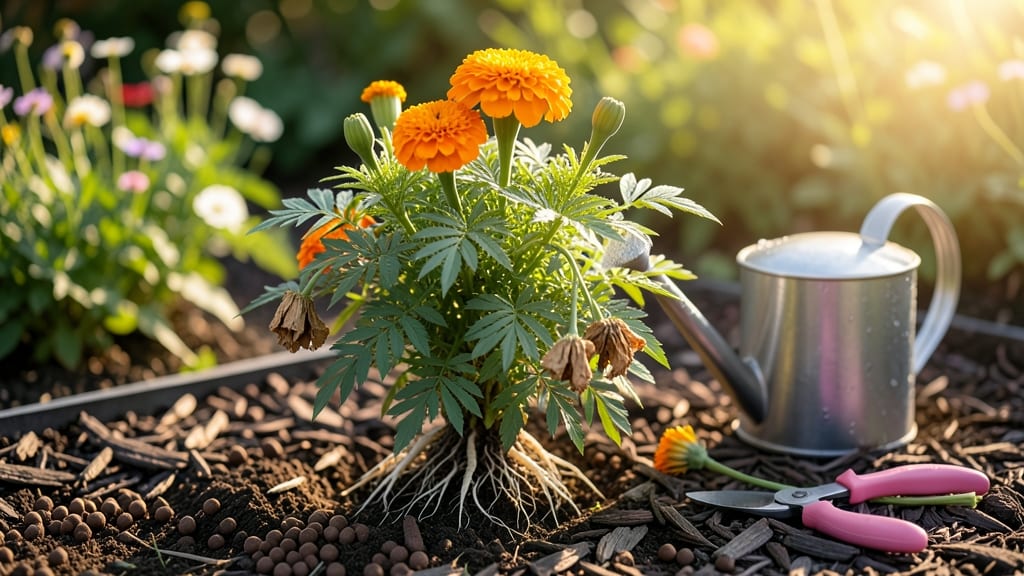
Daily deadheading turns marigolds into blooming machines. ✨ I’ve grown these sun-loving plants for years, and the secret to their nonstop color isn’t magic—it’s a simple habit that keeps them flowering like clockwork. The moment you see a spent bloom, snip it off, and watch new buds form within days.
Start with well-draining soil rich in compost—marigolds hate soggy roots, but they love nutrients. Water when the top inch of soil feels dry, and fertilize lightly every 4-6 weeks with a balanced organic feed. The key? Consistency. Overwatering or skipping fertilizer throws off their blooming rhythm.
By mid-summer, you’ll have marigolds covered in fresh blooms, their bright faces turning every garden corner into a sunny spot. Even my black thumb can’t kill these when I stick to the routine—and the bees will thank you too.
Works for French, African, or signet varieties, and adapts to containers or beds. The only rule? Never let a single dead bloom linger. Your marigolds will reward you with color until frost.
📚 In This Guide
- What you need
- Instructions
- Tips and common mistakes
- Wrapping up and next steps
What you need
- ● Marigold plants: Healthy, established plants (French, African, or Mexican varieties work best). Quantity: 3–5 per container or 1 per square foot in garden beds.
- ○ Pruning shears or sharp scissors: Clean, sharp tools to snip stems without crushing them. Optional: Small hand pruners for delicate work.
- ○ Gloves (optional): Lightweight gardening gloves to protect hands from thorns (common in some varieties) or dirt.
- ● Watering can or hose with a gentle nozzle: For consistent hydration without disturbing roots.
- ● Balanced fertilizer (10-10-10 or 5-5-5): Granular or liquid form to nourish plants. Apply every 4–6 weeks.
- ● Compost or mulch: Organic matter to retain moisture and improve soil. Spread 1–2 inches around the base.
- ● Sunlight: Full sun (6–8+ hours daily). Marigolds thrive in bright, direct light.
- ● Well-draining soil: Mix in compost or sand if your soil is heavy clay. pH range: 6.0–7.5 (neutral to slightly acidic).
- ● Consistent moisture: Water deeply 1–2 times per week (more in extreme heat). Tip: Avoid wetting leaves to prevent mildew.
- ● Deadheading routine: Commit to checking blooms daily! 🔄 Pro tip: Early morning is the best time to snip spent flowers.
Step-by-Step instructions for keeping marigolds blooming
Marigolds reward consistent care with weeks of vibrant blooms—here's how to keep them flowering nonstop.
🌿 Step 1: Deadhead Daily at the Right Time
Start by examining each spent bloom—you'll notice petals curling inward and turning brown at the edges. This is your cue to act. Grab the flower head between your thumb and forefinger and give it a gentle twist to remove the entire spent bloom along with the small green seed pod forming beneath it.
Never pull from the top—this can damage new buds. Instead, pinch just below the flower head where the stem meets the foliage. I like to do this in the morning when blooms are crisp and dry; it prevents pests from hiding in damp flower debris later in the day.
✂️ Step 2: Prune for Bushier Growth
After deadheading, inspect the plant for any leggy stems or branches that have lost their lower leaves. These need pruning to redirect energy to new blooms. Use clean, sharp pruners to cut just above a set of leaves where three or more leaf nodes appear.
I always make cuts at a 45-degree angle to prevent water from pooling on the stem. This encourages faster healing and reduces disease risk. For particularly woody stems, cut back to a healthy lateral branch—your marigold will respond by sending out multiple new shoots within 7-10 days.
💧 Step 3: Water at the Base Strategically
Water marigolds at the soil line rather than overhead—this prevents fungal spores from splashing onto petals and leaves. The ideal time is early morning when temperatures are coolest. You'll know you've watered enough when 1-2 inches of soil feel moist down to your finger's second knuckle.
Overwatering causes blooms to drop prematurely, so let the top inch of soil dry between waterings. Mulch with 1-2 inches of organic mulch around plants to retain moisture and regulate soil temperature. This simple step cuts watering by nearly half while keeping roots consistently happy.
☀️ Step 4: Feed Weekly During Blooming Season
Marigolds are heavy feeders, especially when producing continuous blooms. Use a balanced liquid fertilizer (10-10-10) diluted to half-strength every 7-10 days. Apply in the morning so foliage has time to dry before nightfall, which prevents leaf burn.
I mix the fertilizer with water in a spray bottle and apply it directly to the soil around the base, avoiding contact with leaves. You'll see new buds forming within 3-5 days of feeding—this is your signal the plant is responding well. Stop fertilizing when nights drop below 55°F to prevent tender new growth from frost damage.
🌱 Step 5: Monitor for Pests and Disease
Check the undersides of leaves weekly for aphids or spider mites—common pests that drain plant energy. You'll spot them as tiny moving dots or fine webbing between leaves. Spray with a strong stream of water to dislodge them, or use neem oil for persistent infestations.
Remove any yellowing leaves immediately, as they indicate fungal issues or nutrient deficiencies. I also rotate plants a quarter turn weekly to ensure even sun exposure—this prevents one side from becoming leggy while the other stays compact. Healthy marigolds with consistent care will reward you with blooms until the first frost.
Tips & tricks for keeping marigolds blooming longer
These small adjustments make all the difference between marigolds that fade quickly and ones that burst with color all season.
Timing is Everything: The morning is the absolute best time for deadheading—right after dew has dried but before the sun gets too intense. I've found that plants deadheaded in the morning recover faster and produce new buds within 5-7 days. If you miss morning, afternoon works too, just avoid evening to prevent fungal growth from overnight moisture.
Pruning Precision: When you're making those 45-degree cuts in Step 2, focus on cutting just above a set of leaves with three or more nodes. This isn't just about aesthetics—it's about redirecting the plant's energy to where it matters. I've seen marigolds that were pruned too high (above the nodes) produce fewer blooms, while those cut at the right spot became bushier within 7-10 days as promised in the instructions.
Watering Wisdom: The 1-2 inch soil moisture check is crucial, but I've learned to adjust based on weather. During heatwaves, I check moisture every other day—those top inches dry out faster. Conversely, during cool, rainy periods, I let the soil stay moist longer. The key is always that second knuckle test: if your finger comes out clean, water again.
Fertilizer Finesse: That 10-10-10 fertilizer recommendation works wonders, but here's the secret: I always mix it with rainwater if possible. Tap water can sometimes contain chlorine that stresses plants. Also, if you notice new buds forming within 3-5 days as mentioned, that's your green light to keep feeding—your marigolds are clearly hungry for more nutrients!
Pro Tips for Keep Marigolds Blooming
- These small adjustments make all the difference between marigolds that fade quickly and ones that burst with color all season.
- Timing is Everything: The morning is the absolute best time for deadheading—right after dew has dried but before the sun gets too intense.
- Pruning Precision: When you're making those 45-degree cuts in Step 2, focus on cutting just above a set of leaves with three or more nodes.
Frequently asked questions
Got questions about keeping your marigolds in full bloom? Here are some of the most common ones—and their answers!
Why aren’t my marigolds blooming even after deadheading?
If your marigolds still aren’t blooming, check their sunlight (they need at least 6-8 hours daily) and soil (well-draining, slightly acidic). Over-fertilizing with nitrogen can also promote leafy growth over flowers. Try a balanced 10-10-10 fertilizer instead, and ensure they’re not crowded—spread them 12-18 inches apart.
How often should I deadhead marigolds for continuous blooms?
Deadhead daily (or at least every 2-3 days) during peak bloom season (spring to fall). For French marigolds, pinch back stems to encourage bushier growth. African marigolds, which bloom less prolifically, only need deadheading when flowers fade. Pro tip: Use clean pruners or your fingers—no need for fancy tools!
Can I keep marigolds blooming in cooler weather?
Marigolds are warm-season plants and typically slow down in temperatures below 50°F (10°C). While they may not bloom as heavily, they’ll still produce some flowers if given full sun and protection from frost. In fall, you can extend their season by covering them with a frost cloth on chilly nights.
What’s the best alternative if my marigolds refuse to bloom?
If marigolds struggle in your climate, try these low-maintenance, long-blooming alternatives:
Common culprits include aphids, spider mites, or powdery mildew, which drain energy. Check leaves for yellowing, spots, or sticky residue. Treat with neem oil or insecticidal soap, and ensure good airflow. Prevention tip: Space plants properly and water at the base (not overhead) to reduce fungal risks.
All respond well to deadheading!
Are pests or diseases stopping my marigolds from blooming?
Wrapping up and next steps
Keeping your marigolds blooming is all about consistent care—deadheading, proper sunlight, and a little TLC go a long way! 🌼 With these simple steps, you’ll enjoy vibrant, nonstop color all season long. Don’t wait—grab your pruners and get ready to transform your garden into a cheerful paradise.
Ready to take it further? Try experimenting with different marigold varieties or pair them with complementary flowers for an even more stunning display. Happy gardening!