
Tools
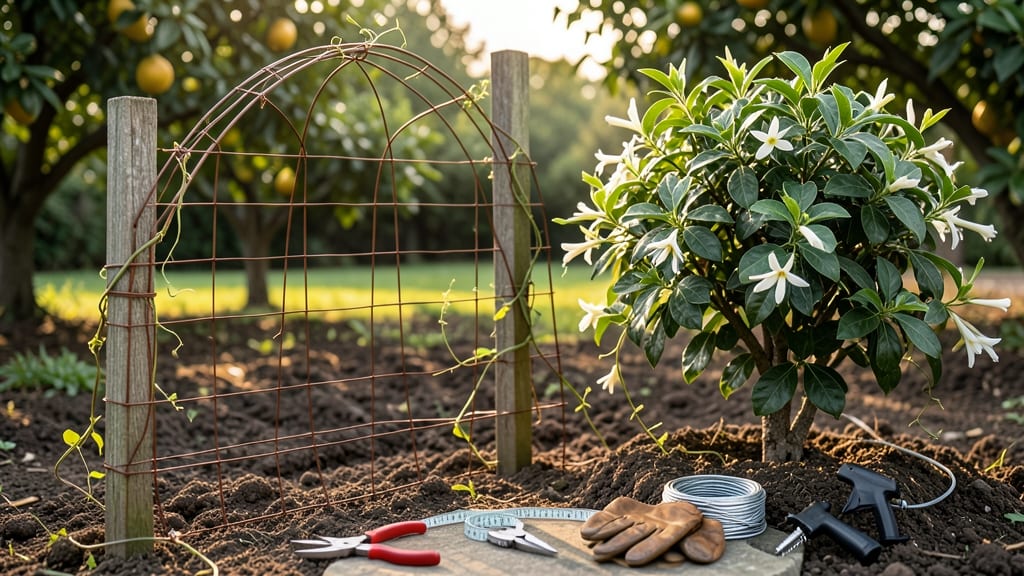
Wire trellises transform jasmine vines from sprawling ground covers into fragrant, eye-catching vertical displays. 🌿 I’ve built mine from simple materials in under an hour—no welding or fancy tools required.
The key is matching the trellis to jasmine’s climbing style: it needs 12-18 inches of horizontal spacing between wires to twine properly, and the structure should reach at least 6 feet for mature vines. Start with 14-gauge galvanized wire (lasts years without rust) and sturdy wooden posts or metal stakes.
For arches, bend the wire into a gentle curve—jasmine loves to climb upward, and this shape encourages it to bloom higher. Place your trellis where it gets at least 6 hours of sunlight daily, but avoid harsh afternoon sun that can scorch delicate leaves.
Once installed, you’ll watch those vines explode with growth by midsummer, their star-shaped flowers perfuming the air. The trellis also makes pruning easier—simply trim back leggy growth to keep the structure neat. For extra drama, weave in evergreen branches for a living wall effect.
Works for both star jasmine (Trachelospermum) and winter jasmine (Jasminum nudiflorum). Let’s get building—your garden’s about to get a whole lot more fragrant and structured!
📚 In This Guide
- What you need
- Instructions
- Tips and common mistakes
- Wrapping up and next steps
What you need
- ● Galvanized steel wire (16- or 18-gauge) – 100–200 feet, depending on trellis size (thicker = sturdier for heavier vines).
- ● Wooden posts (4x4 or 2x4 lumber) – 2–4 posts, cut to 4–6 feet tall (treat with outdoor sealant if needed).
- ● Staple gun + heavy-duty staples – For securing wire to wood (or use zip ties as an alternative).
- ● Measuring tape – To ensure even spacing and height.
- ● Wire cutters – For clean, precise cuts.
- ● Hammer or mallet – To drive posts into the ground (or use post anchors for extra stability).
- ● Gloves – Protect your hands from wire and splinters!
- ● Concrete or gravel – For securing posts deeper into the ground (prevents wobbling).
- ● Decorative paint or stain – To match your garden’s aesthetic.
- ● Plastic or metal mesh – For added support if jasmine grows densely.
- ● Pre-made trellis kit – If you prefer a no-fuss setup (check garden centers!).
Step-by-Step instructions for building a wire trellis for jasmine
This simple, sturdy design supports climbing jasmine while keeping your garden looking natural and intentional.
🪴 Step 1: Gather Materials and Measure Your Space
For a 4-foot tall trellis (ideal for most jasmine varieties), you’ll need 18-gauge galvanized wire, 4 wooden posts (4x4 inches, 5 feet tall), and staple gun with landscape staples. Measure the width of your planting area—jasmine vines need 4-6 feet of horizontal space to spread comfortably. I like to place my trellis near a fence or wall for extra stability.
Mark the ground where your posts will go, spacing them 3-4 feet apart for a rectangular frame. Dig holes 12 inches deep at each mark—this ensures the posts won’t topple when vines grow heavy. Real talk: if your soil is sandy, add 1 foot extra depth to prevent leaning. Use a level to keep posts perfectly vertical before backfilling with soil.
✂️ Step 2: Assemble the Vertical Frame
Attach the 4-foot vertical wires to each post using the staple gun, securing them 6 inches from the top and 6 inches from the bottom. This creates a stable base and top for horizontal wires. For extra strength, loop the wire around the post twice before stapling—jasmine vines can get surprisingly heavy once established.
Here’s the thing—if you’re using a wall or fence as a backdrop, skip the back post and attach wires directly to it. Just make sure the wire is taut and no more than 4 inches away from the wall to encourage upward growth. You’ll see the vines naturally climb toward the light, so positioning matters.
🌿 Step 3: Create the Horizontal Support Grid
Cut horizontal wires in 12-inch segments—this spacing gives jasmine enough room to twine through without crowding. Staple the first horizontal wire 4 inches from the top of the frame, then add wires every 8 inches downward. For a 4-foot trellis, you’ll need 4 horizontal wires total. Keep them parallel and level—uneven wires make vines grow crooked.
If your trellis is wider than 5 feet, add a center post for extra support. I’ve seen jasmine vines snap weaker trellises in strong winds, so reinforcing the middle prevents sagging. For a 6-foot-wide trellis, use 6 horizontal wires (3 on each side) to distribute weight evenly.
💧 Step 4: Secure the Trellis and Plant Jasmine
Before planting, give the trellis a gentle shake—if it wobbles, reinforce the posts with wooden stakes tied at the base. Once stable, plant your jasmine 6-12 inches away from the trellis, facing the structure. The roots will spread toward the support naturally, but you can lightly weave young vines through the wires to encourage climbing.
Don’t skip the mulch layer—spread 2-3 inches of organic mulch around the base to retain moisture and prevent weeds. Jasmine thrives in partial shade to full sun, but if your trellis is in a hot, exposed spot, water deeply 2-3 times per week until established. You’ll know it’s happy when new leaves emerge bright green and glossy.
⏰ Step 5: Maintain and Train the Vines
As the jasmine grows, gently guide vines through the wires every 2-3 weeks—this prevents tangling and keeps the plant neat. Prune any overly long or leggy growth in early spring to encourage bushier, fragrant blooms. I like to trim back one-third of the previous year’s growth right before new shoots appear.
Here’s where it gets fun—watch for new tendrils curling around the wires. These are your plant’s way of saying, “I’m ready to climb!” If a vine starts to sag, tie it loosely to a horizontal wire with soft garden twine. Avoid tight knots—they can damage the stem as it thickens.
Tips & tricks for building a sturdy wire trellis for jasmine
Building a trellis that actually supports jasmine's growth takes more than just wire and wood—it's about creating a structure that will last through seasons of climbing vines. Here's what I've learned from years of watching jasmine transform these simple frames into lush vertical gardens.
Post Placement Precision: When marking your post locations in Step 1, use a string line between the outermost posts to ensure perfect alignment. I've seen trellises that looked straight but had posts slightly off-kilter, which caused the horizontal wires to sag in the middle. For extra stability in windy areas, consider adding two diagonal support wires between opposite posts—this creates an "X" shape that prevents leaning. The 3-4 foot spacing between posts is ideal, but if you're working with a particularly wide area, add an extra post every 5 feet to prevent bowing.
Wire Tension Technique: In Step 2, don't just staple the vertical wires—pull them taut first. Use a helper to hold the wire straight while you staple, or tie temporary knots at the top and bottom before securing. The wires should be straight as a string between two points. For the horizontal wires in Step 3, I've found that using a small level on each segment ensures they're perfectly parallel. If you notice any wires starting to bow under the weight of growing vines, simply tighten them again with a pair of pliers before they become a problem.
Growth Pattern Intelligence: The 12-inch horizontal spacing in Step 3 might seem generous, but trust me—jasmine vines will fill that space beautifully. I've seen gardeners use tighter spacing, and while it works, the vines can become overcrowded and compete for sunlight. For trellises wider than 5 feet, the suggestion to add a center post is brilliant—it prevents the entire structure from sagging in the middle when vines get heavy. When training vines in Step 5, focus on guiding them to the lower horizontal wires first, as this encourages stronger initial growth before they climb higher.
Seasonal Maintenance Strategy: After your first growing season, take 10 minutes to inspect your trellis. Look for any wires that have stretched or staples that have loosened—jasmine's growth can be surprisingly forceful. I like to do a thorough check in early spring before new growth appears, and again in late summer when vines are at their heaviest. If you notice any wires starting to rust, replace them immediately—rust weakens the structure and can damage the vines as they climb.
Pro Tips for Make A Wire Trellis For Jasmine
- Building a trellis that actually supports jasmine's growth takes more than just wire and wood—it's about creating a structure that will last through seasons of climbing vines.
- Post Placement Precision: When marking your post locations in Step 1, use a string line between the outermost posts to ensure perfect alignment.
- Wire Tension Technique: In Step 2, don't just staple the vertical wires—pull them taut first.
Frequently asked questions
about building a wire trellis for jasmine—because even DIY pros need a little help! Here are answers to the most common questions to ensure your climbing vines thrive.What’s the best wire gauge for a jasmine trellis?
For most jasmine varieties, use 14- to 16-gauge galvanized or coated steel wire. This balances strength and flexibility—thick enough to support heavy vines but bendable enough to shape without snapping. Avoid thinner wire (like 20-gauge), as it can kink or break under jasmine’s weight.
How long does it take to build a wire trellis?
For a basic 4-foot by 6-foot trellis, expect 20–45 minutes if you’re prepared. Breakdown:
- 10 minutes to gather tools and materials.
- 15 minutes to bend and shape the wire.
- 5–10 minutes to secure it to posts or a fence.
Can I use a wire trellis for other climbing plants?
Wire trellises work for clematis, roses, morning glories, and even some fruiting vines like passionfruit. Just adjust the spacing: jasmine needs tighter loops (6–12 inches apart), while roses may prefer 18-inch gaps for larger blooms. Use the same wire gauge for most vines, but add extra supports for heavy varieties.
What if my wire trellis sags or bends out of shape?
Sagging usually means your wire isn’t taut enough or your posts aren’t sturdy. Fix it by:
- Tightening the wire with pliers and re-securing knots.
- Adding stakes or a horizontal support beam midway for extra stability.
- Using zip ties or garden wire to reinforce weak spots.
Does a wire trellis need to be removed in winter?
Not necessarily! If you live in a mild climate (zones 8–10), leave it up—jasmine is evergreen or semi-evergreen in many regions. In colder zones (below 7), remove the trellis or cut back vines to prevent wind damage. Store wire in a dry place if disassembling, and coat it with oil to prevent rust.
Wrapping up and next steps
Creating a wire trellis for your jasmine is a simple, rewarding project that’ll give your climbing vines the support they need to thrive! 🌿 With just a few materials and a little patience, you’ve got a sturdy, custom trellis ready to elevate your garden’s beauty.
Now that you’re equipped with the know-how, it’s time to roll up your sleeves and watch your jasmine climb to new heights—your green oasis is just a few twists away!
Ready to take the next step? Plant your jasmine near your trellis, water it well, and enjoy the fragrant blooms as they twine their way up! 🌸 Happy gardening!