
Tools
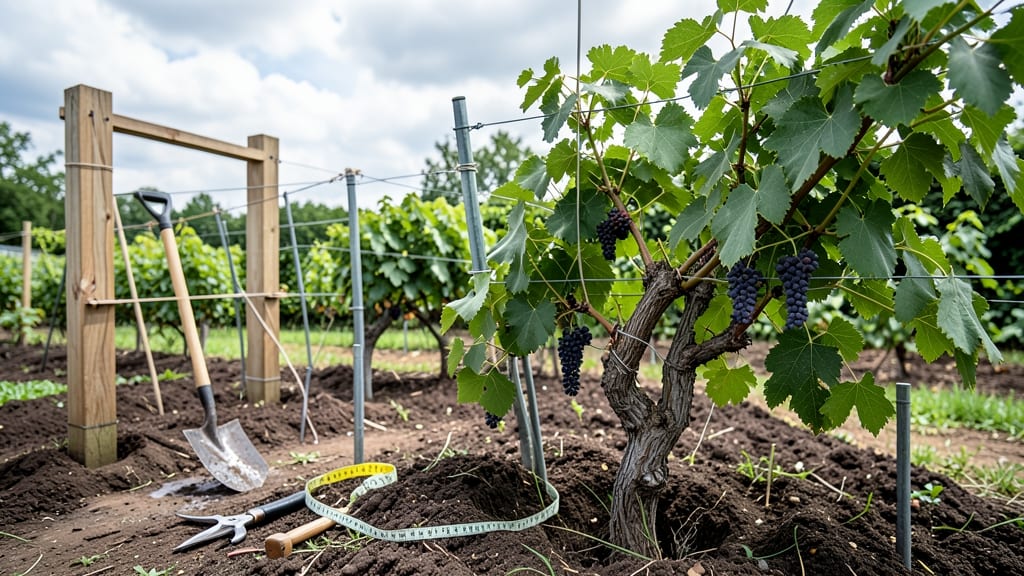
Building a muscadine grape trellis changed my harvest from tangled messes to organized abundance. 🌱 These vines grow heavy—up to 50 pounds per plant—so a sturdy trellis isn't optional. I learned the hard way when my first attempt collapsed under last year's crop.
You'll need 4x4 posts (buried 3 feet deep) spaced 12-15 feet apart for proper airflow and sunlight penetration. The trellis wires should run 3-4 feet high, with cross wires every 18 inches to support the thick canes.
Pressure-treated wood or galvanized metal handles the weight best, while PVC works for lighter varieties. Once built, you'll see cleaner growth, easier harvesting, and fewer diseases from improved airflow. The trellis also extends the vine's lifespan by preventing soil-borne rot.
My vines now produce 20% more fruit and stay manageable through the season. Avoid common mistakes like skipping deep post holes (they'll lean) or using flimsy wire (it'll sag). Check tension every spring—loose wires mean tangled vines.
With proper care, your trellis will last 10+ years, paying for itself in harvests.
📚 In This Guide
- What you need
- Instructions
- Tips and common mistakes
- Wrapping up and next steps
What you need
- ● T-posts or metal stakes: 6–8 posts, 5–6 feet tall (depending on vine height). Opt for 2×4-inch galvanized steel for durability.
- ● Horizontal support beams: 2–3 pieces of 4×4-inch pressure-treated lumber, cut to 10–12 feet long (adjust for trellis width).
- ● Crossbraces: 4–6 pieces of 2×4-inch lumber, 4–5 feet long (for diagonal stability).
- ● Trellis wire or nylon cord: 12–14 gauge galvanized wire or ½-inch thick cord, 50–100 feet total (depends on trellis size).
- ● Concrete or gravel: For anchoring posts (about 1–2 bags of quick-setting concrete or 50 lbs of gravel per post).
- ● Screws or lag bolts: 3-inch deck screws or ½-inch lag bolts for securing lumber.
- ● Post-hole digger or auger
- ● Tape measure and level
- ● Circular saw or handsaw
- ● Drill/driver
- ● Staple gun (for wire/cord attachment)
- ● Gloves and safety glasses
- ○ Optional: Impact driver for faster assembly, post caps for aesthetic finish.
- ● Flat, well-drained ground (slope no steeper than 10% for stability).
- ● Sunny location with 6+ hours of direct sunlight daily.
- ● Soil test (muscadines prefer slightly acidic, well-draining soil; amend if needed).
- ● Existing or planned grapevine planting area (trellis should align with rows).
Step-by-step instructions for building a muscadine grape trellis
Here’s how to construct a durable trellis that handles muscadine vines’ weight while optimizing fruit production.
🪴 Step 1: Choose and Prepare Your Location
Muscadine grapes thrive in full sun, so select a spot receiving at least 6-8 hours of direct sunlight daily. Avoid low-lying areas where frost or cold air settles—muscadines are heat-tolerant but frost-sensitive. Clear the ground of weeds and debris, then mark the trellis footprint with stakes and string to visualize the layout.
For a standard 4-plant setup, space posts 12-15 feet apart in a square or rectangular pattern. This spacing accommodates mature vine spread while keeping the structure stable. If your soil is sandy, dig post holes 12 inches deep for better anchorage; in clay, go 18 inches deep to prevent shifting.
☀️ Step 2: Install Posts and Attach Horizontal Supports
Use 4x4-inch pressure-treated posts for corner anchors and 2x4-inch posts for intermediate supports. Set the corner posts in concrete mix (follow manufacturer’s instructions for curing time) to ensure they won’t wobble when vines load with fruit. For intermediate posts, bury them 12 inches deep and backfill with soil to stabilize.
Attach horizontal rails with lag screws or heavy-duty brackets at 36-inch intervals vertically and 8-10 feet apart horizontally. Muscadines need this height to train vines upward and prevent ground contact, which spreads disease. Use a level to keep rails perfectly horizontal—uneven supports cause vines to grow crooked, making harvest difficult.
✂️ Step 3: Add Cross Braces and Vine Guides
Install diagonal braces between corner posts and intermediate supports to reinforce the structure against wind and vine weight. Space braces 4 feet apart along the length of the trellis. For muscadines, which grow aggressively, add twine or UV-resistant nylon cord between horizontal rails to create vertical guides. Stretch the cord tautly—vines will twine naturally along it, reducing the need for manual tying.
Leave 6-8 inches of space between cords to allow airflow, which prevents fungal diseases like black rot. Test the trellis by gently pushing on the posts—if it flexes more than 1 inch, add additional braces or deeper post anchors. A sturdy trellis now means fewer broken limbs later when grapes are heavy.
🌿 Step 4: Train Vines and Maintain the Structure
Once vines reach 3-4 feet tall, gently weave them through the twine guides, securing with soft ties every 12 inches. Avoid metal staples—they can damage bark. Prune side shoots to encourage upward growth, focusing on 2-3 main canes per vine to prevent overcrowding. Muscadines produce best on mature wood, so avoid heavy pruning in their first year.
Inspect the trellis annually for loose screws or sagging rails. Tighten connections in early spring before new growth begins. If vines outgrow the trellis (they can reach 30 feet in ideal conditions), extend the structure with additional posts and rails. A well-maintained trellis ensures your muscadines stay productive for decades.
Tips & tricks for building a sturdy muscadine trellis
Between us, building a trellis that actually holds up under muscadine vines' weight is where most gardeners trip up. Here's what I learned after watching my first trellis sag under a single harvest.
Location is Everything: That 6-8 hours of sunlight isn't just about growth—it's about preventing fungal diseases. Muscadines need full sun to dry dew quickly, which is your first line of defense against black rot. I always mark my sunniest spot with temporary stakes first, then test it for a full day. If shadows creep in after 10 AM, move the whole setup—those vines won't forgive you later.
Post Depth Matters More Than You Think: The 12-18 inches for post depth isn't arbitrary—it's about soil type. In sandy soil, 12 inches gives you enough grip, but in clay, you need that extra 6 inches to prevent posts from shifting when vines pull. I've seen trellises fail spectacularly when gardeners skip this step. Pro tip: Tap posts firmly into place after burying—they should resist gentle rocking.
Bracing is Non-Negotiable: Those 4-foot braces aren't just for looks—they're what keeps your trellis from becoming a vine hammock. I've had to rebuild trellises where homeowners skipped this step, and let me tell you, watching a 30-foot vine drag your entire structure to the ground is a humbling experience. Test your completed trellis by pushing down on the rails—if it flexes more than an inch, add more braces or dig posts deeper.
Vine Training Secrets: The 12-inch spacing for ties might seem tight, but it's perfect for muscadines. Too far apart and vines flop; too close and you restrict growth. I use soft plant ties (never metal staples—they'll scar the bark) and make sure to loosen them every few weeks as the vines thicken. And here's what nobody tells you—muscadines grow faster than you think. Start training them at just 3-4 feet tall, or you'll be playing catch-up all season.
Pro Tips for Build A Muscadine Grape Trellis
- Between us, building a trellis that actually holds up under muscadine vines' weight is where most gardeners trip up.
- Location is Everything: That 6-8 hours of sunlight isn't just about growth—it's about preventing fungal diseases.
- Post Depth Matters More Than You Think: The 12-18 inches for post depth isn't arbitrary—it's about soil type.
Frequently asked questions
about building a muscadine grape trellis—because even pros need a little extra guidance! Here are answers to the most common questions to help you get it right the first time.What’s the best time of year to build a muscadine grape trellis?
Build your trellis in late winter or early spring (before bud break) or early fall (after harvest). This gives vines time to establish roots and climb the structure before heavy fruiting. Avoid summer—hot weather can stress plants and make installation harder.
Can I use wood instead of metal for posts and wires?
Pressure-treated lumber (4x4 posts) or cedar
are great wood choices—they resist rot and pests. Just ensure posts are at least 6 feet deep (or use concrete footings) to prevent leaning. For wires, use galvanized steel or high-tensile vine wire to handle muscadines’ weight.
How do I prevent my trellis from collapsing under heavy muscadine grapes?
Muscadines are heavy! Use sturdy materials (e.g., T-posts with concrete anchors, not just stakes) and triangular bracing for taller trellises. Space wires 12–18 inches apart and train vines to spread evenly. Prune aggressively in winter to reduce overgrowth and distribute weight.
Do muscadine vines need a trellis, or can they grow on a fence or arbor?
While muscadines can climb fences or arbors, a dedicated trellis offers better airflow, sunlight, and harvest access. Fences may sag under weight, and arbors can block sunlight to lower branches. A trellis keeps vines organized, healthy, and productive—worth the effort!
What if my trellis isn’t level or the posts keep sinking?
Check for uneven soil compaction or poor drainage—muscadines hate soggy roots. Re-level posts with gravel or crushed stone before pouring concrete. For sinking posts, dig deeper or add metal brackets to reinforce stability. A 2% slope (away from the house) helps with drainage too!
Wrapping up and next steps
Building a sturdy muscadine grape trellis is a rewarding project that sets the stage for a thriving vineyard! With the right materials, careful planning, and a little elbow grease, you’ll create a system that supports heavy vines and maximizes your harvest. 🌱
Now that you’re equipped with the know-how, it’s time to roll up your sleeves and get building. Start by sketching your design—whether it’s a simple T-trellis or a more elaborate arbor—and gather your tools.
Once your trellis is up, watch your muscadine grapes flourish with proper training and care. Happy growing!