
Tools
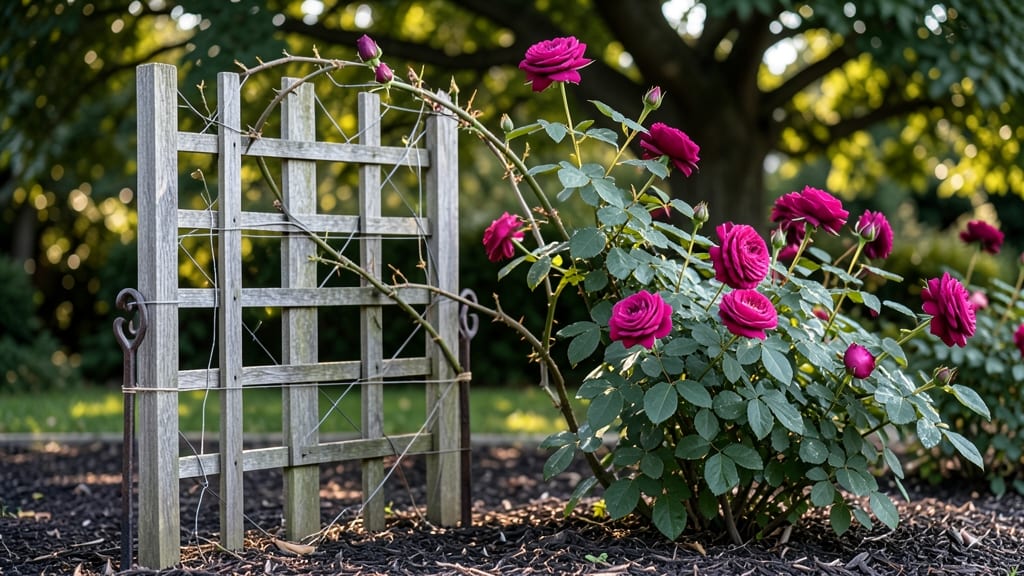
Building a rose trellis transforms your climbing roses from sprawling vines to showstopping vertical displays. 🌹 I learned the hard way—my first attempt collapsed under the weight of blooms, but this design stands strong through storms and seasons.
The right trellis doesn't just support roses; it elevates your garden's structure and beauty. Start with materials that match your style and climate: cedar resists rot, metal lasts decades, and bamboo adds natural elegance.
A simple 4x4 post arbor or obelisk frame works for most gardens, while lattice panels create dramatic backdrops. The key is spacing—12-18 inches between supports keeps vines from tangling and encourages airflow, which prevents disease. You'll end up with roses that climb effortlessly, producing more blooms and healthier canes.
The trellis becomes a focal point, framing your garden like an outdoor gallery. Plus, pruning becomes easier when you can see every stem. Works for small patios or large landscapes—just scale the design. Here's how to build one that lasts for years.
📚 In This Guide
- What you need
- Instructions
- Tips and common mistakes
- Wrapping up and next steps
What you need
- ● Lumber: 2 pieces of 4x4 pressure-treated posts (8 ft long)
- ● 2 pieces of 2x4 lumber (8 ft long, for horizontal supports)
- ● 1 piece of 1x4 or 2x2 lumber (8 ft long, for lattice or slats)
- ● Hardware: 6–8 3-inch exterior wood screws (for assembling posts)
- ● 12–16 2-inch deck screws (for attaching supports)
- ○ 4–6 galvanized corner braces (optional but recommended for extra stability)
- ● Fasteners: 1–2 post anchors or concrete footings (to secure posts in the ground)
- ● Tape measure
- ● Carpenter’s square
- ● Circular saw or handsaw
- ● Drill/driver with screwdriver bits
- ● Level (to ensure your trellis stays straight!)
- ● Post hole digger or auger (if setting posts in the ground)
- ● Safety gear: gloves, goggles, and ear protection
- ● Stain or paint (for weather resistance and aesthetics)
- ● Lattice panels or decorative metalwork (for a fancier look)
- ● Post caps (to protect the tops of your 4x4 posts)
- ● Pre-made trellis kits (if you prefer a quicker assembly)
Step-by-Step instructions for building a rose trellis
Here’s how to craft a sturdy, long-lasting trellis that lets climbing roses thrive while keeping your garden organized.
🪴 Step 1: Gather Materials and Tools
For a 4-foot tall trellis (supporting 4 climbing rose bushes), you’ll need two 4x4 wooden posts, ½-inch galvanized wire or sturdy wooden slats, concrete mix, galvanized screws or lag bolts, and post-hole digger. I like using cedar for the slats—it resists rot and lasts for years. Measure your space first; trellises should stand 6-8 feet apart for proper support.
Check your local building codes if installing near property lines or walkways. A minimum 6-foot height ensures roses can climb without overcrowding. Gather gloves, safety glasses, and a level—skipping these will lead to uneven posts or wire sagging over time.
✂️ Step 2: Set the Posts Deeply and Securely
Dig holes 2 feet deep and 1 foot wide for each post—deep enough so ⅔ of the post is buried. Mix concrete according to package instructions (usually 1 part water to 3 parts mix) and pour into the hole. Place the 4x4 post vertically, ensuring it’s plumb (use a level). Tap it gently to settle while the concrete sets.
Let the concrete cure for 24 hours before attaching horizontal supports. If you’re in a windy area, add two diagonal braces between posts for extra stability. I’ve seen trellises collapse in storms when posts weren’t securely anchored—don’t skip this step.
🌿 Step 3: Attach Horizontal Supports
For wire trellises, stretch ½-inch galvanized wire between posts at 12-inch intervals vertically and 6-inch intervals horizontally. Use heavy-duty staples or screws to secure the wire—roses need something sturdy to grip. For wooden slat trellises, attach 2x4 slats horizontally at 18-inch intervals, leaving 4-inch gaps between slats for airflow.
Leave 6 inches of clearance between the top of the trellis and the first horizontal support—this gives roses room to arch upward naturally. Test the structure by gently pushing on the posts; if it wobbles, reinforce with additional braces or screws.
☀️ Step 4: Train Roses to Climb Properly
Once your trellis is built, prune roses in early spring to encourage strong canes. Select 3-5 of the healthiest, longest canes and tie them to the bottom wire or slat using soft plant ties (never wire—it cuts into stems). As new growth appears, weave it through the trellis, securing it loosely every 12-18 inches.
Here’s the thing—roses climb counterclockwise by default. If your trellis is wire, twist it slightly clockwise to guide growth upward. Avoid over-tightening ties; they should allow ¼-inch of stem movement to prevent girdling as the plant thickens.
💧 Step 5: Maintain for Longevity
Inspect the trellis twice a year—after winter and before summer. Replace rotted wood or rusted wire immediately. If using wooden slats, seal them every 2 years with outdoor-rated stain to prevent decay. Prune roses in late winter to remove dead wood and redirect energy into new growth.
Watch for powdery mildew on leaves near the trellis—this thrives in poor airflow. Space trellises at least 3 feet apart and avoid overcrowding roses. A well-maintained trellis will last 10+ years, giving your climbing roses the perfect vertical home.
Tips & tricks for building a sturdy rose trellis
Here's what I've learned from years of building trellises—and how to avoid the mistakes I made early on.
Foundation is Everything: When digging those 2-foot deep holes for your 4x4 posts, use a post-hole digger with a sharp edge to create clean, vertical walls. I learned this the hard way after struggling with a dull tool that left ragged edges—now I always check the blade before starting. The cleaner the hole, the straighter your post will stand, and that means less work later when you're checking for plumb with your level.
Wire vs. Wooden Slats: For wire trellises, I recommend using ½-inch galvanized wire with a slight twist—this creates natural grip points for rose canes. If you choose wooden slats, cedar is my top pick because it naturally resists rot, but if you use pine, seal it immediately after assembly. The 12-inch vertical spacing for wire works perfectly for most climbing roses, but if you're growing particularly vigorous varieties, consider reducing to 10 inches for better support.
Pruning and Training Pro Tip: In Step 4, when you're selecting those 3-5 healthiest canes, look for ones with a slight curve—they'll naturally follow the trellis shape better. I've found that tying new growth every 12-18 inches creates the perfect balance between support and flexibility. The ¼-inch movement allowance is crucial—tighter ties can actually strangle the stems as they thicken over time. This is where many gardeners go wrong, leading to stunted growth.
Seasonal Maintenance Strategy: That twice-yearly inspection in Step 5 is non-negotiable. I schedule mine right after the last frost and just before summer storms begin. For wooden slats, I use a high-quality outdoor stain that contains mildewcide—this prevents both decay and powdery mildew issues. If you notice rust spots on wire, replace those sections immediately; rust weakens the metal and can damage rose stems when they brush against it.
Pro Tips for Build A Rose Trellis
- Here's what I've learned from years of building trellises—and how to avoid the mistakes I made early on.
- Foundation is Everything: When digging those 2-foot deep holes for your 4x4 posts, use a post-hole digger with a sharp edge to create clean, vertical walls.
- Wire vs.
Frequently asked questions
Got questions about building your rose trellis?
Here are some of the most common ones—and their answers—to help you get started with confidence.
What’s the best material for a rose trellis?
A sturdy rose trellis should use rot-resistant wood (cedar or redwood), metal, or PVC. Wood blends in naturally, while metal or PVC offers durability and low maintenance. Avoid untreated wood—it can rot and harm your roses over time.
When is the best time to build a rose trellis?
Build your trellis in early spring or late fall when the ground is workable. If planting bare-root roses, install the trellis at the same time as planting (or shortly after) to give roots time to establish before climbing. Avoid winter construction—frozen ground makes digging difficult!
Can I use a trellis for other plants besides roses?
Trellises work great for climbing beans, cucumbers, grapes, and even morning glories. Just adjust the height and spacing—roses need 6–8 feet tall, while vining veggies may only require 4–5 feet. Get creative with your garden layout!
What if my trellis isn’t sturdy enough for my roses?
If your trellis wobbles or sags, reinforce it immediately. Add extra stakes or guy wires for support, or replace weak materials. For heavy roses, opt for thicker posts (4x4 inches) or a lattice design—distribute weight evenly to prevent bending.
How can I make my trellis look decorative?
Paint or stain your trellis to match your garden’s aesthetic, or wrap it in lattice panels for a classic look. Add climbing roses with contrasting colors (like deep reds or soft pinks) to create a stunning focal point. Pro tip: Mix in ivy or clematis for extra texture!
Wrapping up and next steps
Building your own rose trellis is a rewarding project that adds both beauty and structure to your garden! With the right materials and a little patience, you can create a sturdy support that helps your climbing roses thrive. 🌸
Now that you’re equipped with the knowledge, it’s time to roll up your sleeves and get growing! Start by sketching your design, gathering your tools, and choosing a location that gets plenty of sunlight.
Once your trellis is up, watch as your roses climb, bloom, and transform your garden into a stunning, fragrant paradise.
Need inspiration? Browse garden design ideas or explore varieties of climbing roses to pair with your new trellis—happy gardening! 🌿