
Propagation
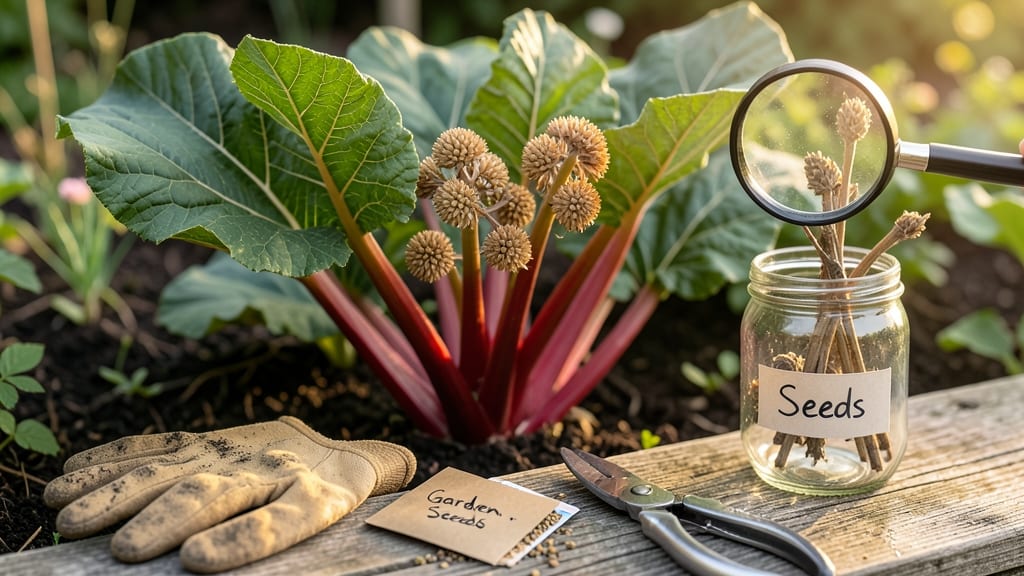
Collecting rhubarb seeds feels like chasing a rare treasure—because it is. 🌱 Most gardeners propagate rhubarb through crown division, but if you're curious about breeding new varieties or just love a challenge, seed collection is where patience pays off.
The process starts with mature seed heads that rarely appear unless you have multiple compatible cultivars nearby.
You'll need sharp scissors, paper bags for drying, and a spot with consistent humidity. Harvest the seed heads when they turn from green to tan and begin splitting open—usually in late summer after flowering.
Each seed head contains hundreds of tiny seeds, but only a fraction will germinate, so consider this a long-term experiment rather than a reliable method.
Drying takes 2-3 weeks in a cool, dark place. Once completely dry, rub the heads to release seeds into your bag. Store them in an airtight container in the fridge until spring planting.
Germination is slow and unpredictable, but the thrill of growing something truly unique makes it worth the wait.
Fair warning: seeds won't produce plants identical to the parent. If you're after reliable rhubarb, stick with divisions. But if you're experimenting or breeding, this is where the magic—and the science—happens. Ready to try?
📚 In This Guide
- What you need
- Instructions
- Tips and common mistakes
- Wrapping up and next steps
What you need
- ● Mature rhubarb plants: Choose healthy, disease-free plants (at least 2–3 years old) with plump seed pods (usually appear in late summer/fall).
- ● Scissors or pruners: Sharp, clean pair to snip seed pods without damaging the plant.
- ● Paper towels or newspaper: For drying seeds (avoid plastic—it traps moisture).
- ● Brown paper bags or envelopes: Breathable containers to store seeds until planting.
- ● Permanent marker: To label seed varieties and collection dates.
- ○ Small mesh bag or breathable fabric: For storing seeds long-term (optional but helpful for airflow).
- ● Patience! 🕒 Rhubarb seeds take 6–12 months to germinate—plan ahead!
- ● Desiccant packets: For low-humidity storage if seeds aren’t fully dry.
- ● Seed viability test: A few seeds in water to check for sinkers (viable) vs. floaters (non-viable).
- ● Grow lights or a sunny windowsill: For indoor seedling starts (if planting early).
- ● Compost or seed-starting mix: For germinating seeds before transplanting outdoors.
Step-by-step instructions for harvesting rhubarb seeds
Rhubarb seeds are a gardener's patience test—worth the wait for free, homegrown plants next spring.
🌱 Step 1: Identify Mature Seed Stems for Harvesting
Wait until late summer or early fall when rhubarb's seed stalks turn brown and papery—this signals full maturity. These stalks grow from the center of the plant and stand taller than the leafy growth. I always harvest on a dry, sunny afternoon when the stalks feel crisp to the touch.
Cut the entire stalk at the base with clean shears, leaving the crown undisturbed. The seed pods form along the stalk's length—each pod contains 2-3 seeds. If you miss the window, stalks left too long on the plant will shatter seeds onto the soil, reducing viability.
🌿 Step 2: Extract Seeds and Clean Thoroughly
Bring the dried stalk indoors and place it in a paper bag. Shake gently to release the papery seed pods. The pods will open naturally over 1-2 days—don't rush this process. Once dry, rub the pods between your fingers to separate the tiny black seeds from the chaff.
Spread the seeds on a clean white paper towel and use a soft paintbrush to sweep away debris. I store the cleaned seeds in a small envelope labeled with the harvest date—fresh seeds germinate best when planted within 6 months. The seeds are tiny (about 1/16 inch), so patience during cleaning prevents mixing with soil particles.
⏰ Step 3: Stratify Seeds for Better Germination
Rhubarb seeds need cold stratification to break dormancy. Place the cleaned seeds in a sealed container with slightly damp sand or a paper towel. Store the container in your refrigerator's crisper drawer for 8-12 weeks—this mimics winter conditions. Check monthly to ensure the mix stays barely moist (not soggy).
After stratification, sow seeds directly in the garden bed or containers in early spring. Press them 1/4 inch deep in well-draining soil and keep the surface consistently moist. Germination can take 3-6 weeks, so don't disturb the soil until you see tiny green shoots—this is your signal to stop watering so heavily.
☀️ Step 4: Transplant Seedlings to Permanent Location
Once seedlings reach 2-3 inches tall with 2-3 true leaves, transplant them to their permanent spot. Rhubarb thrives in full sun with 6+ hours of direct light daily. Space plants 3 feet apart to allow for mature growth—crowding leads to weak stems and poor harvests.
Water deeply after transplanting to settle roots, then maintain 1 inch of moisture weekly during dry spells. Mulch around the base with 2-3 inches of organic matter (like straw) to retain moisture and suppress weeds. The first year focuses on root establishment—don't harvest any stalks, as this weakens young plants.
Tips & tricks for perfect rhubarb seed harvesting
Here's what nobody tells you about turning those delicate seed stalks into next spring's thriving plants.
The Timing Secret: Harvest those brown, papery seed stalks only on dry, sunny afternoons—this prevents premature seed shattering. I've learned the hard way that even light rain can ruin your harvest by causing stalks to split open before you're ready. Cut the entire stalk at the base with clean shears, leaving the crown untouched—this ensures your rhubarb plant stays healthy for future harvests. The seed pods along the stalk contain 2-3 seeds each, but they'll only release properly when fully mature and dry.
Seed Extraction Wisdom: That 1-2 day waiting period after bringing stalks indoors is non-negotiable. The papery seed pods need time to open naturally—don't rush them by shaking too aggressively or they'll crumble. Once open, separate the tiny black seeds from chaff using a soft paintbrush on a clean white paper towel. I store my cleaned seeds in labeled envelopes, marking the harvest date—fresh seeds planted within 6 months yield the best germination rates. Those seeds are microscopic (about 1/16 inch), so take your time during cleaning to avoid mixing them with soil particles.
Stratification Strategy: The 8-12 week cold stratification period in your refrigerator's crisper drawer is what breaks rhubarb seeds' natural dormancy. Use slightly damp sand or a paper towel in a sealed container—check monthly to ensure it stays barely moist (not soggy). This mimics winter conditions and dramatically improves germination rates. After stratification, plant seeds 1/4 inch deep in well-draining soil and maintain consistent moisture until you see those first tiny green shoots appear in 3-6 weeks.
Transplanting Tip: Wait until seedlings reach 2-3 inches tall with 2-3 true leaves before transplanting to their permanent location. Rhubarb thrives in full sun with 6+ hours of direct light daily, so choose a sunny spot and space plants 3 feet apart. The first year is all about root establishment—resist the temptation to harvest any stalks, as this weakens young plants. Water deeply after transplanting and maintain 1 inch of moisture weekly during dry spells, with 2-3 inches of organic mulch to retain moisture and suppress weeds.
Pro Tips for Collect Rhubarb Seeds
- Here's what nobody tells you about turning those delicate seed stalks into next spring's thriving plants.
- The Timing Secret: Harvest those brown, papery seed stalks only on dry, sunny afternoons—this prevents premature seed shattering.
- Seed Extraction Wisdom: That 1-2 day waiting period after bringing stalks indoors is non-negotiable.
Frequently asked questions
Got questions about collecting rhubarb seeds? You’re not alone—this process can feel tricky for new gardeners! Below are answers to the most common queries, from timing to troubleshooting. Let’s dive in:
How do I know when rhubarb seeds are ready to collect?
Rhubarb seeds mature after the stalks have finished growing (usually late summer to early fall). Look for plump, brown seed pods—they’ll split open naturally when ripe. Collect them before birds or pests snatch them up! Harvest on a dry day to avoid mold.
Can I collect seeds from store-bought rhubarb?
Unfortunately, no. Most grocery-store rhubarb is bred for sweetness and large stalks, not seed production. For viable seeds, you’ll need to grow rhubarb from a seed-producing plant (like a heirloom variety) in your garden. If you’re starting from scratch, consider buying seeds online!
What’s the best way to store rhubarb seeds until planting?
Once collected, let seeds dry in a cool, dark place for 1–2 weeks. Store them in a paper envelope (not plastic!) in the fridge for up to 2 years. Label them with the variety and harvest date—rhubarb seeds lose viability over time, so plant them as soon as possible for best results.
Why aren’t my rhubarb seeds germinating?
Rhubarb seeds are fussy—they need cold stratification (a winter chill) to break dormancy. Try soaking seeds in water for 24 hours, then planting them in moist soil. Place the pot in the fridge for 4–6 weeks before transferring to warm conditions. Patience is key!
Is it easier to grow rhubarb from seed or division?
If you’re impatient (like most gardeners!), division is faster. Rhubarb crowns (root sections) produce stalks in just 1–2 years. Seeds take 3–5 years to mature—but they’re fun for experimenting with rare varieties! Start with division for quick rewards, then try seeds later.
Wrapping up and next steps
Collecting rhubarb seeds is a rewarding journey that connects you to the future of your garden—literally! 🌱 With patience, the right timing, and a few simple steps, you’ll soon have the chance to grow unique, homegrown rhubarb plants.
Whether you’re a seasoned gardener or just starting, this process is a fun way to experiment and expand your harvest.
Now that you’re armed with the know-how, why not give it a try? Start by marking your calendar for next fall, gather your supplies, and enjoy the thrill of nurturing life from seed. Happy gardening—and may your rhubarb patch flourish! 🌿