
Pruning
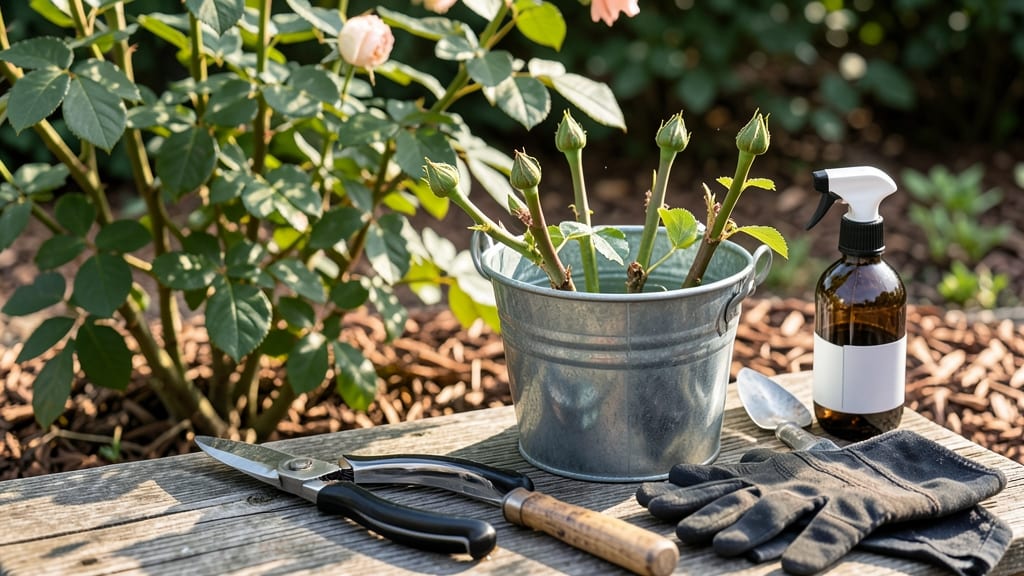
Your rose bush deserves a fresh start. ✂️ Cutting a rose bush for replanting isn't just about trimming—it's about giving your plant the chance to grow stronger roots and lush new growth.
I've learned the hard way that proper pruning makes all the difference between a bush that struggles and one that thrives after being moved.
The best time to prune for replanting is in early spring before new growth begins, or in late winter when the plant is still dormant. You'll need sharp bypass pruners, a clean saw for thicker stems, and rubbing alcohol to sterilize your tools between cuts.
The goal is to reduce the bush by about one-third while keeping the structure balanced—this helps minimize stress during transplanting.
What you'll end up with is a healthier, more vigorous rose bush that establishes faster in its new location. The cuts you make now encourage stronger root development, and the new growth that follows will be more resistant to disease.
Plus, you'll avoid the shock many gardeners experience when they replant without proper pruning preparation.
Whether you're dividing a crowded rose bush or moving it to a sunnier spot, this method works for all varieties. The key is patience—give your rose bush 4-6 weeks of recovery time before expecting it to bounce back with full force. Let's get those pruners ready!
📚 In This Guide
- What you need
- Instructions
- Tips and common mistakes
- Wrapping up and next steps
What you need
Before you grab those pruners, let’s make sure you’ve got everything you need to tackle this task like a pro! Gathering the right tools and materials will not only make the job smoother but also help your rose bush thrive after replanting. Here’s your
Step-by-step instructions for pruning a rose bush before replanting
Here’s how I prep a rose bush for replanting—cutting back just right to encourage stronger roots and lusher regrowth.
✂️ Step 1: Time the Pruning for Best Results
Prune your rose bush 4-6 weeks before replanting to give it time to heal and form new growth. I always do this in late winter or early spring, just before buds swell but before new shoots appear. This timing lets the plant focus energy on root development rather than foliage.
If you’re replanting in summer, prune 6-8 weeks ahead to avoid stress during hot weather. Watch for the first pink buds—that’s your signal to hold off. Pruning too early means wasted energy; too late means shock before transplanting.
✂️ Step 2: Cut Back Stems to the Right Height
Use clean, sharp pruners to make 45-degree cuts just above an outward-facing bud. For most roses, I trim back one-third to one-half of the plant’s height. This removes dead or weak growth while leaving enough foliage for photosynthesis during recovery.
Focus on cutting just above a bud that’s facing outward—this encourages branches to grow away from the center, improving airflow. Avoid leaving stubs; a clean cut prevents disease. If a stem is completely dead (no green inside when snapped), cut it all the way to the base.
✂️ Step 3: Remove Crowded or Damaged Canes
Look for crossing branches or canes growing inward—they rub against each other, creating wounds that invite pests. Snip these out completely at the base. Thin the center of the bush to improve airflow, which reduces humidity-related diseases like black spot.
Also remove any weak, thin, or spindly stems—they won’t support new growth well. Aim to leave 3-5 strong, outward-facing canes per plant. You’ll know you’ve done it right when sunlight can reach the center of the bush without obstruction.
💧 Step 4: Water and Fertilize for Recovery
After pruning, water deeply to help the plant recover. I give mine 1-2 inches of water over the root zone, letting it soak in slowly. Avoid wetting the leaves to prevent fungal issues. For the next 4-6 weeks, keep soil consistently moist but not soggy.
Apply a balanced fertilizer (like 10-10-10) 2-3 weeks after pruning to support root and shoot growth. I use half the recommended dose—roses are sensitive to over-fertilizing early on. Watch for new pink buds forming; that’s your sign the plant is healing well.
☀️ Step 5: Prepare for Replanting
2-3 weeks before replanting, gradually reduce watering to toughen the roots. This helps prevent transplant shock. Choose a partly sunny spot with well-draining soil—roses hate soggy feet. Dig the new hole twice as wide as the root ball but only as deep.
When replanting, loosen the roots slightly if they’re circling, then place the bush in the hole so the graft union (the bump near the base) sits 1-2 inches above soil level. Backfill with native soil, water again, and add 2-3 inches of mulch to retain moisture. Avoid heavy mulch right against the stem—it can cause rot.
Tips & tricks for pruning a rose bush before replanting
Real talk: Pruning a rose bush isn't just about cutting branches—it's about giving your plant a fresh start. Here's what I've learned to make the process smoother and more effective.
Timing is Everything: I've pruned roses in both spring and fall, but late winter or early spring—just before new growth begins—is ideal. This timing gives your rose the full growing season to recover and establish strong roots before winter hits again. If you must prune in summer, do it early in the season to avoid stressing the plant during its peak flowering period.
Tool Prep Matters: Before you even touch the plant, sterilize your pruners with rubbing alcohol or a bleach solution. This prevents spreading disease between cuts. I also like to sharpen my pruners regularly—dull blades crush stems instead of making clean cuts, which invites infections. A quick test: If your blade doesn't glide through a piece of paper, it needs sharpening.
The 45-Degree Angle Secret: When making your cuts in Step 2, that 45-degree angle isn't just for show—it helps water run off the cut instead of pooling and causing rot. Make sure to cut just above an outward-facing bud (about ¼ inch up), which gives you a better chance of getting new growth in the direction you want. I always visualize the bud as an arrow pointing where I want the new branch to grow.
Pro Tips for Cut A Rose Bush To Replant
- Real talk: Pruning a rose bush isn't just about cutting branches—it's about giving your plant a fresh start. Here's w...
- Timing is Everything: I've pruned roses in both spring and fall, but late winter or early spring—just before new grow...
- Tool Prep Matters: Before you even touch the plant, sterilize your pruners with rubbing alcohol or a bleach solution....
Frequently asked questions
Got questions about cutting and replanting your rose bush? You’re not alone! Here are some of the most common concerns—and their answers—to help you prune like a pro.
When is the best time to cut a rose bush for replanting?
The ideal time is late winter or early spring, just before new growth begins. This gives the plant time to recover before summer heat. Avoid pruning in fall, as it can leave the bush vulnerable to disease. For tropical roses, prune in late winter too, but adjust for your local climate.
How far back should I cut the stems when replanting?
Cut stems back to about one-third to one-half of their height, or down to a strong outward-facing bud. Remove dead, diseased, or weak stems entirely. For older bushes, you can prune harder—even down to 12–18 inches—to encourage vigorous regrowth. Always use clean, sharp shears to avoid tearing the wood.
Can I replant a rose bush in the same spot after pruning?
While possible, it’s often better to move it to a new location to prevent soil depletion or disease buildup. If replanting in the same spot, amend the soil with compost and ensure proper drainage. Roses thrive in well-draining soil with plenty of organic matter—so give them a fresh start when possible!
What should I do if my rose bush doesn’t regrow after pruning?
Don’t panic! Check for root health—gentle tugs on the plant can reveal if roots are still alive. If the soil is waterlogged or compacted, improve drainage. Apply a balanced fertilizer (like 10-10-10) and mulch to retain moisture. Patience is key—some roses take 4–6 weeks to show new growth. If no signs appear after 8 weeks, reassess for pests or disease.
Do I need to treat the cuts after pruning?
No need for pruning sealants like wax or paint—modern research shows they can trap moisture and harm the plant. Simply make clean cuts at a 45-degree angle just above a bud. If your area has fungal issues, lightly dust cuts with sulfur or copper fungicide, but healthy roses rarely need this step.
Wrapping up and next steps
Pruning your rose bush for replanting might seem daunting, but with the right tools and techniques, you’ll set the stage for vibrant blooms and robust growth! 🌸 By following these steps—cleaning your tools, cutting at the right angles, and nurturing your plant afterward—you’re not just trimming; you’re giving your rose a fresh start.
Now that you’re equipped with the know-how, roll up your sleeves and enjoy the process—your garden will thank you!
Ready to replant? Mark your calendar for the best time to move your rose bush, and watch as it thrives in its new home! 🌱