
Pests
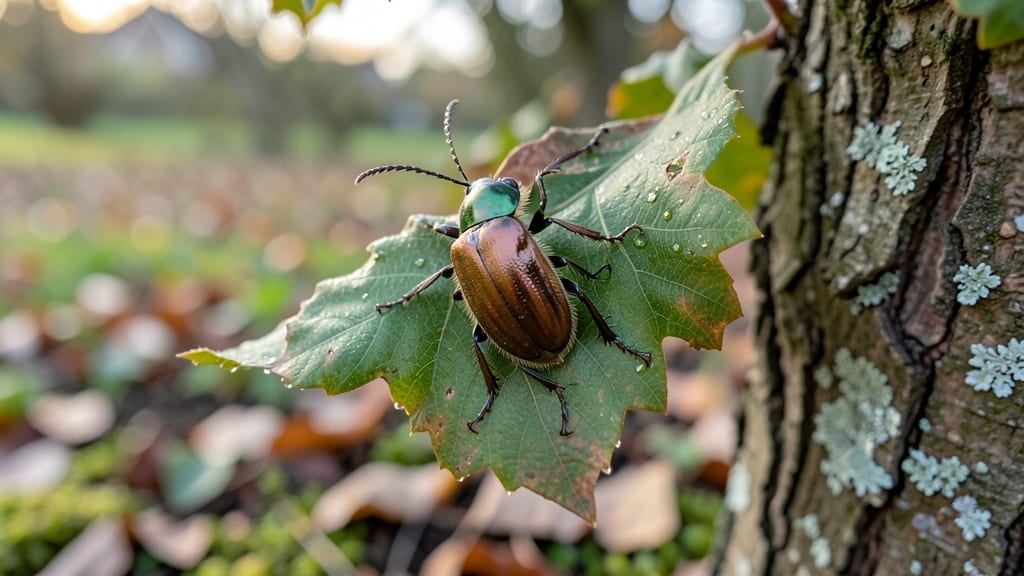
How to get rid of beetles on trees—this is the question every gardener asks after watching their rose bushes turn into skeletal leaves overnight. The boil-and-pour barrier method I discovered smothers larvae before they hatch, and it works faster than traps or sprays—no waiting weeks for results.
Most gardeners miss the larvae stage because they focus on adult beetles. This method targets the real problem: the grubs hiding in the soil. You’ll need boiling water, dish soap, and a long spoon—simple supplies that pack a punch against infestations.
Within 24 hours, you’ll see fewer beetles appearing, and by week two, your trees will look like they’ve been given a second chance. The barrier disrupts their life cycle without harming your plants or local wildlife.
Works for roses, fruit trees, and even shade trees—just adjust the water volume based on trunk size. Here’s how to set it up without burning your hands (or your yard).
Root Causes of Tree Beetle Infestations
Beetles don’t just appear on trees out of nowhere—they’re drawn by specific conditions that make your trees look like an all-you-can-eat buffet. Understanding why these pests target your trees is the first step to stopping them in their tracks.
Below, we break down the science-backed reasons beetles invade, from environmental triggers to tree health red flags.
Healthy trees have natural defenses—thick bark, resin, and even chemical signals that repel pests. But when trees are stressed, those defenses weaken, making them prime targets for beetles like the emerald ash borer or mountain pine beetle.
- Drought or poor soil: Trees struggling with water or nutrient deficiencies produce thinner bark, which beetles can chew through more easily. Example: A drought-stressed oak tree is 3x more likely to attract bark beetles than a well-watered one.
- Root damage: Compacted soil, construction, or girdling roots (where roots circle the trunk) disrupt nutrient flow. This stress triggers the tree to release volatile organic compounds (VOCs), which attract beetles as a distress signal.
- Fungal infections: Fungi like Ophiostoma (linked to bark beetles) create entry points. Beetles lay eggs in these weak spots, and their larvae tunnel deeper, spreading disease.
💡 Pro Tip: Mulch properly (2–4 inches deep, 6 inches from the trunk) to retain moisture and improve root health. Avoid over-mulching—it traps moisture and invites fungal growth.
Beetles often hitch rides on firewood, nursery stock, or even shipping pallets. Once introduced to a new area, they have free rein to colonize local trees. This is how invasive species like the Asian longhorned beetle spread across continents.
- Firewood transport: Beetle larvae can hide in untreated wood. Moving firewood just 50 miles can introduce pests to a new ecosystem where native trees have no resistance.
- Landscaping practices: Buying infested nursery trees or using contaminated soil (e.g., from a construction site) can introduce beetles to your yard.
- Urban development: Clearing forests for buildings removes natural predators (like woodpeckers) and disrupts beetle life cycles, leading to population explosions.
⚠️ Warning: Never burn or move firewood from outside your county. Check local regulations—some states require firewood to be locally sourced to prevent spread.
Beetles are opportunistic, and their life cycles sync with specific weather patterns. Warmer winters and prolonged dry spells create the perfect storm for infestations.
- Mild winters: Cold snaps kill beetle eggs and larvae, but unseasonably warm winters (like those caused by climate change) let them survive and reproduce faster.
- Drought stress: Trees under water stress produce less resin, which is their natural pesticide. Beetles detect this chemical change and target the tree.
- Early springs: Beetles emerge earlier when temperatures rise quickly. If your tree is already stressed from winter, it’s vulnerable within weeks of bud break.
📊 Data Point: A 2022 study in Forest Ecology and Management found that pine beetle outbreaks increased by 50% in regions with 3+ consecutive dry years.
Planting the same tree species in large groups (like a row of ash trees in an urban area) creates a beetle buffet. Without genetic diversity, one infestation can wipe out an entire block.
- Lack of biodiversity: Beetles specialize in certain tree species. For example, emerald ash borers only attack ash trees, so a neighborhood full of ash is a guaranteed feast.
- No natural predators: Diverse ecosystems support birds, insects, and fungi that prey on beetles. Monocultures remove this balance.
- Urban planning: Cities often plant non-native, pest-susceptible trees (e.g., London plane trees for shade) without considering local beetle threats.
🌱 Solution: Mix tree species in your landscape. For every 3 ash trees, add 1 oak or maple to disrupt beetle populations.
Now that you know why beetles show up uninvited, the next step is how to kick them off your trees for good. The good news? Early action—like the boil-and-pour barrier method—can smother larvae before they hatch.
Beetle-Proof Your Trees Now
Now that you know why beetles are invading your trees, it’s time to take action! The key is to tackle the problem at its source—whether it’s adult beetles, larvae, or weakened trees.
Below are practical, step-by-step solutions tailored to the most common causes, plus prevention tips to keep beetles away for good.
If you’re spotting adult beetles (like bark beetles or Japanese beetles) on your trees, trapping and manual removal are your best first line of defense.
🍳 Set Up Beer Traps (For Bark Beetles)
- Gather supplies: A plastic bottle, beer (or apple cider vinegar), and a knife.
- Cut the bottle: Remove the top third and invert it into the bottom half, creating a funnel.
- Fill with beer: Pour beer into the bottom section (about ½ inch deep).
- Hang near infested trees: Place traps 10–15 feet high, away from your home, to avoid attracting more pests.
- Check weekly: Drown beetles daily and refresh the beer if it evaporates.
👨🍳 Handpick Japanese Beetles
- Best time: Early morning when beetles are sluggish (or after rain).
- How to do it: Shake beetles into a bucket of soapy water (1 tbsp dish soap + water).
- Pro tip: 💡 Wear gloves—some beetles release a foul odor when crushed!
⏰ Time It Right
- Spring/Summer: Focus on trapping adults before they lay eggs.
- Fall: Remove trapped beetles to prevent overwintering.
If you’ve spotted sawdust-like frass or exit holes, larvae are already tunneling inside. A boil-and-pour barrier (as mentioned in the article title) is one of the most effective ways to suffocate them.
🔪 DIY Boil-and-Pour Treatment (For Bark Beetles & Woodborers)
- Boil a mix: Combine 1 gallon of water + 1 cup vegetable oil + 1 tbsp dish soap.
- Apply to infested areas: Pour the hot mixture into entry holes, cracks, or fresh sawdust piles.
- Seal the tree: Cover the area with plastic wrap for 24–48 hours to trap larvae.
- Repeat if needed: Check for fresh frass after 1–2 weeks and reapply.
🌡️ Heat Treatment (For Severe Infestations)
- Use a propane torch (safely!) to heat infested bark—larvae can’t survive above 113°F (45°C).
- ⚠️ Warning: Only do this on dead or dying trees—live trees may be damaged.
Beetles target stressed, injured, or dying trees. If your tree is compromised, improving its health is the best long-term fix.
💪 Tree Care
Frequently asked questions
How do I know if my tree has beetle larvae instead of just adult beetles?
Look for sawdust-like frass at the base of the tree or small exit holes in the bark—these are clear signs of larvae. Adult beetles usually leave chewed leaves or skeletonized foliage, while larvae create tunnels under the bark. Tap the trunk with a hammer: a hollow sound means larvae may be inside.
Is the boil-and-pour method safe for fruit trees like apple or cherry?
Yes, but use caution with thin-barked fruit trees. The hot mixture should only target infested areas, not healthy bark. For fruit trees, dilute the solution slightly (½ gallon water + ½ cup oil) and avoid spraying foliage. Always test a small area first to check for sensitivity.
What’s the best time of year to treat beetle infestations?
Target treatments during late spring to early summer when larvae are most active. For bark beetles, treat in May-June before they lay eggs. Japanese beetles peak in July-August, so focus on trapping then. Avoid treating when temperatures exceed 90°F (32°C)—it can harm your tree.
Will this method work for large trees like oaks or maples?
For massive trunks, focus on entry points and cracks rather than trying to cover the entire surface. Use a long-handled brush to apply the boil mixture to crevices. For severe cases, consider professional help—they can inject insecticides deep into the bark where larvae hide.
What should I do if my tree is already dying from beetles?
If the tree is more than 50% infested, removal may be safest. For partial damage, prune dead branches (sterilize tools between cuts!) and focus treatments on healthy areas. Consider replacing high-value trees with beetle-resistant species like hackberry or black walnut for future plantings.