
Pests
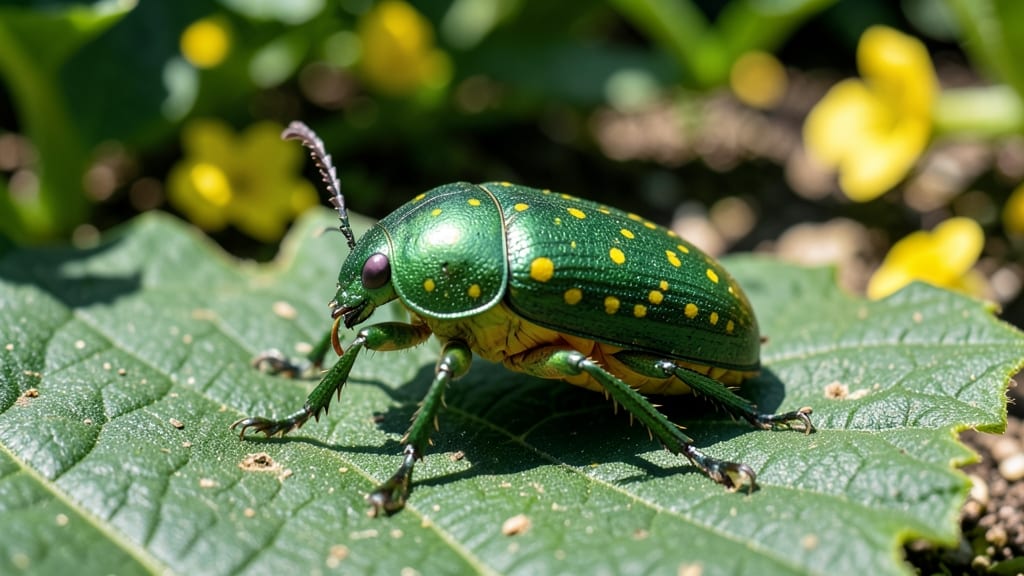
Here’s how to get rid of those tiny black-and-yellow striped beetles wreaking havoc on your cucumbers. 🌱 I learned the hard way that spotted cucumber beetles don’t just chew leaves—they spread bacterial wilt, a death sentence for your vines. The key to saving your harvest? A neem oil spray that repels them for weeks while protecting your plants.
Neem oil isn’t just another garden spray—it disrupts their feeding cycle and mating signals. You’ll need 1 tablespoon of neem oil, 1 teaspoon of mild liquid soap, and 1 quart of water, mixed and sprayed in the early morning when beetles are least active.
The smell is strong, but it works where other sprays fail.
Within 24-48 hours, you’ll see them vanish, and your plants will start recovering. The real magic? This spray lasts 3-4 weeks with reapplication, giving your cucumbers the head start they need. Plus, it’s safe for bees once fully dried—just avoid spraying when flowers are open.
For stubborn infestations, combine this with row covers or yellow sticky traps to break their cycle. Early intervention is everything—don’t wait until your vines wilt. The sooner you act, the sooner you’ll be back to harvesting crisp cucumbers instead of battling beetles.
Root Causes of Beetle Infestations
Spotted cucumber beetles (Acalymma vittatum and Diabrotica undecimpunctata) don’t just show up out of nowhere—they’re drawn to your garden by specific conditions that make your plants irresistible. Understanding why these pests target your cucumbers, squash, and melons is the first step to stopping them before they wreak havoc.
Here’s a breakdown of the key factors behind their unwelcome visits:
Spotted cucumber beetles have a very specific menu: they only feed on plants in the Cucurbitaceae family, which includes:
- Cucumbers
- Squash (zucchini, yellow squash)
- Melons (watermelon, cantaloupe, honeydew)
- Pumpkins
- Gourds
These plants produce volatile organic compounds (VOCs)—natural chemicals that signal to beetles, “Free meal here!” The beetles use their antennae to detect these scents from up to 30 feet away.
If you’ve ever grown these crops, you’ve essentially hung out a neon “Dinner’s Served” sign.
Why it matters: Even if your main garden is beetle-free, a single cucumber plant in your yard can act as a beacon, luring beetles to your entire patch. Adults lay eggs in the soil near these plants, ensuring the next generation will hatch ready to feast.
Spotted cucumber beetles are opportunistic—they time their life cycle to exploit the perfect conditions for their larvae (grubs) to thrive. Here’s how soil conditions play a role:
| Factor | Why It Attracts Beetles | Beetle’s Reaction |
|---|---|---|
| Warm soil (60–85°F) | Larvae develop faster in heat, and adults seek out warm pockets to lay eggs. | Females dig 1/4-inch deep to deposit eggs near plant roots. |
| Moist, well-drained soil | Larvae need hydration to survive; soggy soil drowns them, but slightly damp soil is ideal. | Eggs hatch in 3–10 days into ravenous grubs that chew roots. |
| Freshly tilled or disturbed soil | Loose soil makes it easier for females to burrow and lay eggs. | More egg-laying sites = more grubs next season. |
Pro tip: If your soil stays too wet (like in clay or poorly drained areas), beetles may avoid it—but their larvae can still survive in micro-environments near plant roots. The key is consistent moisture, not sogginess.
Healthy plants have natural defenses against pests, but when they’re stressed, those defenses weaken—and spotted cucumber beetles love a struggling host. Common stressors include:
- Nutrient deficiencies (e.g., lack of nitrogen, potassium, or magnesium)
- Water stress (drought or overwatering)
- Competition from weeds (stealing nutrients and space)
- Disease or fungal infections (e.g., powdery mildew)
- Physical damage (e.g., hail, poor pruning)
When plants are weak, they produce less sap (which can deter beetles) and emit different chemical signals that actually attract pests. Beetles also target plants with:
- Young, tender leaves (easier to chew)
- Flowers (adults feed on pollen for energy)
- New growth (high in sugars and water)
Why it matters: A beetle-infested plant can spread bacterial wilt (a deadly disease they carry) to nearby healthy plants. Once one plant is compromised, the whole garden becomes vulnerable.
Spotted cucumber beetles don’t just target your prized veggies—they also thrive in wild cucurbits, which are essentially their “fast food” option. These include:
- Wild gourds
- Bitter melon (a relative of cucumbers)
- Buffalo gourd (a common weed in the South)
- Morning glory (sometimes confused for edible plants)
Why does this matter? Weeds act as beetle nurseries. Here’s how:
- Beetles feed on these plants year-round, building up populations.
- They lay eggs in the soil near weeds, ensuring a steady supply of grubs.
- Adults migrate to your garden when your plants start flowering (their favorite snack time!).
Actionable insight: If your garden is near fields, roadsides, or overgrown lots with wild cucurbits, beetles will always find their way to you. Removing these “beetle buffets” can cut infestations by 50% or more.
Key takeaway: Spotted cucumber beetles don’t invade randomly—they’re following a perfect storm of scent, soil, plant health, and habitat. By addressing these root causes, you’ll make your garden far less appealing to them. The next section covers how to disrupt their life cycle before they become a full-blown problem.
Quick Fixes for Spotted Cucumber Beetles
Spotted cucumber beetles may seem like a stubborn pest, but with the right strategies, you can reclaim your garden in no time. Below are practical, step-by-step solutions tailored to the root causes of infestations—from early detection to long-term prevention.
Whether you’re dealing with a sudden outbreak or want to avoid future visits, these methods will help you protect your plants and keep your garden thriving.
Prevention starts with action. Spotted cucumber beetles are most active in the morning or on warm, sunny days—perfect times for manual removal.
- 👨🍳 Grab a bucket of soapy water (1 tbsp dish soap per gallon of water) and inspect plants for adults or larvae.
- 🔪 Use gloves (these beetles can carry bacterial wilt!) and drop them into the soapy water to drown them.
- 🕰️ Repeat every 2–3 days during peak beetle activity (spring to early summer).
- 💡 Pro Tip: Check under leaves, on stems, and near flowers—these are their favorite hiding spots.
Why it works: Removing beetles early reduces egg-laying and prevents larval damage to roots.
If beetles persist, neem oil, kaolin clay, or diatomaceous earth can create a protective barrier without harsh chemicals.
🍳 Homemade Neem Oil Spray (Best for Long-Term Defense)
Neem oil disrupts beetle feeding and reproduction. Here’s how to make it:
| Ingredient | Amount | Purpose |
|---|---|---|
| Neem oil | 1 tbsp | Active repellent |
| Dish soap (mild) | ½ tsp | Helps oil stick to beetles |
| Water | 1 quart (32 oz) | Base for spray |
| Optional: Garlic or cayenne pepper | 1 tsp (crushed) | Extra repellent boost |
👨🍳 Steps:
- Mix all ingredients in a spray bottle.
- 🌿 Spray thoroughly on leaves, stems, and soil (especially around the base of plants).
- ⏰ Reapply every 5–7 days or after rain.
- 🌡️ Best applied in the evening to avoid harming bees.
✨ Why it works: Neem oil coats beetles, clogs their respiratory systems, and deters egg-laying for weeks.
🌡️ Kaolin Clay Barrier (Physical Shield)
Kaolin clay (like Surround WP) creates a white, dusty film that confuses beetles and reflects sunlight, making plants less appealing.
- 🍳 Mix 1–2 tbsp kaolin clay per gallon of water and stir well.
- 🌿 Spray on plants, focusing on young leaves and stems.
- ⏰ Reapply every 7–10 days or after rain.
- 💡 Pro Tip: Works well on cucumbers, squash, and melons—just avoid spraying flowers if bees are active.
✨ Why it works: Beetles avoid treated surfaces, and the clay also reduces fungal diseases.
🔥 Diatomaceous Earth (DE) Dust (For Soil & Heavy Infestations)
Food-grade diatomaceous earth is a non-toxic powder that kills beetles by dehydrating them.
- 👨🍳 Lightly dust DE around the base of plants and in garden beds (avoid over-applying—it can harm beneficial insects).
- 🌧️ Reapply after watering or rain (DE loses effectiveness when wet).
- ⚠️ Warning: Wear a mask when applying to avoid inhaling fine particles.
✨ Why it works: DE’s microscopic particles cut beetle exoskeletons, leading to rapid dehydration.
For organic growers or severe infestations, row covers or collars can block beetles entirely.
🍳 Floating Row Covers (Best for Seedlings)
- 🛡️ Cover young plants with fine mesh (1/4-inch or smaller) before beetles emerge in spring.
- ⏰ Remove covers when plants flower to allow pollination (or hand-pollinate with a paintbrush).
- 💡 Pro Tip: Secure edges with soil or bricks to prevent beetles from crawling underneath.
🥬 Collars for Seedlings (Protect New Growth)
- 🍳 Cut 4-inch-wide strips from cardboard or plastic and wrap them around seedling stems.
- 🔪 Bury the bottom 1 inch into the soil to block beetles from reaching young plants.
- ⏰ Remove once plants are established (about 3–4 weeks old).
✨ Why it works: Beetles can’t chew through barriers, giving plants a head start before infestations worsen.
Once you’ve eliminated existing beetles, keep them away for good with these proactive steps:
- 🌿 Plant trap crops like radishes or nasturtiums to lure beetles away from cucumbers.
- 🌱 Rotate crops annually to disrupt beetle life cycles (they overwinter in soil).
- 🌞 Encourage natural predators like ladybugs, lacewings, and parasitic wasps by planting dill, fennel, or marigolds.
- 🌡️ Water plants in the morning—wet foliage helps wash away eggs and attracts beneficial insects.
- 🔥 Clean up garden debris in fall to remove overwintering beetles and eggs.
💡 Pro Tip: Interplant cucumbers with herbs like basil or thyme—beetles dislike the strong scents!
If neem oil, row covers, and handpicking aren’t enough, consider:
- 🐜 Beneficial nematodes (Heterorhabditis bacteriophora) to target larvae in the soil.
- 🐝 Pyrethrin-based sprays (derived from chrysanthemums) for severe outbreaks (use late in the day to protect bees).
- 🚨 Contact your local cooperative extension for region-specific recommendations.
Final Thought: Spotted cucumber beetles are annoying but beatable—combine early action, natural repellents, and smart gardening for a beetle-free harvest. Start with neem oil and row covers, then layer in traps and predators for long-lasting protection. Your cucumbers (and sanity) will thank you! 🥒🌱
Frequently asked questions
How do I know if my plants have spotted cucumber beetles?
Look for tiny black-and-yellow striped beetles (about 1/4-inch long) on leaves, stems, or flowers. Check for chewed leaves with jagged edges and silver streaks on cucumber vines (signs of bacterial wilt). Larvae appear as white, worm-like grubs in soil near roots.
Can neem oil harm my plants or beneficial insects?
Neem oil is safe for most plants when used correctly, but it can harm bees and beneficial insects if sprayed directly on flowers. Apply in the evening when bees are less active, and avoid spraying open blooms. Always test a small leaf area first to check for sensitivity.
Why do I keep getting infestations even after treating them?
Beetles often return because their larvae survive in soil and new adults migrate from nearby wild plants. To break the cycle, rotate crops annually, remove garden debris in fall, and plant trap crops like radishes to lure them away from cucumbers.
What’s the best time of day to apply treatments?
The early morning or late evening are ideal because beetles are less active and temperatures are cooler. This reduces stress on plants and minimizes harm to beneficial insects. Avoid spraying during peak sun hours (10 AM–4 PM) when UV rays can break down neem oil.
How long does it take to see results from neem oil?
You should notice a reduction in beetles within 24-48 hours of application, but full protection takes 3-4 weeks of consistent use. For severe infestations, combine neem oil with row covers or handpicking for faster results. Reapply after rain or every 5-7 days.