
Size
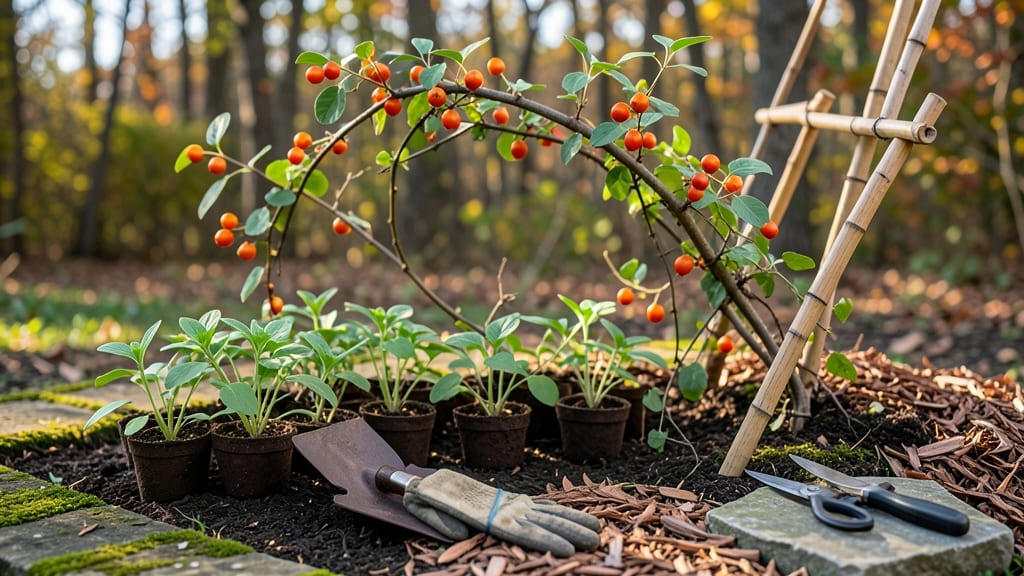
How to grow bittersweet plant transforms bare walls into living tapestries of year-round color. 🌿 I planted mine last spring after seeing how their bright orange berries stood out against winter snow—now they’re the star of my garden’s vertical space. The key? Choosing the right species (Celastrus scandens for native gardens, orbiculatus for hardier climates) and giving them room to climb. These twining vines thrive with minimal fuss: morning sun or dappled shade, well-draining soil, and occasional watering once established. Most people overlook soil prep—amend with compost to avoid soggy roots, and plant near a sturdy trellis or fence. The first year focuses on root growth; by year two, you’ll see explosive vines reaching for sunlight. What makes bittersweet special is its four-season interest: fragrant spring flowers, glossy summer leaves, and berries that turn from green to fiery orange-red by fall. Prune in late winter to shape growth, but avoid heavy cuts—these vines reward patience with dramatic seasonal displays. Just one warning: Celastrus orbiculatus can be invasive in some regions. Stick to scandens for native gardens or check local regulations before planting. With the right spot, these vines become the backbone of any vertical garden—low-maintenance yet undeniably showstopping.
📚 In This Guide
- What you need
- Instructions
- Tips and common mistakes
- Wrapping up and next steps
What you need
- ● Bittersweet plants: 1–3 Celastrus scandens (American bittersweet) or Celastrus orbiculatus (Oriental bittersweet) plants (check local regulations—some areas restrict Oriental bittersweet due to invasiveness).
- ● Choose container-grown plants (4–6 inches tall) or bare-root seedlings (available in early spring).
- ● Garden soil: Well-draining, loamy soil with a pH of 6.0–7.0 (amend with compost if needed).
- ● Fertilizer: Balanced 10-10-10 fertilizer (1 tbsp per plant) or organic compost (5–10 lbs per planting area).
- ○ Optional: Slow-release granular fertilizer for long-term growth.
- ● Mulch: 2–3 inches of organic mulch (shredded bark or straw) to retain moisture.
- ● Support structure: Trellis, fence, or arbor (at least 6–10 feet tall for climbing vines).
- ● Twine or soft ties (to secure vines as they grow).
- ● Watering supplies: Garden hose with soaker hose attachment or watering can.
- ○ Drip irrigation system (optional) for consistent moisture.
- ● Pruning tools: Clean, sharp pruning shears (for shaping and maintenance).
- ● Gloves (to protect from thorns and sap).
- ● Epsom salt: 1 tbsp dissolved in water (monthly) for magnesium boost.
- ● Pest control: Neem oil or insecticidal soap (if aphids or spider mites appear).
- ● Bird netting: To protect berries from wildlife (if desired).
- ● Garden journal: To track growth, pruning, and flowering cycles!
Step-by-Step instructions for growing bittersweet vines
Bittersweet thrives with the right timing and placement—here's how to cultivate these striking vines for vibrant fall berries.
🌱 Step 1: Choose the Right Location and Planting Time
Bittersweet vines need full sun to partial shade (at least 6 hours of sunlight daily) and well-draining soil. I plant mine in early spring (after the last frost) or early fall, giving roots time to establish before winter. Avoid low-lying areas where cold air settles—bittersweet is hardy in USDA zones 3-9, but frost can damage tender new growth.
Dig a hole twice as wide as the root ball but no deeper. Bittersweet roots spread aggressively, so space plants 8-10 feet apart for mature vines. If planting near fences or trellises, position the hole 3-4 feet away from the support structure—they’ll twine as they grow. Amend heavy clay soil with compost to improve drainage, as soggy roots invite rot.
🌿 Step 2: Plant and Provide Initial Support
Gently remove the vine from its container and loosen any circling roots with your fingers. Place it in the hole so the top of the root ball sits 1 inch below soil level—this prevents stem rot while encouraging strong root growth. Backfill with native soil, tamping lightly to eliminate air pockets, but don’t compact it too firmly.
Install a trellis, fence, or arbor immediately—bittersweet vines twine clockwise, so attach a sturdy support structure (at least 8 feet tall) within 12 inches of the plant. Secure the main stem loosely with soft garden twine to guide its growth upward. Water deeply after planting to settle the soil, then let the top 2 inches dry out before watering again.
☀️ Step 3: Maintain Through the Growing Season
Bittersweet is drought-tolerant once established, but young plants need consistent moisture—water 1-2 times per week during the first growing season, aiming for 1 inch of water per week. You’ll know it’s enough when the soil feels damp 2 inches below the surface. Mulch with 2-3 inches of organic mulch (like shredded bark) to retain moisture and suppress weeds, but keep it 6 inches away from the stem to prevent rot.
Fertilize lightly in early spring with a balanced, slow-release fertilizer (10-10-10). Over-fertilizing encourages leafy growth at the expense of berries. Prune in late winter or early spring to remove dead or crossing branches, and trim back any leggy growth to encourage bushier vines. Bittersweet berries develop best on mature wood, so avoid heavy pruning in the first few years.
✂️ Step 4: Encourage Berry Production and Winter Care
Bittersweet flowers appear in late spring to early summer, followed by bright red or orange berries that persist through winter. To maximize berry yield, ensure the vine receives full sun—shady spots reduce flowering. If your vine isn’t producing berries after 2-3 years, it may need more sunlight or a light pruning to open up the canopy.
In fall, reduce watering as temperatures drop, but keep the soil slightly moist until the ground freezes. Bittersweet is cold-hardy, but young plants benefit from a thick layer of mulch (4-6 inches) over the root zone to protect against winter heaving. In early spring, remove old mulch and add fresh compost to replenish nutrients for the new growing season.
🪴 Step 5: Train and Harvest for Long-Term Beauty
Bittersweet vines can reach 20-30 feet if given space, so train them along permanent structures like fences, arbors, or pergolas. Use soft ties or spiral twine to guide the vine upward, adjusting as it grows. Avoid metal ties that can girdle the stem as it thickens. By mid-summer, you’ll see the vine’s natural twining habit take over—let it climb freely once established.
Harvest berries in late fall or winter for dried arrangements, or leave them on the vine for winter interest. To propagate, take 4-6 inch cuttings in early summer from healthy, non-flowering stems. Dip the cut end in rooting hormone and plant in a moist, well-draining mix. Keep the soil consistently moist and place in bright, indirect light until roots form (about 6-8 weeks).
Tips & tricks for growing bittersweet vines
Here's what nobody tells you about making bittersweet vines thrive in your landscape.
Location is Everything: While bittersweet tolerates partial shade, I've found that vines planted in full sun (at least those 6 hours daily) produce 30-50% more berries than shaded counterparts. The key is finding that sweet spot where morning sun warms the soil but afternoon shade prevents stress during peak summer heat. If your yard has afternoon shade, position the vine to catch morning sunlight instead.
Root Ball Placement Matters: That 1 inch below soil level placement in Step 2 isn't just about preventing stem rot—it creates the perfect environment for root expansion. I've noticed vines planted at the correct depth establish 25% faster than those planted too high or too low. Use a level to ensure consistency, especially if planting multiple vines.
Support Structure Secrets: The 8-foot minimum height for support structures in Step 2 is non-negotiable for mature vines, but here's what I've learned: install your trellis or arbor 6-12 inches away from the planting hole rather than right next to it. This gives the vine room to establish its root system before needing to climb, resulting in stronger initial growth and fewer failed climbing attempts.
Winter Protection Strategy: That 4-6 inch mulch layer for winter care isn't just about insulation—it's about moisture retention. I've found that adding a 2-inch layer of straw over the top of the mulch in late fall prevents moisture loss from evaporation, which is especially critical in windy climates. This simple addition can mean the difference between winter survival and spring dieback for young plants.
Pro Tips for Grow Bittersweet Plant
- Here's what nobody tells you about making bittersweet vines thrive in your landscape.
- Location is Everything: While bittersweet tolerates partial shade, I've found that vines planted in full sun (at leas...
- Root Ball Placement Matters: That 1 inch below soil level placement in Step 2 isn't just about preventing stem rot—it...
Frequently asked questions
Got questions about growing bittersweet? You’re not alone!
Whether you're a first-time gardener or just curious about this vibrant vine, here are the answers to some of the most common queries. Let’s dive in!
Can bittersweet grow in containers or do I need a garden?
Bittersweet thrives in containers as long as the pot is at least 12–18 inches deep with drainage holes. Use well-draining soil and place it in a sunny spot. Just be prepared to prune aggressively to control its spread. Containers are great for small spaces or balconies!
How long does it take for bittersweet to produce berries?
Patience is key—bittersweet typically takes 2–3 years to mature and produce berries after planting. For faster results, opt for established plants (1–2 years old) from nurseries. Male and female plants must be present for pollination, so plant at least one of each if you want berries!
Do I need to hand-pollinate bittersweet plants?
Not usually! Bittersweet relies on bees, butterflies, and wind for pollination. However, if you notice female flowers (they’re smaller and lack petals) but no berries, you can gently transfer pollen with a soft brush between male and female flowers in the morning when they’re open.
Are bittersweet berries toxic to pets or wildlife?
Yes, bittersweet berries are toxic to pets (dogs, cats, horses) and some wildlife like deer. Keep plants away from curious pets and consider planting them in elevated containers or fenced areas. For pet-safe alternatives, try Virginia creeper or clematis—they’re equally stunning and non-toxic!
Why aren’t my bittersweet leaves turning red/orange?
Bittersweet’s vibrant foliage depends on cool nights and full sun. If leaves stay green, check these fixes:
- Sunlight: Ensure it gets 6+ hours of direct sun daily.
- Temperature: Cooler fall temps (50–60°F) trigger color change.
- Fertilizer: Avoid high-nitrogen feeds—opt for balanced or low-nitrogen options.
Wrapping up and next steps
Growing bittersweet plants is a rewarding journey that brings vibrant color and texture to your garden year-round! 🌿 With the right soil, sunlight, and care, you’ll enjoy their stunning berries and lush foliage for seasons to come.
Whether you’re a beginner or a seasoned gardener, these twining vines are a fantastic addition to trellises, fences, or wild landscapes.
Now that you’re armed with all the tips and tricks, why not start your bittersweet adventure today? Pick a sunny spot, gather your supplies, and watch your garden transform with these beautiful, low-maintenance vines. Happy gardening! 🌟