
Size
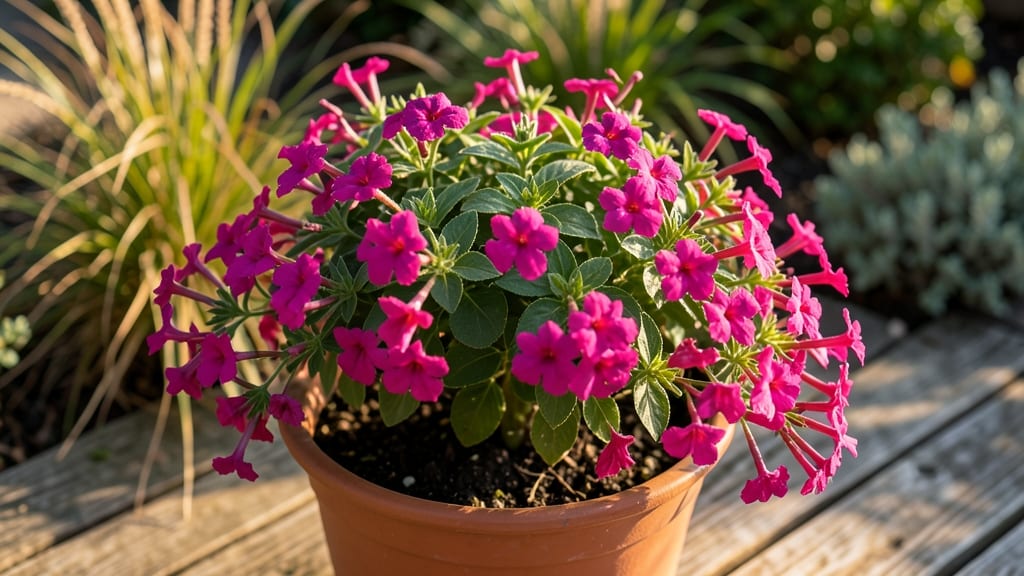
How to grow million bells transforms any space into a cascading purple waterfall. 🌿 I’ve grown them in hanging baskets, window boxes, and even as spillers in containers—each time, they outperform petunias with their nonstop blooms from spring to frost. The secret? Mimicking their natural tropical habits with just a few key adjustments.
Start with well-draining potting mix (they hate soggy roots) and a sunny spot with 6+ hours of direct light daily. Plant seeds indoors 8-10 weeks before last frost or buy transplants in spring—they’re heat-lovers and bolt easily if shocked.
Water consistently but let the top inch dry between drinks; their trailing stems need support, so weave them into baskets or trellises early.
Pruning is where the magic happens: pinch back leggy stems to encourage bushier growth and deadhead spent blooms weekly. The result? A dense, flowering curtain that repels pests naturally (deer and rabbits avoid them) and thrives even in partial shade if you keep them well-watered.
My baskets stay vibrant for 10+ weeks with this routine.
For year-round color, overwinter plants in a bright indoor spot or bring containers inside before frost. They’re surprisingly cold-tolerant if kept dry and may even rebloom lightly in spring.
The only real enemy is powdery mildew—prevent it with good airflow and avoid overhead watering. Trust me, once you grow these, you’ll never buy petunias again.
📚 In This Guide
- What you need
- Instructions
- Tips and common mistakes
- Wrapping up and next steps
What you need
- ● Million Bells Seeds or Plants: Choose from varieties like ‘Million Bells Purple,’ ‘Superbells,’ or ‘Trailing Million Bells.’ Start with 5–10 plants (or seeds) for a small bed, scaling up as needed.
- ● Well-Draining Potting Mix: 10–20 gallons (depending on container size). A blend of 50% peat moss or coco coir, 30% perlite, and 20% vermiculite works best.
- ● Containers or Garden Beds: Containers: 5–10 gallon pots (one per plant) with drainage holes. Opt for fabric grow bags or plastic pots for flexibility.
- ● Garden Beds: Full sun exposure (6+ hours daily) and loose, fertile soil. Amend with 2–3 inches of compost before planting.
- ● Fertilizer: A balanced, water-soluble fertilizer (10-10-10 or 20-20-20) for planting, then switch to a low-nitrogen, high-phosphorus formula (5-10-10) to encourage blooms. Use every 2–4 weeks during growing season.
- ● Watering Can or Drip Irrigation: Million Bells thrive on consistent moisture but hate soggy roots. A self-watering system or drip line is ideal.
- ● Pruning Shears: For trimming leggy stems or deadheading spent blooms (sterilize with rubbing alcohol between cuts!).
- ● Garden Gloves: Protect your hands from thorns (some varieties have mild ones) and dirt.
- ● Mulch: 1–2 inches of shredded bark or pine needles to retain moisture and suppress weeds.
- ● Grow Lights (Indoor Growing): A full-spectrum LED grow light (12–16 hours/day) if starting indoors or in low-light areas.
- ○ Support Structures: Optional for trailing varieties—use cattle panels, trellises, or hanging baskets to showcase their cascading growth.
- ● Insecticidal Soap or Neem Oil: Keep pests like aphids or spider mites at bay (spray early morning or evening to avoid burning foliage).
Tips & tricks for cultivating Million Bells
Here’s what nobody tells you about growing Million Bells—small details that make all the difference between a struggling plant and a vibrant, blooming showstopper.
Light Strategy: In Step 1, the 4-6 hours of sunlight requirement is non-negotiable, but I’ve learned that morning sun is your best friend. If you’re in a hot climate, provide afternoon shade to prevent leaf scorch—this is especially critical during summer months. I’ve seen plants wilt dramatically when exposed to full afternoon sun without protection. A simple shade cloth or even a nearby tree can save your Million Bells from heat stress while still giving them enough light to thrive.
Soil Science: The soil preparation in Step 1 is where most beginners go wrong. While the pH range of 6.0-7.0 is ideal, I’ve found that Million Bells actually perform best when the soil is slightly on the acidic side (closer to 6.0). Test your soil before planting—if it’s neutral or alkaline, add a bit of peat moss or sulfur to lower the pH. And don’t skimp on the perlite! I’ve seen roots rot when people use regular garden soil without amending it properly. The perlite-to-soil ratio of 1:3 is perfect for creating that airy, well-draining environment these plants crave.
Container Hack: For Step 2, if you’re growing in containers, I recommend using terracotta pots—not just for their breathability, but because they help regulate soil temperature. I’ve noticed that Million Bells in plastic pots can develop root rot more easily, even with drainage holes. Also, when planting, that ¼-inch burial of the root ball is crucial. It might seem counterintuitive, but it helps prevent the plant from drying out too quickly while encouraging strong root growth. Pro tip: Use a moisture meter to check soil moisture in containers—they dry out faster than garden beds.
Deadheading Discipline: The instructions mention deadheading in Step 3, but here’s the secret: consistency is everything. I’ve found that if you deadhead every 3-4 days instead of waiting for a full week, you’ll see a dramatic increase in new blooms. The plant redirects its energy immediately when you remove spent flowers, and you’ll notice fresh buds forming within days. And if you’re worried about over-pruning, don’t be—Million Bells are resilient and will bounce back quickly if you keep up with regular maintenance.
Pro Tips for Grow Million Bells
- Here’s what nobody tells you about growing Million Bells—small details that make all the difference between a struggling plant and a vibrant, blooming showstopper.
- Light Strategy: In Step 1, the 4-6 hours of sunlight requirement is non-negotiable, but I’ve learned that morning sun is your best friend.
- Soil Science: The soil preparation in Step 1 is where most beginners go wrong.
Frequently asked questions
about growing Million Bells (Calibrachoa) can help you avoid common pitfalls and optimize your success. Here are answers to the most pressing questions from gardeners just like you!How fast do Million Bells grow, and when can I expect flowers?
Million Bells are fast growers—expect seedlings to reach transplant size (3–4 inches) in 4–6 weeks under ideal conditions. With proper care, you’ll see first blooms in 6–8 weeks after planting, and continuous flowers if deadheaded regularly. Pro tip: Pinch back leggy stems to encourage bushier growth and more flowers!
Are Million Bells frost-tolerant? Can I grow them year-round?
No, Million Bells are tender perennials and die back in frost (below 32°F/0°C). For year-round blooms, grow them as annuals or overwinter indoors in pots with grow lights. In mild climates (Zones 9–11), they may self-seed or return with protection. Alternative: Try Calibrachoa ‘Superbells’ for better cold tolerance!
Why aren’t my Million Bells flowering? What’s wrong?
Lack of flowers often stems from over-fertilizing with high nitrogen (focus on bloom boosters like 10-30-20) or inconsistent watering. Other culprits:
- Too much shade (they need 6+ hours of sun).
- Root-bound pots (repot if crowded).
- Leggy growth (prune to encourage compactness).
Can I grow Million Bells in containers? What’s the best pot size?
Yes! Million Bells thrive in containers—just use pots at least 12 inches wide (bigger for multiple plants). Ensure drainage holes and a well-draining potting mix (add perlite or sand). Hang baskets work great for trailing varieties like ‘Trailing Million Bells.’ Pro tip: Feed weekly with half-strength liquid fertilizer during bloom season!
What pests or diseases should I watch for with Million Bells?
Common issues include:
- Spider mites (yellowing leaves, webbing) – Spray with water or neem oil.
- Whiteflies (sticky residue) – Use yellow sticky traps.
- Powdery mildew (white dust) – Improve air circulation and avoid overhead watering.
Wrapping up and next steps
Growing Million Bells (Calibrachoa) is a rewarding journey that brings vibrant color and texture to your garden year-round!
With the right location, soil prep, and care, these compact beauties thrive even in containers—perfect for balconies or patios. 🌸 Remember, consistent watering, deadheading, and a little winter protection are key to keeping them blooming nonstop.
Now that you’re armed with tips, take the first step today—whether it’s snagging cuttings, prepping pots, or simply admiring their purple-foliaged charm. Your garden’s next masterpiece is just a seed (or cutting) away! 🌱✨