
Picking
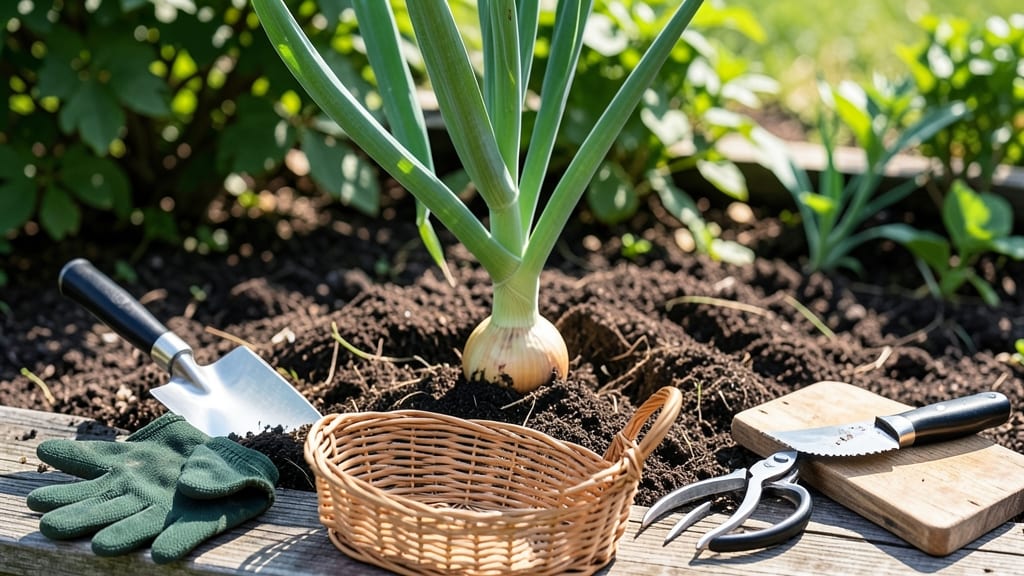
How to harvest onions at home—don’t let them fool you with early sweetness. 🌱 The secret to perfect onions lies in watching for those telltale signs—when half the leaves yellow and flop over but the other half stay green, that’s your cue. Timing matters more than you’d think. Most gardeners wait until late summer or early fall, but the real test is bulb size—when they’re 2-3 inches across and the necks tighten near the soil. Dig carefully with a fork to avoid cutting into the bulbs. After harvesting, cure them properly. Lay onions in a dry, shaded spot for 2-3 weeks to toughen skins and prevent rot. Store in a cool, dark place, and they’ll keep fresh for months—no more sad, sprouting grocery store onions. Common mistakes? Harvesting too early (small, pungent bulbs) or too late (soft, sprouting onions). Follow these steps, and you’ll have storage onions that rival the store—except way tastier.
📚 In This Guide
- What you need
- Instructions
- Tips and common mistakes
- Wrapping up and next steps
What you need
- ● Garden shears or pruning shears – Sharp, clean pair for cutting (avoid dull blades to prevent crushing onions).
- ○ Gloves (optional but recommended) – Heavy-duty gardening gloves to protect hands from dirt and sharp onion tops.
- ● Baking sheet or clean tarp – For drying onions (use a flat surface like a baking sheet or a shaded outdoor tarp).
- ● String or rubber bands – To bundle onion tops for hanging (if curing indoors).
- ● Paper bags or mesh bags – For storing harvested onions (paper bags allow airflow; mesh prevents moisture buildup).
- ● Spray bottle with water – To mist onions lightly during drying (if humidity is low).
- ● Mature onion plants – Onions ready for harvest (tops yellowing and falling over, or bulbs reaching 2–3 inches in diameter).
- ● Dry, warm weather (ideal: 70–80°F / 21–27°C) – For optimal curing (3–5 days of dry conditions).
- ● Clean workspace – A well-ventilated area (garage, shed, or covered patio) to avoid dampness.
- ● Food dehydrator – For speeding up drying if humidity is high.
- ● Labeling tags – To mark onion varieties (especially if growing multiple types).
- ● Vinegar or diluted bleach solution – For sanitizing tools before use (1 part vinegar/bleach to 3 parts water).
- ● Humidity monitor – To track drying conditions (aim for 50–60% humidity).
Tips & tricks for perfect onion harvesting
Here's what nobody tells you about getting onions that taste sweeter and last longer.
Timing is Everything: The 100-120 day window is critical for sweetness. I've learned that harvesting too early means bland onions, while waiting too long risks splitting bulbs. Check for yellowing tops that naturally fall over—this is your perfect cue. If you're in a wet climate, wait until tops are completely brown and crispy to prevent rot during storage.
Curing Can't Be Skipped: Those 2-3 weeks of curing develop flavor and extend shelf life. I once skipped this step and my onions sprouted within weeks. Lay them in a single layer with good airflow—never stack them or they'll sweat and spoil. A fan helps in humid climates, but make sure it's not blowing directly on them.
Storage Hack: For long-term storage, braid the dried tops and hang them upside down. This traditional method keeps onions fresh until spring. I always label my storage containers with the variety and harvest date—this helps me use the oldest onions first and avoid waste. Store them in a cool, dark place between 40-50°F for best results.
Green Onion Rescue: If your green onions (scallions) get too tall, harvest them when tops reach 6-8 inches. Store them in a jar of water in the fridge for up to 2 weeks. For longer storage, trim the roots and store them in a plastic bag in the crisper drawer. This simple trick keeps them fresh for weeks longer than you'd expect.
Pro Tips for Harvest Onions At Home
- Here's what nobody tells you about getting onions that taste sweeter and last longer.
- Timing is Everything: The 100-120 day window is critical for sweetness. I've learned that harvesting too early means ...
- Curing Can't Be Skipped: Those 2-3 weeks of curing develop flavor and extend shelf life. I once skipped this step and...
Frequently asked questions
Got questions about harvesting onions? You’re not alone—growing your own onions is rewarding, but timing and technique can feel tricky! Below, we’ve answered the most common questions to help you harvest like a pro.
When is the best time to harvest onions?
Onions are ready to harvest when the tops yellow and flop over (for short-day varieties) or when the bulbs reach 1–2 inches in diameter (for green onions or scallions). For storage onions, wait until the tops dry out completely—usually 100–120 days after planting. Harvest on a dry, sunny day to prevent rot.
What if I miss the harvest window?
Don’t worry! If you wait too long, onions may split or sprout, but you can still use them. Green onions can be harvested early by cutting just above the soil. For mature onions, pull them up and braid the tops to dry indoors. They’ll lose some quality but can still be cooked or pickled.
How do I properly store harvested onions?
For long-term storage, cure onions for 2–3 weeks in a dry, well-ventilated spot (like a mesh bag in a garage). Avoid refrigeration—they’ll sprout! Store in a cool, dark place (like a pantry) with good airflow. Never store onions in plastic bags—this traps moisture and causes rot.
Can I harvest onions in the rain?
Harvesting in wet conditions is a no-go—it makes bulbs prone to disease and rot. If rain is forecasted, harvest a few days early and let them dry indoors. Wait until the soil is dry to the touch before pulling onions. Pro tip: Use a fork or spade to loosen stubborn bulbs gently.
What can I do with onions that don’t store well?
Not all onions keep perfectly, but that doesn’t mean they’re wasted! Use soft or sprouting onions in cooked dishes like soups, stews, or stir-fries. Green onions can be chopped and frozen in ice cube trays for quick use. For pickling, slice onions thinly and soak in vinegar, sugar, and spices—they’ll last months in the fridge!
Wrapping up and next steps
Harvesting onions at home is a rewarding experience that connects you to your food and ensures fresh, flavorful produce year-round. By following the right timing—whether harvesting green onions for quick use or mature bulbs for long-term storage—you’ll enjoy a bountiful harvest with minimal effort.
Now that you’re equipped with the perfect techniques and storage tips, why not take the next step? Try experimenting with different varieties or even preserving your harvest through drying or fermenting! 🌱✨