
How To
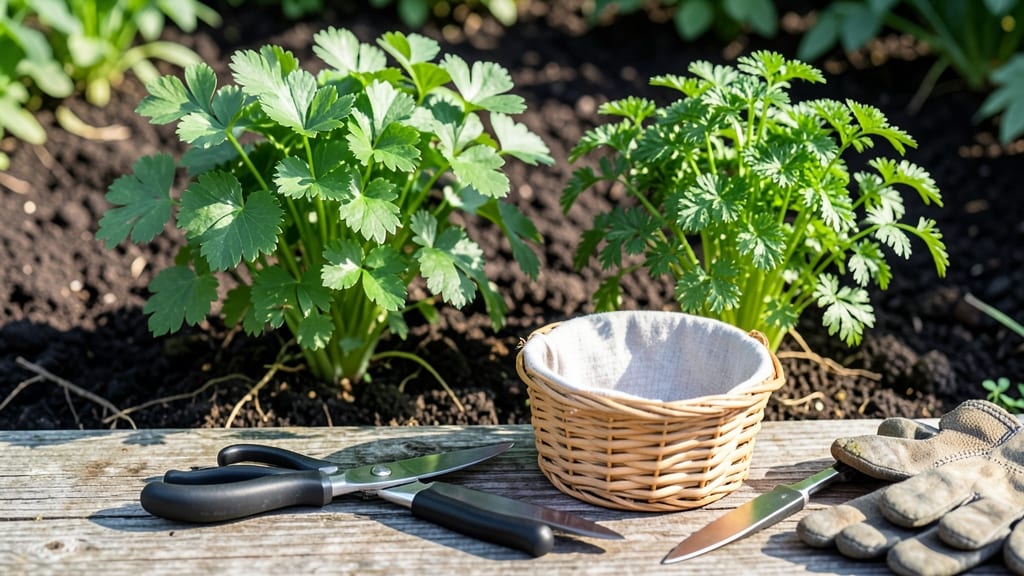
Want to harvest parsley without sacrificing future growth? The key is timing—snip too early, and you’ll stunt your plant; wait too long, and the flavor fades.
I’ll show you exactly when to harvest 🌿 parsley for maximum flavor and how to encourage regrowth so your herb garden stays lush all season.
Most gardeners assume parsley is ready when leaves look big, but the best time is actually when your plant hits 6-8 inches tall with deep green, crisp leaves.
This timing ensures you get the most flavor without stressing the roots. Whether you’re growing flat-leaf or curly parsley, the same rules apply—just with a few subtle differences.
Harvesting parsley the right way isn’t just about cutting stems—it’s about technique. I’ll walk you through the proven methods to snip leaves without killing your plant, including when to use scissors vs. your fingers.
Plus, I’ll share my go-to storage tips to keep your harvest fresh longer and set your parsley up for fast regrowth.
Ready to turn your parsley patch into a year-round flavor powerhouse? Let’s dive into the exact steps, seasonal timing, and care tricks that’ll keep your herb thriving from May through October—no guesswork required.


When to harvest parsley for maximum flavor and regrowth
Timing your parsley harvest is everything—cut too early, and you’ll sacrifice flavor; wait too long, and you risk woody stems and bitter leaves. The ideal harvest window for parsley is when it reaches 6-8 inches tall with mature, deep green leaves.
This usually happens 60-90 days after planting, but seasonal factors like sunlight and temperature can shift this timeline.
Flat-leaf parsley (like Italian parsley) tends to mature slightly faster than curly varieties, so monitor its growth closely. For year-round harvests, parsley thrives in USDA Zones 3-11, but in colder climates, it’s best harvested before the first frost to preserve flavor and prevent damage.
Weather plays a crucial role too. Harvest on dry, sunny mornings to avoid dampness that can cause rot or mildew. If your parsley bolts (sends up a flower stalk), it’s past its prime—harvest immediately before the flavor turns bitter and the plant becomes less productive.
Look for these 3 key signs your parsley is ready: deep green, glossy leaves, firm stems, and crisp texture. Avoid harvesting if leaves are pale, yellow, or still soft—this means the plant isn’t mature enough for peak flavor.
Seasonal timing matters too. In spring and fall, parsley grows slower, so harvest less frequently. During summer’s peak growth, you can harvest every 2-3 weeks without stunting regrowth. Always leave at least 2-3 inches of growth after harvesting to encourage bushier, healthier regrowth.
| Harvest Stage | Plant Height | Leaf Condition | Best Time to Harvest | Regrowth Notes |
|---|---|---|---|---|
| Early Growth | 4-6 inches | Soft, pale leaves | Avoid harvesting | Wait for maturity |
| Ideal Harvest | 6-8 inches | Deep green, crisp | Morning, dry days | Leave 2-3 inches |
| Late Stage | Over 12 inches | Woody stems, bitter | Harvest all leaves | Reduce future harvests |
| Bolting | Any height | Flower stalk present | Immediate harvest | Flavor declines fast |
Did you know? Flat-leaf parsley has a more robust flavor than curly varieties, but both types benefit from regular, strategic harvesting. The key is consistency—harvesting too much at once can shock the plant, while too little lets it become leggy and less productive.
For continuous harvests, aim to remove no more than 1/3 of the plant at a time. This balance ensures your parsley keeps producing fresh, flavorful leaves without sacrificing its long-term health. Always use clean, sharp scissors to avoid crushing stems or spreading disease.
Pro tip: If your parsley is growing in containers, it may mature slightly faster due to better soil warmth. Monitor container-grown parsley weekly and adjust your harvest schedule accordingly. In ground beds, parsley tends to grow more slowly, so patience is key.
Harvesting parsley at the right time isn’t just about flavor—it’s about encouraging regrowth. When done correctly, a single parsley plant can provide continuous harvests for 2-3 years, making it one of the most rewarding herbs to grow. Just remember: timing, technique, and tenderness are your secrets to success.
Step-by-step parsley harvesting techniques to avoid killing your plant
Harvesting parsley correctly is all about gentle handling and strategic snipping. Unlike aggressive pruning, parsley thrives when you remove just 1/3 of the plant at a time, leaving enough foliage for photosynthesis.
I always use clean, sharp scissors or my fingers to avoid crushing stems—this keeps the plant healthy and encourages bushier regrowth.
Start by identifying the outer leaves or lower stems first. These are mature enough to harvest but won’t disrupt the plant’s center. For flat-leaf parsley, I pinch off individual leaves, while curly parsley does better with small stem cuts just above a leaf node.
This technique prevents woody stems and promotes new growth from the base.
Never cut more than 30% of the plant in one session, or you risk shocking it into dormancy. I’ve learned this the hard way—once, I harvested too aggressively in summer, and my parsley took 3 weeks to recover instead of the usual 7-10 days.
The key is patience and moderation.
Step-by-Step Parsley Harvesting Guide
- Step 1: Wait until plant reaches 6-8 inches tall with 6+ mature leaves.
- Step 2: Use clean scissors or fingers to snip outer leaves or lower stems.
- Step 3: Cut just above a leaf node (where new growth emerges).
- Step 4: Harvest no more than 1/3 of the plant per session.
- Step 5: Rinse leaves in cool water to remove dirt and pests.
- Step 6: Store in airtight container with a paper towel to absorb moisture.
✂️ Pro Tip: Harvest in the morning for peak flavor and freshness!
For year-round harvesting, I focus on seasonal adjustments. In spring and fall, parsley grows slower, so I harvest every 2-3 weeks. During summer’s peak growth, I can harvest weekly without stressing the plant.
Always avoid harvesting when leaves are wilted or yellow—this signals stress or disease.
One common mistake I see is using dull tools, which crush stems and invite rot. Invest in a small pair of pruning shears ($10 or less) and keep them sterilized with rubbing alcohol.
Another tip: Never pull leaves—this can uproot the plant. Always cut or pinch for a cleaner harvest.
After harvesting, I always water the base deeply and add a light mulch layer to retain moisture. This simple step ensures your parsley recovers faster and stays lush. With these techniques, my parsley plants have thrived for 3+ years with minimal stress.