
Watering
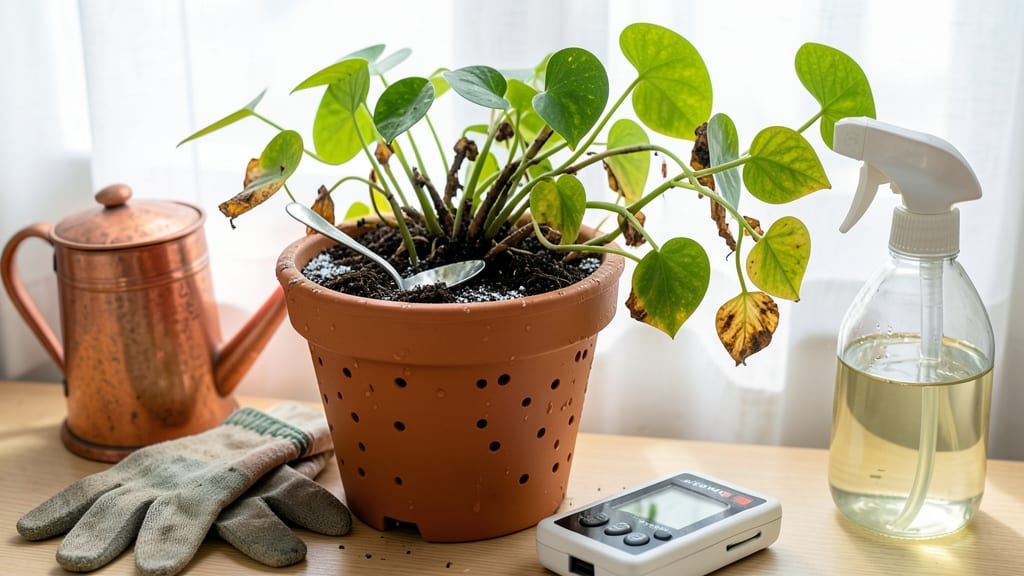
How to help an overwatered plant—those drooping leaves aren’t a death sentence, just a cry for help. 🌱 I've nursed more soggy-rooted plants back to life than I can count, and the secret lies in three simple rescue steps that work for everything from ferns to tomatoes. The key? Acting fast to drain excess water and giving roots a chance to breathe again.
Start by checking the soil—if it smells sour or feels mushy, you're dealing with root rot. Gently remove the plant (support the stem!) and trim any black, mushy roots with clean scissors.
The goal is to expose healthy white or light tan roots underneath. This might seem drastic, but it's the only way to stop the rot from spreading.
Once you've trimmed the damage, repot in fresh, well-draining soil mixed with perlite or sand. Water lightly only when the top inch feels completely dry, and keep the plant in bright, indirect light. Within a week, you'll see new growth pushing through—proof that your plant is fighting back.
Here's the game-changer: adjust your watering habits. Most overwatering happens from good intentions, so I recommend sticking your finger in the soil before watering. If it's damp below the surface, wait another day. This simple check saves plants every season—trust me, I've learned the hard way.
Root Causes of Overwatering
Overwatering isn’t just a gardening mistake—it’s a silent killer for plants, often sneaking up when well-meaning caretakers overcompensate for dry spells. But why does it happen so frequently? Let’s dig into the science (and the human habits) behind this common problem.
🚨 The Problem: If your plant’s pot lacks drainage holes or uses soil that compacts like concrete, water has nowhere to go but up—straight to the roots.
Why It Happens:
- Clogged Drainage Holes: Over time, roots, debris, or mineral buildup can block holes, trapping water inside the pot.
- Heavy or Compacted Soil: Clay-heavy or poorly amended potting mixes hold moisture like a sponge, suffocating roots.
- Sealed Containers: Terracotta pots without holes or decorative cachepots (without drainage underneath) create a waterlogged prison.
Actionable Insight: Test your pot’s drainage by filling it with water—if it drains in under 10 minutes, you’re good. If not, it’s time for a hole upgrade or a soil swap to something airy like cactus mix or perlite-amended soil.
💦 The Problem: Sticking to a rigid watering calendar (e.g., "every Tuesday") ignores the plant’s actual needs, leading to soggy soil.
Why It Happens:
- Ignoring Soil Moisture: Watering based on time (not touch) assumes all plants drink the same—they don’t. Succulents and ferns have wildly different thirst levels.
- Environmental Factors: Humidity, temperature, and season affect evaporation rates. A plant in a steamy bathroom needs less water than one baking on a sunny windowsill.
- Autopilot Mode: Using timers or "set it and forget it" systems without monitoring soil moisture turns your plant into a science experiment gone wrong.
Actionable Insight: Finger-test first! Stick your index finger 1–2 inches into the soil. If it’s damp, wait. If it’s bone-dry, water—but only until it drains freely.
🌱 The Problem: Not all soil is created equal. Some mixes are designed to hold water—great for hydroponics, terrible for most houseplants.
Why It Happens:
- Peat Moss Overload: While peat retains moisture, it breaks down over time, creating a waterlogged, anaerobic (oxygen-free) zone where roots rot.
- Lack of Organic Matter: Soil with no perlite, vermiculite, or compost stays soggy because it lacks aeration pathways for excess water to escape.
- New Potting Mix Myths: Some "moisture-control" blends are marketed for tropical plants but drown everything else.
Actionable Insight: For most houseplants, aim for a 60/40 mix of:
- Organic matter (coco coir, compost, worm castings)
- Inorganic amendments (perlite, pumice, or orchid bark)
Pro tip: 🌡️ Bake your soil for 30 minutes at 200°F to kill pathogens before repotting—overwatered soil often harbors fungus.
🌡️ The Problem: Plants don’t just drown from you—their surroundings can force them to drink more than they need.
Why It Happens:
- High Humidity: Air thick with moisture slows evaporation, making soil stay damp longer. Think: jungle plants vs. desert cacti.
- Cold Drafts or AC: Cool air reduces transpiration (water loss through leaves), so plants "hoard" water instead of using it.
- Root-Bound Pots: When roots circle the pot like a pretzel, they compete for oxygen and water, creating localized waterlogging.
Actionable Insight:
- Move your plant to a spot with indirect light and moderate humidity (40–60% is ideal).
- Upgrade the pot size if roots are visible at the surface—root-bound plants overwater themselves by desperate uptake.
- Use a humidity tray (pebbles + water) for dry-air lovers like snake plants, but empty it daily to avoid passive drowning.
Key Takeaway: Overwatering is rarely just about too much water—it’s about poor drainage, misjudged schedules, soil science, and environmental mismatches. Fix one piece, and you’ll see your plant’s roots breathe easier (and your green thumb grow stronger). 🌿
Fix Overwatered Plants Fast
Now that you know the signs and causes of overwatering, let’s roll up our sleeves and get your plant back to health! The key is acting quickly—before root rot sets in or the plant becomes too stressed.
Below are practical, step-by-step solutions tailored to the most common causes of overwatering, plus tips to keep your plant thriving long-term.
Cause: Soggy soil from excess watering or poor drainage.
How to Fix It:
- 🔥 Stop Watering Immediately
- Let the soil dry out completely before watering again. This prevents further damage to the roots.
- 🍳 Drain Excess Water
- If your plant is in a pot, place it in a shallow tray and let it sit for 10–15 minutes to drain any standing water from the saucer.
- For garden plants, ensure the area isn’t waterlogged by improving soil drainage (see below).
- 👨🍳 Check the Soil Moisture
- Stick your finger 1–2 inches deep into the soil. If it’s damp, wait another day before checking again.
- Use a moisture meter for accuracy—most plants prefer soil that’s 60% dry before the next watering.
💡 Pro Tip: If your plant is in a decorative pot without drainage holes, repot it immediately into one with holes to prevent future overwatering.
Cause: Compacted soil, no drainage holes, or poor pot choice.
How to Fix It:
- ✨ Repot if Necessary
- If your plant’s roots are suffocating, transfer it to a pot with drainage holes and a well-draining soil mix.
- DIY Fix: Mix potting soil with perlite or sand (1:1 ratio) to improve aeration.
- 🔪 Loosen Compacted Soil (For Garden Plants)
- Use a fork or trowel to gently aerate the soil around the plant’s roots. This helps water drain faster.
- Add compost or organic matter to improve soil structure.
- 🌬️ Boost Air Circulation
- Move your plant to a bright, indirect spot with good airflow (but avoid cold drafts).
- Use a small fan on low (1–2 hours daily) to speed up evaporation if humidity is high.
🎯 Prevention Tip: Always use pots with drainage holes and never let plants sit in saucers of water overnight.
Cause: Root rot or fungal growth from prolonged soggy conditions.
How to Fix It:
- 🔪 Prune Rotten Roots (For Potted Plants)
- Remove the plant from its pot and rinse the roots gently with water to wash away excess soil.
- Use sterilized scissors to trim black, mushy, or smelly roots (healthy roots are firm and white).
- 💡 Pro Tip: Dip healthy roots in a fungicide solution (like hydrogen peroxide at 3%) for 10 minutes to prevent infection.
- 🍃 Trim Yellow or Wilted Leaves
- Snip off yellow, brown, or mushy leaves with clean scissors to redirect the plant’s energy to recovery.
- Avoid cutting into green but droopy leaves—they may recover with proper care.
- 🌿 Repot in Fresh Soil
- After trimming, place the plant in a clean pot with fresh, well-draining soil.
- Water lightly only after the soil feels dry to the touch.
⚠️ Warning: If more than 50% of the roots are rotten, your plant may not survive. In that case, propagate healthy cuttings if possible.
Now that your plant is on the mend, let’s keep it healthy with a watering schedule that works:
| Plant Type | Watering Frequency | Soil Test | Extra Tips |
|---|---|---|---|
| Succulents/Cacti | Every 2–3 weeks | Dry 3–4 inches deep | Use terracotta pots (they dry faster) |
| Houseplants | Every 7–10 days | Top 1–2 inches dry | Check leaf droop before watering |
| Tropical Plants | Every 5–7 days | Top ½ inch dry | Increase humidity with a pebble tray |
| Herbs (Basil, Mint) | Every 3–5 days | Top ½ inch dry | Avoid overpotting—keep roots snug |
💡 Pro Tip: Bottom-watering (placing the pot in a tray of water for 10–15 minutes) gives roots better control over hydration.
Final Thought: Overwatering is fixable—act fast, improve drainage, and adjust your watering habits. With a little TLC, your plant will bounce back stronger than ever! 🌿✨
Frequently asked questions
How do I know if my plant is overwatered vs. underwatered?
Check the soil first—overwatered plants have soggy, smelly soil that stays damp for days, while underwatered soil feels dry 1–2 inches deep. Overwatered leaves turn yellow and mushy, while underwatered leaves crisp at the edges. Weigh the pot too: soggy soil feels heavy; dry soil feels light.
Can I save a plant with root rot?
Yes, but you must act fast! Gently remove the plant, trim all black, mushy roots with sterilized scissors, and repot in fresh, well-draining soil. For severe cases, soak healthy roots in hydrogen peroxide (3%) for 10 minutes before repotting. Avoid watering until the soil is completely dry.
What’s the best soil mix to prevent overwatering?
Use a blend of 60% organic matter (coco coir, compost) and 40% inorganic amendments (perlite, pumice, or orchid bark). This creates air pockets for drainage. For succulents, try a 70/30 mix of cactus soil and perlite. Always use pots with drainage holes!
Why does my plant keep getting overwatered even after I stop?
This usually means poor drainage or root-bound conditions. Check if your pot has drainage holes and if roots are circling the bottom. If so, repot into a slightly larger container with fresh soil. Also, avoid decorative cachepots without drainage—use them only as outer covers.
How often should I water my plant after rescuing it?
Wait until the soil is completely dry (stick your finger 1–2 inches deep—if it feels damp, wait longer). For most houseplants, this means watering every 7–10 days. Succulents need even less: every 2–3 weeks. Always water until it drains freely from the bottom.