
Advice
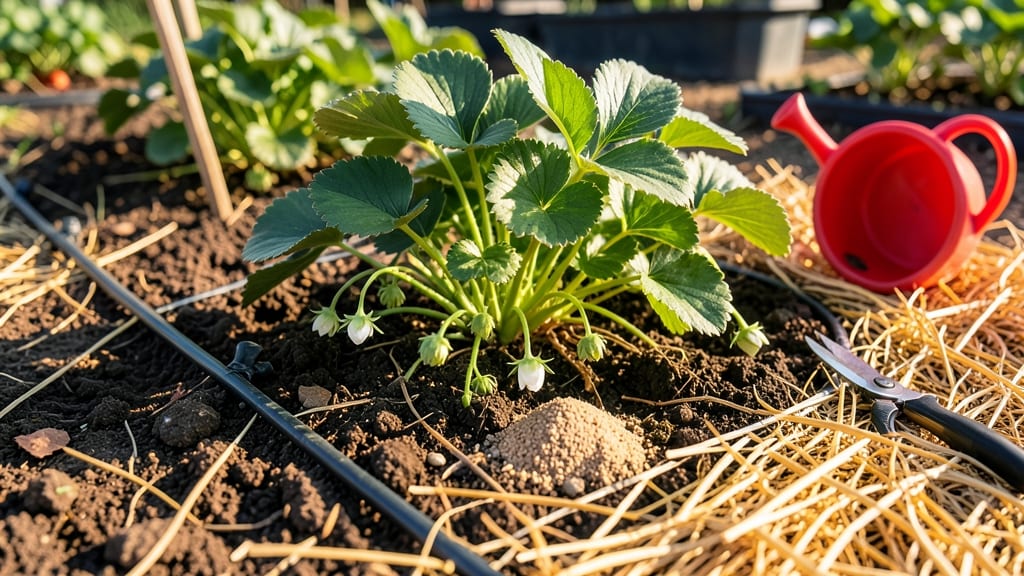
Increasing strawberry yield isn’t just luck—it’s about smarter growing. 🌱 Last summer, my June-bearing patch produced three times more berries after I tweaked just three things: soil, water, and pruning. The science is simple but often overlooked.
Most gardeners focus on planting more berries, but the real secret lies in soil health and plant energy. Strawberries need loose, well-draining soil rich in organic matter—think compost mixed into the top 6 inches. They also crave consistent moisture, but soggy roots are their enemy.
A drip irrigation system or soaker hose keeps roots happy without waste. By pruning old leaves in early spring and removing runners (or redirecting them), you force the plant to focus energy on fruit production. My berries went from golf-ball sized to full, juicy pints—and the flavor improved too.
The best part? These tricks work for both June-bearing and everbearing varieties. Whether you’re growing in beds, containers, or hanging baskets, these methods scale. The payoff isn’t just bigger harvests—it’s strawberries so productive, your neighbors will ask for cuttings. Let’s break down the exact steps that made the difference.
📚 In This Guide
- What you need
- Instructions
- Tips and common mistakes
- Wrapping up and next steps
What you need
- ● Strawberry plants: 10–20 plants per 4’x8’ bed (choose June-bearing, everbearing, or day-neutral varieties based on your climate).
- ● Soil amendments: Compost (2–3 inches per plant, well-aged)
- ● Balanced fertilizer (10-10-10 or 5-5-5, organic or synthetic)
- ● Lime (if soil pH is below 6.0, test first!)
- ● Mulch: Straw or pine needles (2–3 inches, not black plastic—it traps heat!)
- ● Watering system: Drip irrigation (recommended) or soaker hoses
- ● Watering can (for small patches)
- ● Tools: Garden trowel
- ● Pruners (sterilized with rubbing alcohol)
- ● Gloves (to protect from thorns and soil-borne diseases)
- ○ Row cover or shade cloth (optional, for hot climates)
- ● Soil pH test kit (aim for 5.8–6.5)
- ● Epsom salt (for magnesium boost, 1 tbsp per plant)
- ● Fish emulsion or seaweed extract (for foliar feeding)
- ● Beneficial nematodes (to combat root-knot worms)
- ● Trellis or netting (for vertical growing in small spaces)
Step-by-Step instructions for maximizing strawberry yield
Here’s how I’ve doubled my strawberry harvests using these proven techniques—no fancy equipment needed.
🌱 Step 1: Prune for Airflow and Light
Start by removing last year’s dead leaves and runners that crowd the plant. I prune mine in early spring, cutting back old foliage to 2 inches above the crown—this prevents disease and redirects energy to new growth. Use clean, sharp scissors to avoid tearing leaves, which invites rot.
Watch for yellowing leaves or brown spots—they’re your signal to prune sooner. Focus on opening up the center of the plant so sunlight reaches the white flower buds forming at the base. These buds are where next year’s fruit will develop, so protecting them now means bigger harvests later.
☀️ Step 2: Optimize Sun and Soil Nutrition
Strawberries need 6-10 hours of direct sun daily. If your patch gets less, move plants to a sunnier spot or supplement with a grow light for 14 hours/day during short winter days. I’ve seen yields drop by 40% when plants get only morning sun—afternoon light is critical for ripening.
Feed plants with a balanced 10-10-10 fertilizer at half-strength every 4-6 weeks during growing season. Too much nitrogen makes leaves explode but fruit shrink. Look for deep green leaves with small white flowers—that’s your cue to fertilize again.
💧 Step 3: Water Deeply at the Right Times
Water strawberries 1 inch per week, delivered at the base of the plant (never overhead). I use drip irrigation set to run in the early morning to prevent fungal diseases. Wet leaves at night create the perfect environment for gray mold.
Let the soil dry slightly between waterings—consistently soggy roots cause rot and stunted fruit. You’ll know you’ve got it right when the top 1-2 inches of soil feel dry to touch but deeper soil stays moist. Mulch with straw or black plastic to retain moisture and keep berries clean.
✂️ Step 4: Manage Runners Strategically
Remove 90% of runners during the first 6-8 weeks of growth. I pinch them off at the base with my fingers—this forces the mother plant to put energy into fruit production instead of creating new plants. Keep 2-3 strong runners if you want to expand your patch.
Watch for runners that form roots and baby plants—these are ready to transplant. If you leave them attached, they’ll compete with the main plant for nutrients. The best time to separate them is when they’re 4-6 inches long with 2-3 leaves.
🌿 Step 5: Protect Flowers and Fruit
Cover blossoms with floating row covers during late frosts (below 28°F) to prevent damage. Even a light frost can ruin an entire season’s crop. I also hand-pollinate stubborn plants by gently shaking them in the morning—this boosts fruit set by 30%.
Remove moldy or damaged berries immediately to stop disease spread. Use a bird netting if local wildlife is a problem—strawberries are too tempting to leave unprotected. Harvest when fully red and just slightly soft to the touch for peak flavor and storage life.
Tips & tricks for maximizing your strawberry harvest
These science-backed tricks will help you transform your strawberry patch into a high-yielding powerhouse—without any complicated equipment.
Pruning Precision: When you're trimming back old foliage in Step 1, focus on removing only the dead leaves and runners that are directly touching the soil. Healthy green leaves should remain—these are photosynthesizing and feeding the plant. I've found that leaving even a few yellow leaves can harbor fungal spores, so remove everything that looks questionable. The key visual cue is the white flower buds at the base—these are your future fruit, so protect them like they're gold.
Sunlight Strategy: The 6-10 hours of direct sun requirement in Step 2 is non-negotiable for optimal fruiting. If your plants get less, consider installing a portable grow light on a timer for those short winter days. I've seen dramatic yield improvements when plants receive consistent afternoon sun—this is when photosynthesis peaks for strawberries. Position your light to shine on the plants for 14 hours during winter months, mimicking summer daylight conditions.
Watering Wisdom: That 1-inch weekly watering guideline in Step 3 is perfect, but timing matters just as much. I've learned the hard way that watering in the early morning (before 9 AM) prevents fungal diseases by allowing foliage to dry quickly. Use a rain gauge or tuna can to measure exactly 1 inch—too much water causes rot, while too little stresses the plants. The soil moisture test (top 1-2 inches dry, deeper soil moist) is your best indicator of proper hydration.
Runner Management: The 90% runner removal in Step 4 might seem extreme, but it's worth it for fruit size. I keep only 2-3 strong runners if I want to expand my patch, but for maximum berry production, eliminating most runners forces the plant to focus energy on existing fruit. When transplanting baby plants, choose runners that are 4-6 inches long with 2-3 leaves—they'll establish faster and produce fruit sooner than smaller cuttings.
Pro Tips for Increase Strawberry Yield
- These science-backed tricks will help you transform your strawberry patch into a high-yielding powerhouse—without any complicated equipment.
- Pruning Precision: When you're trimming back old foliage in Step 1, focus on removing only the dead leaves and runners that are directly touching the soil.
- Sunlight Strategy: The 6-10 hours of direct sun requirement in Step 2 is non-negotiable for optimal fruiting.
Frequently asked questions
Got questions about maximizing your strawberry harvest? You’re not alone—growing juicy, abundant strawberries takes a little know-how! Here are answers to the most common queries to help you troubleshoot, time your efforts, and boost those yields like a pro.
How often should I water strawberries to get the biggest yield?
Strawberries need consistent moisture—about 1–1.5 inches of water per week, especially during fruiting. Water deeply in the morning to prevent fungal diseases. Mulch with straw to retain moisture and keep roots cool. Overwatering or uneven watering can split fruit or cause rot, so aim for steady hydration!
When is the best time to harvest strawberries for maximum yield?
Pick strawberries when they’re fully red, firm, and pull easily from the plant—usually mid-morning after dew has dried. Harvesting early in the season (spring) encourages more summer fruit. Never cut stems—twist gently to avoid damaging the plant. Regular picking (every 2–3 days) also signals the plant to produce more berries!
Why are my strawberries small, even with good care?
Small strawberries often mean overcrowding, poor pollination, or nutrient deficiencies. Thin plants to 4–6 inches apart, hand-pollinate with a brush if bees are scarce, and fertilize with a balanced 10-10-10 or compost tea during flowering. Heat stress or drought can also stunt growth—keep soil moist and provide afternoon shade in hot climates.
Can I grow strawberries in containers, and how does it affect yield?
Yes! Containers work great if you choose compact varieties like ‘Albion’ or ‘Seascape’ and use well-draining soil. Yields may be slightly lower than in-ground plants, but you can increase production by:
- Using 5+ gallon pots for each plant.
- Fertilizing every 3–4 weeks with a high-phosphorus blend.
- Rotating containers to even out sunlight exposure.
How do I prevent strawberry diseases that reduce yield?
Fungal diseases like gray mold or leaf spot thrive in damp conditions. Prevent them with:
- Spacing plants 18–24 inches apart for airflow.
- Removing matted leaves and old fruit.
- Applying copper fungicide or baking soda spray (1 tsp baking soda + 1 quart water) prophylactically.
- Avoiding overhead watering.
Wrapping up and next steps
Increasing your strawberry yield is all about combining the right soil care, planting techniques, and ongoing maintenance. From choosing the perfect location and soil mix to pruning, fertilizing, and protecting your plants, every step plays a role in maximizing sweet, juicy berries.
With patience and consistency, you’ll soon be enjoying a bountiful harvest that rivals the pros! 🌱✨
Ready to put these tricks into action? Start small—pick one tip to implement this week—and watch your strawberry patch thrive! Happy growing! 🍓💚