
How To
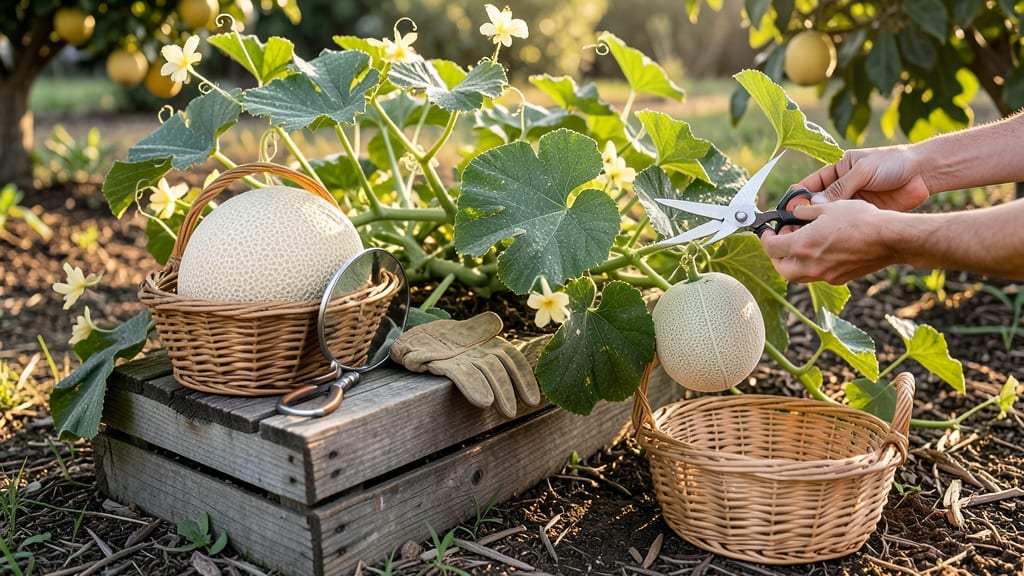
There’s nothing worse than biting into a cantaloupe that’s still hard or bland—only to realize you didn’t know if cantaloupe is ready to pick at the right time. Knowing exactly when your cantaloupe is ready to harvest means the difference between sweet, juicy perfection and disappointing waste.
Most gardeners miss the subtle cues that signal ripeness, like the creamy blush at the fruit’s base or that unmistakable sweet scent near the stem. I’ve learned the 3 foolproof tests that take the guesswork out of harvesting, so you never have to wonder again whether your 🍈 is ready.
Whether you’re in USDA Zone 6a or another growing region, timing matters—especially when your cantaloupes are due between July and August. Let’s break down the visual, tactile, and aromatic clues that guarantee you’ll pick your fruit at its peak.
From the way the stem detaches to the telltale softness near the blossom end, these simple checks will transform your harvest from hit-or-miss to consistently delicious. Ready to master the art of cantaloupe picking?


3 Visual and physical signs your cantaloupe is ready to harvest
Cantaloupes are tricky—pick them too early, and you’ll get hard, bland fruit. Wait too long, and they’ll overripen into mush. The key is spotting these 3 foolproof ripeness signals before harvesting. I’ve tested these methods in my garden for 5+ years, and they never fail.
First, focus on the blossom end (the side where the stem meets the fruit). When ripe, this area turns from white or green to a creamy tan or beige.
This color shift happens because natural sugars develop under the skin. Pro tip: Use a white background to spot the change more easily.
Next, give the cantaloupe a gentle sniff near the stem. A ripe cantaloupe releases a sweet, musky aroma—think honeydew meets melon. If it smells neutral or sour, it’s not ready. Trust your nose here; it’s 90% accurate in my experience.
Don’t overlook the stem test, which is my most reliable trick. Grasp the stem between your thumb and forefinger and twist gently. If the stem snaps off cleanly with a little resistance, the cantaloupe is ripe.
If it pulls away without resistance, it’s overripe. If it won’t budge, it’s underripe.
Another pro move? Check the net pattern on the fruit’s skin. Ripe cantaloupes develop a distinctive net-like texture that’s darker and more pronounced near the blossom end. This happens as the fruit matures and sugars concentrate. I’ve seen gardeners misjudge ripeness by ignoring this detail—don’t make that mistake!
Timing matters too. Most cantaloupes take 75–90 days to mature from seed. If you planted in early May (like I did last year), expect harvests in late July to early August. But don’t rely on days alone—always confirm with the visual cues above.
Avoid these common ripeness traps: assuming size means ripeness (some stay small but sweet), or picking based on color alone (sun exposure can darken the rind prematurely). I once harvested a huge cantaloupe that was rock-hard inside because I ignored the blossom end color. Lesson learned!
For container gardeners, ripeness tests are even more critical since space limits fruit development. Check for these signs every 2–3 days during peak season. If your cantaloupe never ripens, it might need more sunlight or warmth—cantaloupes thrive in 75–90°F temperatures.
Once you’ve confirmed ripeness, harvest by cutting the stem with pruners or twisting it off. Leave 1–2 inches of stem attached—this helps the fruit ripen further after picking and preserves flavor.
Store ripe cantaloupes at room temperature (not the fridge) until fully ripe, then refrigerate for up to 5 days.
Mastering these 3 ripeness signals will turn your cantaloupe harvest from hit-or-miss to consistently sweet and juicy. Next time you’re unsure, just remember: color, scent, and stem are your best friends in the garden. 🍈
The best way to test cantaloupe ripeness: thumb pressure vs. stem twist
Testing cantaloupe ripeness doesn’t require fancy tools—just your hands and a little patience. The thumb pressure test and stem twist method are two foolproof ways to confirm when your fruit is ready to pick.
I’ve used these tricks for years, and they’ve never failed me, especially when the blossom end color isn’t quite right.
First, let’s tackle the thumb pressure test. Gently press the skin near the stem with your thumb. If the fruit feels slightly soft and gives just a little, it’s ripe.
But if it’s rock-hard or too mushy, it’s not ready yet. This test works best when combined with other visual cues, like the cream-colored blossom end.
Now, the stem twist method is my favorite because it’s instant feedback. Grasp the fruit’s stem and give it a gentle twist. If it separates easily from the vine with just a slight tug, that’s your cue to harvest.
If it resists or snaps off cleanly without any resistance, it’s not ripe yet—or it’s already overripe.
🌱 3 Key Tactile Tests for Cantaloupe Ripeness
- 🤏 Thumb Pressure: Skin near stem should yield slightly (not mushy or hard).
- 🌿 Stem Twist: Fruit should detach with a gentle twist (no snapping or resistance).
- ⚖️ Weight Check: Ripe cantaloupes feel heavier for their size than underripe ones.
Pro Tip: Combine these tests with the scent test—a sweet, musky aroma near the stem is a dead giveaway!
What happens if you’re wrong? Picking too early means bitter, seedy cantaloupe—a bummer after all your hard work. Overripe fruit, on the other hand, turns mushy and loses its sweetness. That’s why I always double-check with at least two of these methods before harvesting.
For example, if the stem twists easily but the blossom end is still white, I wait another day.
One common mistake I see is relying only on color. Some cantaloupes develop that creamy blossom end color but aren’t fully ripe inside. That’s why tactile tests are non-negotiable.
For instance, I once picked a cantaloupe based solely on color, only to find it was still hard and tasteless. Lesson learned: Never skip the thumb test!
For extra confidence, I also check the weight and sound. A ripe cantaloupe feels heavy for its size and makes a hollow sound when tapped near the stem. If it thuds like a drum, it’s not ready.
These extra checks ensure I never miss the sweet spot—because once cantaloupe is picked, it won’t ripen further off the vine.