
How To
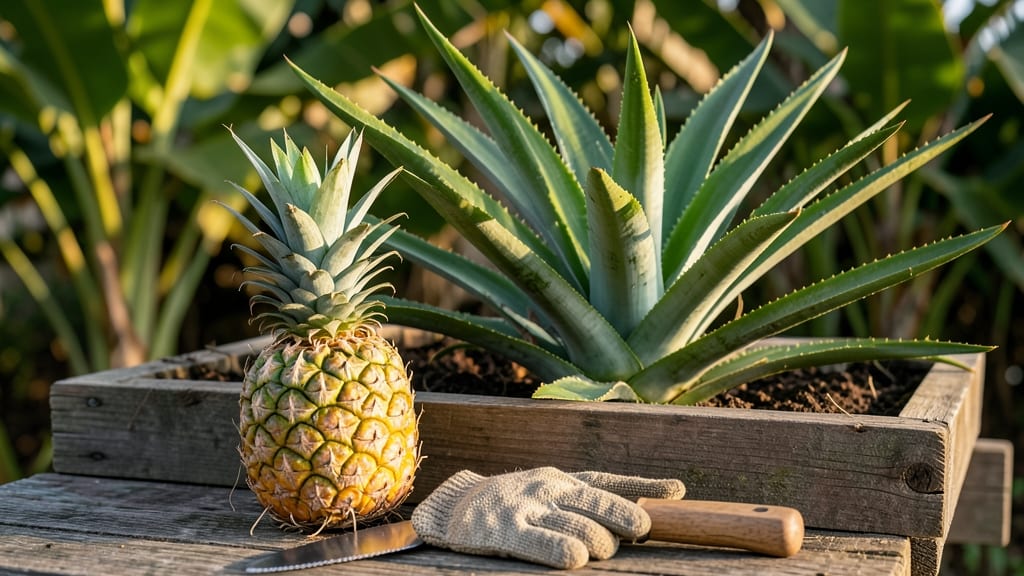
How to know when a pineapple is ready to pick is an art—one that most gardeners miss by focusing only on size. That golden, sweet reward you’ve been waiting for could still be weeks away if you ignore the subtle cues your plant gives. Whether you're growing in a tropical paradise or a container on your balcony, these visual and tactile clues will help you determine exactly when to harvest.
The key lies in what you can see and feel: a shift from pale green to a rich, golden hue at the base, leaves that turn brown and dry, and a slight give when you gently press the fruit.
Don’t overlook the sweet, tropical aroma near the stem—this is your plant’s way of saying, "I’m ready!" Skipping these steps often leads to underripe fruit that lacks flavor or overripe pineapples that turn mushy.
But here’s the catch: timing matters just as much as the clues. In warmer climates, your pineapple might ripen faster, while cooler zones could slow the process.
I’ll walk you through the exact steps to check ripeness, avoid common mistakes, and even salvage fruit that’s picked too early or too late. Let’s make sure your harvest is as delicious as it is rewarding.
Ready to turn your pineapple plant into a sweet success? Grab your gloves and let’s dive into the 4 visual clues that’ll change the way you pick your fruit forever.


4 Visual clues to identify a ripe pineapple before harvesting
Harvesting a pineapple at the right moment transforms your garden labor into a sweet, golden reward. Unlike store-bought pineapples, homegrown fruit ripens based on visual and tactile cues rather than artificial gassing.
The key is paying attention to subtle changes that signal peak ripeness—changes most gardeners overlook until it's too late.
Pineapples develop best in warm climates (USDA Zones 10-12), but even in containers, they’ll show these same ripening signs. The process typically takes 18-24 months from planting to harvest, so patience is crucial.
I’ve learned the hard way that rushing harvests leads to bland, underripe fruit—so let’s focus on the four foolproof indicators that guarantee a perfect pick.
The leaf color shift is often the first sign, appearing 4-6 weeks before harvest. I’ve found that pineapples grown in containers show these signs slightly faster than in-ground plants due to stress from root confinement.
Pay extra attention if your plant is in a pot—it might ripen 2-3 weeks earlier than expected.
For the base color change, avoid comparing to store-bought pineapples—they’re often picked green and gassed for ripening. Your homegrown fruit’s color should be uniform and vibrant, not patchy. Pro tip: Check the color in morning sunlight—artificial light can distort the true hue.
The firmness test is where many gardeners go wrong. A pineapple that’s too firm will taste tart and underdeveloped, while one that’s too soft will be mushy inside.
Aim for that just-right give—like pressing a ripe peach. I test firmness daily during the final 2 weeks of ripening to catch the perfect moment.
Finally, the pull test is your final confirmation. If the fruit resists, wait 3-5 more days. If it comes off too easily, you’ve missed the window—though you can still ripen it indoors (we’ll cover that later).
The pull test works best when the fruit is warm from sunlight, as cooler temperatures make the fruit tighter.
Remember: All four clues must align for a perfectly ripe pineapple. If one sign is off (like brown leaves but green base), the fruit likely needs more time. Rushing harvests is the #1 mistake I see in home gardens—don’t fall into that trap!
4 Visual clues to identify a ripe pineapple before harvesting
Determining when your homegrown pineapple is ready to pick relies on more than just size—it’s about reading subtle visual and tactile cues. As a gardener, I’ve learned that ignoring these signs often leads to underripe fruit that lacks sweetness or overripe fruit that’s mushy.
The key is observing leaf color, fruit firmness, base color, and performing the pull test.
Start by examining the leaf color at the pineapple’s base. When ripe, the lower leaves will turn yellow-brown and begin to dry out. This natural process signals the plant is redirecting energy to the fruit.
If the leaves remain vibrant green, your pineapple needs more time to mature—typically 1-2 more weeks of growth.
Next, check the fruit’s base color. A ripe pineapple will show a golden-yellow hue at the bottom, often with slight browning. Avoid green bases, which indicate underripeness. In tropical climates, this color shift happens faster—sometimes in just 3-5 days—so monitor daily during peak harvest season.
Lower leaves turn yellow-brown and dry out. This is your first visual cue that the fruit is nearing ripeness.
Look for a golden-yellow base with slight browning. Green bases mean it’s not ready yet.
Gently press the fruit—it should yield slightly but not feel mushy. Overly firm pineapples are underripe.
Grasp the fruit near the base and twist gently. If it separates easily from the plant, it’s ready to harvest!
Don’t overlook the scent test, either. A ripe pineapple emits a sweet, tropical aroma near the stem when gently squeezed. If you detect no smell, it’s not ready—this is especially true for pineapples grown in cooler climates, where ripening slows.
Finally, perform the pull test by grasping the fruit’s base and twisting gently. If it separates cleanly from the plant with minimal resistance, your pineapple is ready.
Resist the urge to harvest based on size alone—some varieties, like Sugarloaf, take longer to mature but produce sweeter fruit when fully ripe.
Pro tip: In temperate zones, pineapples may take 18-24 months to ripen compared to 12-18 months in tropical climates. Patience pays off with a sweeter, more flavorful harvest! 🌱