
How To
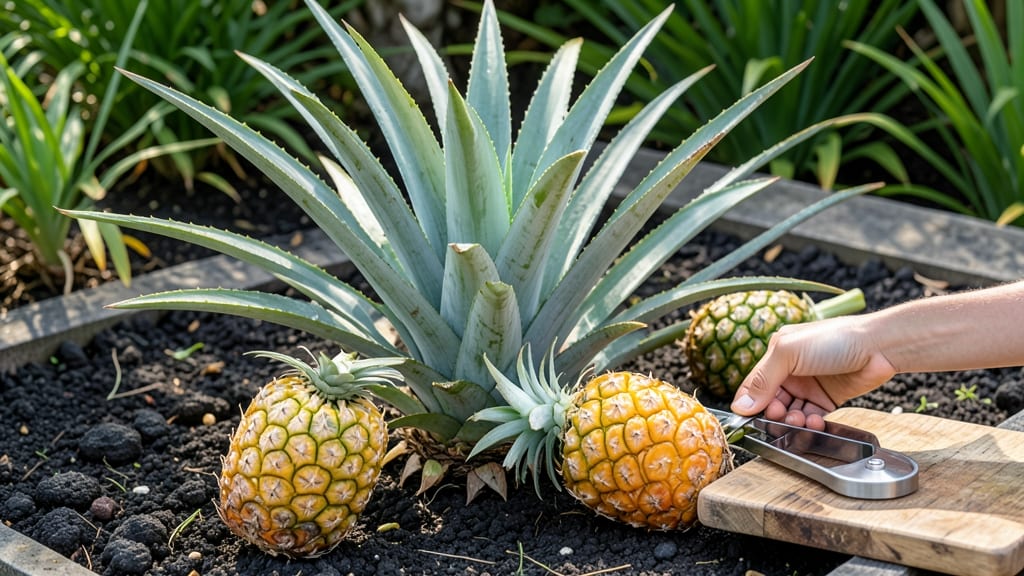
How to know when to pick a pineapple can turn a frustrating guessing game into a rewarding harvest—especially when you're growing your own 🍍 in tropical climates. That perfect balance of sweetness and texture happens at just the right moment, and missing it means either waiting months longer or ending up with a mealy, underwhelming fruit.
Most gardeners assume bigger pineapples are riper, but size isn’t the real indicator.
Instead, you’ll want to pay attention to three key signals: the color shift from green to golden at the base, the way the fruit smells when you give it a little squeeze, and even the behavior of the leaves.
These clues work whether you’re growing pineapples in containers or straight in the ground.
In this guide, I’ll walk you through the exact smell, sight, and touch tests that’ll tell you when your pineapple is ready to harvest—no more second-guessing.
You’ll also learn how climate and care leading up to this point affect ripeness, so you can avoid common mistakes that lead to premature picking or waiting too long.
Once you master these simple tricks, you’ll never have to wonder again whether your pineapple is ready. Let’s get started with the first sign that your 🍍 is practically begging to be picked.


3 Visual signs your pineapple is ripe and ready to harvest
Pineapples don’t ripen like bananas after picking—they need to be harvested at the perfect moment. The first clues come from visual cues that reveal the fruit’s internal sweetness.
Start by examining the fruit’s skin color, which shifts from green to a vibrant golden-yellow or red (depending on the variety) when fully ripe. This color change signals the fruit’s sugars have fully developed, but don’t rely on this alone—some varieties may stay partially green even when ripe.
The base of the pineapple is where the magic happens. Look for a golden-yellow hue around the stem, often called the "sweet spot." This area should also feel slightly softer than the rest of the fruit when gently pressed with your thumb.
If the base remains green or firm, the pineapple needs more time on the plant. Pro tip: Check for dry, brown leaf tips at the base—they’re a classic sign of ripeness, as the plant redirects nutrients to the fruit.
Leaf color changes are another key indicator. The outer leaves should start turning yellow or brown at the tips, while the inner leaves remain green. If the entire plant looks uniformly green, the fruit isn’t ready yet. Conversely, if the leaves are mostly brown and crispy, the pineapple might be overripe. Pay attention to the leaf curl near the base—it should begin to dry out naturally, which happens just before harvest time.
| Sign | What to Look For | Ripeness Status |
|---|---|---|
| Fruit Skin Color | Uniform golden-yellow or red (varies by variety) | 🟡 Ready |
| Base Color | Golden-yellow "sweet spot" near stem | 🟡 Ready |
| Leaf Tips | Dry, brown, or yellowing at base | 🟡 Ready |
| Fruit Firmness | Slightly heavy for size, skin resists gentle pressure | 🟡 Ready |
| Green Skin Patches | Any green areas remaining | 🟢 Not Ready |
| Leaf Health | All leaves uniformly green and firm | 🟢 Not Ready |
One of the most reliable visual cues is the fruit’s weight. A ripe pineapple feels noticeably heavier than its size suggests, thanks to its concentrated sugars. Gently lift the fruit in your hand—if it feels light for its dimensions, it’s likely underripe.
Overripe pineapples, on the other hand, may feel mushy or overly soft, especially near the base. This is a clear sign the sugars have broken down, and the fruit will lack the crisp texture you want.
Don’t overlook the stem’s condition either. The stem should pull away from the fruit with a slight resistance when you gently tug it. If it comes off easily, the pineapple is overripe. Conversely, if the stem refuses to budge, the fruit isn’t ready yet.
This "pull test" is a quick way to confirm what your eyes and hands tell you about the fruit’s ripeness.
Pro tip: Use a sharp, sterilized knife to cut the stem if it doesn’t pull away—just be sure to leave about an inch of stem attached to preserve the fruit’s sweetness.
For home gardeners growing pineapples in containers or cooler climates, these visual signs are even more critical. Pineapples in pots may ripen slightly faster due to limited root space, so monitor them weekly in late summer when temperatures peak.
If you’re growing a red-skinned variety like "Red Spanish," the color shift to deep red is your green light—these types often stay firmer longer but develop richer sugars when fully colored.
Remember, patience is key—pineapples take 18-24 months to mature, and rushing the harvest can leave you with a tart, underripe fruit. Keep an eye on these three visual signs (skin color, base condition, and leaf changes) to ensure you pick your pineapple at its sweetest.
Once you’ve confirmed ripeness, it’s time to move to the smell and touch tests for the final verdict.
🍍
How to test pineapple ripeness with smell and touch
Your nose and fingers are your best tools for determining if a pineapple is truly ripe. Unlike visual cues, which can be misleading, sensory tests give you an accurate read on sweetness and texture. Start by sniffing the base—if it smells sweet and tropical, that’s a great sign.
Next, give the fruit a gentle squeeze near the base: it should feel slightly soft but firm, not mushy or rock-hard.
For home gardeners, the leaf pull test is foolproof. Gently tug on the bottom leaves—if they come off easily, the pineapple is ready. This happens because the fruit’s sugars trigger natural enzymes that weaken the leaf attachment. Never pull too hard, or you’ll damage the plant or fruit.
Pro tip: Test multiple pineapples if you’re unsure. Some varieties ripen unevenly, so checking a few ensures you don’t miss the sweetest one. Temperature matters too—pineapples ripen faster in warm climates (like USDA zones 10-12) but may take longer in cooler microclimates.
If you’re growing pineapples in containers, harvest slightly earlier—container-grown fruit often ripens faster due to limited root space. Always use clean, sharp shears to cut the stem, leaving about an inch attached. This preserves the fruit’s sweetness and prevents spoilage.
For store-bought pineapples, these tests still apply. Skip the leaf pull (unless it’s organic), but sniff and squeeze to avoid buying underripe fruit. A ripe pineapple’s scent alone can save you from a bland, watery experience.
Remember: Patience pays off. A pineapple that’s fully ripe on the plant tastes far superior to one picked early and forced to ripen indoors. Trust your senses—they’re your garden’s best quality control!