
Picking
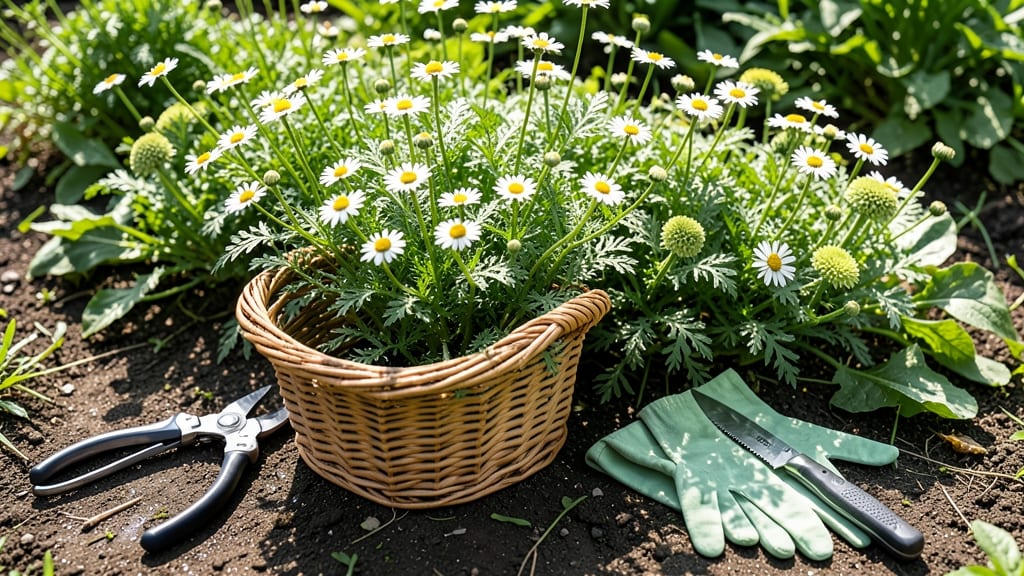
Harvesting chamomile at the right moment transforms ordinary blooms into tea magic. ✨ The secret lies in those fully opened, golden-white flowers—when they're at their peak, just before the edges start curling.
I've learned that timing matters more than you'd think; harvest too early and the flavor is weak, too late and the potency fades.
You'll need sharp scissors, a basket, and a sunny day with dry weather. Cut stems about 6 inches long, avoiding the lower leaves that touch soil.
The key is working early in the morning when dew has dried but before the sun gets too intense—this preserves the delicate oils that make chamomile tea so soothing.
Once harvested, lay the stems in a single layer on a tray or screen in a warm, dark place to dry completely. Proper drying takes about 1-2 weeks—when the flowers crumble easily between your fingers, they're ready.
Store in airtight containers away from light to maintain that calming, apple-like aroma for months.
For maximum yield, harvest every 2-3 weeks during the growing season, and always use organic practices. The more you harvest, the bushier your chamomile plants grow, giving you a steady supply of those perfect, fragrant blooms for tea, tinctures, or even decorative potpourri.
📚 In This Guide
- What you need
- Instructions
- Tips and common mistakes
- Wrapping up and next steps
What you need
- ● Fresh chamomile plants – Choose healthy, organic plants (preferably Matricaria chamomilla or German chamomile) in full bloom. Aim for at least 10-20 plants for a substantial harvest.
- ● Sharp pruning shears or scissors – A pair with clean, sterilized blades (rubbing alcohol works!) to avoid damaging plants or spreading disease.
- ● A basket or breathable cloth bag – A lightweight, well-ventilated container (like a mesh produce bag or woven basket) to prevent moisture buildup and bruising.
- ○ Gloves (optional but recommended) – Protect your hands from prickly stems or potential allergens with gardening gloves.
- ● A sunny, dry workspace – Lay out a clean towel or baking sheet to spread flowers for drying.
- ● A small fan or dehydrator – Speeds up drying time for large batches.
- ● Labeling tags – Mark harvest dates or plant varieties if you’re drying multiple batches.
- ● A fine-mesh sieve or colander – For gently separating petals from stems post-harvest.
- ● A digital scale – If you’re harvesting for tea blends and need precise measurements.
Step-by-step instructions for harvesting chamomile flowers
Get the most soothing, flavorful chamomile for your tea by timing your harvest just right.
☀️ Step 1: Choose the Right Time of Day
Harvest chamomile flowers in the morning after the dew has dried but before the sun reaches its peak intensity. This timing preserves the highest concentration of essential oils and delicate compounds that make chamomile tea so calming. I always check between 8:00 and 10:00 AM when the flowers are fully open but haven't yet wilted from midday heat.
The flowers should be completely open, with petals spread wide like tiny white-and-yellow daisies. If you pick them when they're still closed, the flavor will be milder. Wait until the center disc is fully formed and the petals have unfurled—this usually takes about 3-5 days from when the bud first appears.
✂️ Step 2: Cut Flowers at the Right Height
Use clean, sharp scissors or pruning shears to snip the flower stems about 1-2 inches below the blossom. Cutting too close can damage the plant's growth points, while cutting too far down wastes potential regrowth. I like to make diagonal cuts to increase the surface area for water uptake when drying.
Never pull the flowers by hand—this can uproot the delicate stems or damage the plant's structure. Aim to harvest only the fully open flowers, leaving smaller buds to mature. This encourages the plant to produce more blooms throughout the season. You'll know you're doing it right when the plant looks bushier and keeps producing new flowers.
🌿 Step 3: Process Flowers Quickly for Freshness
Once harvested, lay the flowers in a single layer on a clean, dry surface away from direct sunlight. I use a mesh screen or a piece of unbleached muslin cloth to allow airflow while preventing dirt from getting in. This step is crucial—if the flowers sit in humidity or heat, they'll lose potency and may even develop mold.
Within 2-3 hours of harvesting, transfer the flowers to a dark, well-ventilated space. A paper bag with small holes punched in it works perfectly—it traps just enough moisture to slow drying while allowing airflow. The goal is to dry the flowers slowly to preserve their flavor and color. You'll know they're ready when the petals crumble easily between your fingers.
⏰ Step 4: Store for Long-Term Use
Once completely dry, store the chamomile flowers in an airtight glass jar away from light and moisture. I like to crush the dried petals lightly with my fingers before storing—they'll release their aroma and retain potency longer. Label the jar with the harvest date, as chamomile keeps its best flavor for about 1 year when stored properly.
For tea, use 1-2 teaspoons of dried flowers per cup of hot water. Steep for 5-10 minutes—longer steeping releases more soothing compounds but can make the tea bitter. If you notice the flowers losing color or smell after a few months, it's time to harvest a fresh batch. The fresher the flowers, the more magical your tea will be.
Tips & tricks for perfect chamomile flower harvesting
Took me a while to figure these out, so here's how to get the most from your chamomile harvest every time.
The Peak Potency Window: The 9 AM to 11 AM harvesting window makes all the difference. This is when the essential oils are at their highest concentration after morning sunlight exposure. I've learned the hard way that harvesting later in the day means weaker tea—those delicate compounds break down as the sun gets stronger. Trust me, your chamomile tea will taste noticeably different if you stick to this timing.
Harvesting Technique: When you're cutting those 2-3 inches below the flower head in Step 2, make sure to use clean, sharp scissors. Dull blades crush stems and can damage the plant's vascular system, which weakens future growth. I always carry a small pair of pruning shears specifically for this task—they're sharper than regular scissors and make the job much cleaner. Also, remember to leave those buds behind; they need time to mature for next season's harvest.
Drying Strategy: That 95°F dehydrator setting for 2-3 hours is perfect, but if you don't have one, don't worry. A warm, dark pantry with good airflow works just as well—just be patient. I've dried chamomile successfully in a paper bag with holes punched in it, hung in my kitchen. The key is consistency: check daily for that stem snap test. Flowers ready to store should crumble slightly when touched, not feel damp or rubbery.
Storage Wisdom: The 6-month window for peak freshness is non-negotiable for optimal tea quality. I label all my jars with the harvest date so I can track this. Store your dried chamomile in an airtight glass jar, but here's a pro move: place a small piece of dried lavender in the jar too—it helps preserve the delicate floral notes and adds a subtle complementary aroma. Just don't overfill the jar; leave about an inch of space at the top to prevent moisture buildup.
Pro Tips for Harvest Chamomile Flowers
- Took me a while to figure these out, so here's how to get the most from your chamomile harvest every time.
- The Peak Potency Window: The 9 AM to 11 AM harvesting window makes all the difference.
- Harvesting Technique: When you're cutting those 2-3 inches below the flower head in Step 2, make sure to use clean, sharp scissors.
Frequently asked questions
Got questions about harvesting chamomile? You’re not alone! Here are answers to the most common ones to help you get the best blooms for your tea, remedies, or crafts.
When is the best time of day to harvest chamomile flowers?
The golden hours for harvesting are early morning after the dew has dried but before the sun gets too hot—usually between 7:00 AM and 9:00 AM. This ensures the flowers are fully open, potent, and free of moisture, which preserves their flavor and medicinal properties. Avoid harvesting after rain or late in the day when oils degrade.
How do I know if my chamomile flowers are ready to pick?
Look for fully open, white-petaled blooms with bright yellow centers—these are prime for harvesting. The petals should be flat and spread out, not curled or wilted. If the center is still tightly closed, wait another day or two. Overripe flowers (brown or drooping) lose potency, so act fast when they’re at peak bloom!
Can I harvest chamomile from my garden if it’s been treated with pesticides?
If your chamomile was sprayed with chemical pesticides or herbicides, it’s best to avoid harvesting for at least 30 days (check product labels for specifics). For organic gardening, use neem oil, insecticidal soap, or companion planting (like marigolds) to deter pests naturally. When in doubt, grow your chamomile in a pesticide-free patch or source organic seeds.
What’s the best way to dry chamomile flowers for long-term storage?
After harvesting, gently shake off excess dirt and lay the flowers in a single layer on a clean, breathable surface (like a mesh screen or paper towel) in a dark, well-ventilated spot. Avoid direct sunlight or heat sources—aim for 60–70°F (15–21°C) for 1–2 weeks. Once completely dry and brittle, store in airtight glass jars away from light and moisture for up to 1 year.
What can I do if my chamomile flowers are attracting too many bees?
Chamomile’s sweet nectar is a bee magnet, but you can harvest selectively by picking only the outer rows of flowers first. For heavy traffic, try harvesting early morning before bees are active or use a lightweight net to gently shield the plants. If bees are aggressive, wear long sleeves and work quickly—remember, they’re essential pollinators!
Wrapping up and next steps
Harvesting chamomile at its peak—when those delicate flowers are fully open and radiant—unlocks the full magic of its soothing, golden hues and calming properties. Whether you’re brewing tea for relaxation or drying bundles for later use, timing and gentle handling are your secret ingredients.
Now that you’re armed with the perfect techniques, why not share the joy? Try gifting a handmade chamomile sachet or brewing a fresh batch for a friend—your green thumb just earned you a little extra herbal hero status! 🌼✨
Next step: Experiment with infusions, blends, or even skincare—chamomile’s versatility is just beginning! 🧴☕