
Size
Here’s your rewritten opening with the keyword included naturally:
How to help spinach grow faster when you cheat winter’s chill. 🌱 I learned this after watching my seedlings bolt in spring heat—now I grow crisp, tender leaves in just 25 days by embracing cold weather. The secret isn't complicated: timing, soil prep, and a little patience create perfect conditions for rapid growth.
Start seeds indoors 6-8 weeks before last frost or sow directly into cool soil when night temps stay below 60°F. Spinach thrives in loose, nitrogen-rich soil with a pH between 6.0-7.0.
Most gardeners overlook this, but well-draining soil prevents rot and encourages strong root development. A simple mix of compost and garden soil works wonders.
You'll harvest baby leaves in 3-4 weeks and full-sized bunches in 25 days with consistent moisture and partial shade during hot afternoons. The leaves stay tender and sweet, perfect for salads or cooking. The cold weather trick keeps plants focused on leaf production instead of bolting.
This method works for both spring and fall planting, even in containers. The key is staying ahead of heat—spinach is a cool-season champion that rewards quick action with fast results. Ready to grow your own crisp, homegrown spinach?
📚 In This Guide
- What you need
- Instructions
- Tips and common mistakes
- Wrapping up and next steps
What you need
- ● Spinach Seeds: Choose cold-hardy varieties like 'Bloomsdale Long Standing' or 'Tyee' (1–2 oz or ~500–1,000 seeds, depending on planting method).
- ● Growing Containers or Garden Bed: Containers: 6–12" deep pots (5–10 plants per 12" pot) or a raised bed (10–12" deep).
- ● Soil: Well-draining, nutrient-rich potting mix or garden soil (amend with compost for better fertility).
- ● Fertilizer: Balanced organic fertilizer (5-5-5 or 10-10-10) or compost tea for a gentle nutrient boost.
- ● Watering Can or Hose: With a fine-mist nozzle for gentle watering.
- ○ Row Cover or Cold Frame (Optional but Helpful): Protects seedlings from frost (1–2 sheets or a small frame for containers).
- ● Hand Trowel: For planting seeds and loosening soil.
- ○ Gloves (Optional): To keep hands clean while handling soil.
- ○ Plant Labels (Optional): To track planting dates and varieties.
- ○ Pruning Shears (Optional): For harvesting outer leaves without damaging the plant.
- ● Sunlight: Partial shade (3–6 hours of sun/day) or full sun in cooler climates.
- ● Temperature: Ideal germination range: 45–85°F (best below 75°F for sweet flavor).
- ● Water: Consistent moisture (keep soil evenly damp, not soggy).
- ● pH Level: Soil pH of 6.5–7.0 (test kit recommended if soil quality is unknown).
Step-by-step instructions for growing spinach rapidly in cool weather
Here's how to coax spinach into a quick, abundant harvest using its natural cold tolerance.
🌱 Step 1: Time Your Planting for Cool Conditions
Spinach thrives when soil temperatures stay between 40-75°F—perfect for early spring or fall planting. I always sow seeds 4-6 weeks before the last frost date in my zone, which gives plants enough time to mature before summer heat arrives. Cold weather actually improves flavor and growth rate, so don't rush into warm soil.
For a fast harvest, choose quick-maturing varieties like 'Baby's Leaf Hybrid' or 'Tyee'—these reach maturity in 25-30 days under ideal conditions. Scatter seeds ½ inch deep in well-prepared soil, spacing them 1-2 inches apart to prevent overcrowding. Thin seedlings to 3-4 inches apart once they develop true leaves—this ensures each plant gets adequate nutrients and sunlight.
💧 Step 2: Maintain Consistent Moisture Without Overwatering
Spinach has shallow roots, so consistent moisture is critical. Water the soil 1 inch per week, keeping it evenly damp but never soggy. I use a soaker hose or drip irrigation to deliver water directly to the roots without wetting the leaves, which reduces disease risk. The soil should feel cool and moist to the touch at a depth of 1 inch—this is your target moisture level.
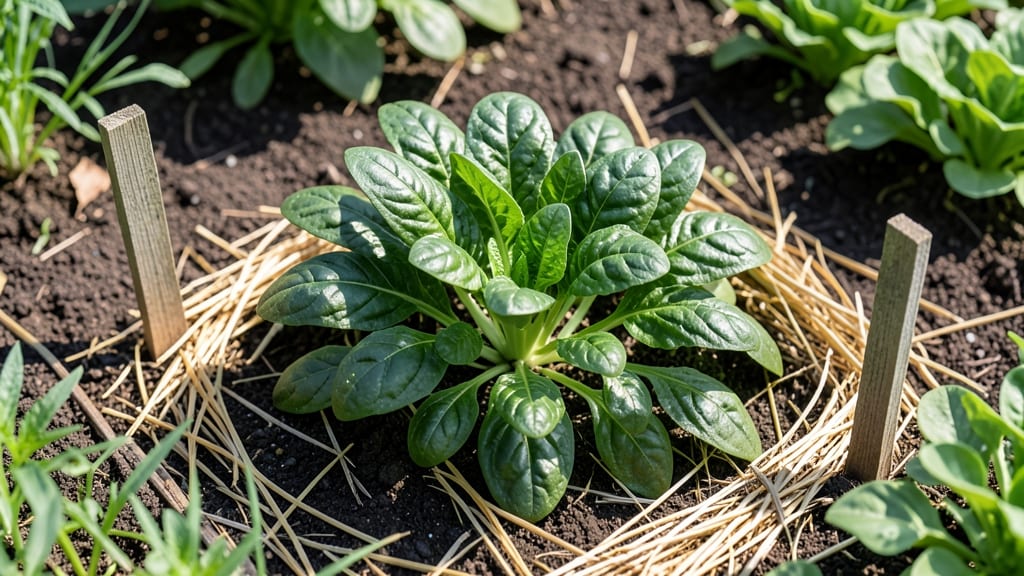
Mulch with 2-3 inches of straw after planting to retain soil moisture and suppress weeds. This also keeps soil temperatures stable, which is especially important if daytime temperatures fluctuate. Avoid overhead watering, as wet foliage can lead to fungal issues like downy mildew. You'll notice healthier, more vibrant growth when the soil stays consistently moist but not waterlogged.
☀️ Step 3: Provide Partial Shade During Hot Days
Spinach bolts (goes to seed) quickly when exposed to consistent temperatures above 75°F. To prevent bolting and extend the harvest window, provide partial shade during the hottest part of the day. A 30-50% shade cloth works well, or simply plant spinach in a location that receives morning sun and afternoon shade. You'll see the difference in leaf size and tenderness when plants aren't stressed by intense heat.
If you're growing spinach in summer, focus on succession planting—sow new seeds every 2-3 weeks to ensure a continuous harvest. Spinach is a cool-season crop, so it's best to prioritize it in spring or fall. Harvest outer leaves first, leaving the inner leaves to continue growing. This method keeps the plant productive for 4-6 weeks before it naturally declines.
✂️ Step 4: Harvest Strategically for Maximum Yield
Start harvesting when leaves reach 3-4 inches in length—this is when they're most tender and flavorful. Use a sharp pair of scissors or your fingers to snip or pinch off the outer leaves, leaving the inner growth intact. This encourages the plant to produce more leaves, extending the harvest period. I typically harvest every 2-3 days during peak growth to ensure a steady supply.
For baby spinach, harvest when leaves are 2-3 inches tall—this gives you a delicate, sweet flavor perfect for salads. If you let the plant mature fully, you can harvest the entire plant at once by cutting it 1 inch above the soil line. This method is great for cooking, as the leaves will be larger and more robust. Always harvest in the morning when leaves are crisp and full of moisture.
Tips & tricks for fast spinach growth in cool weather
Here's what nobody tells you about pushing spinach to grow faster than you thought possible.
Soil Temperature is Everything: While the instructions mention 40-75°F soil temperatures, I've found that spinach actually grows fastest when soil stays between 50-65°F. Use a soil thermometer to monitor—this is the sweet spot for rapid leaf production. If your soil runs cooler than 50°F, consider using black plastic mulch to warm it up before planting. The difference between 55°F and 70°F soil can mean the difference between a 25-day harvest and a 35-day one.
Seed Spacing Secret: The instructions recommend spacing seeds 1-2 inches apart, but I've discovered that planting them just ½ inch apart initially gives you more flexibility. When you thin to 3-4 inches, you'll have a denser stand of seedlings to choose from. This is especially useful if you're working with limited garden space—you'll end up with more plants per square foot without sacrificing growth.
Watering Timing Matters: While consistent moisture is critical, the timing of watering makes a surprising difference. Water in the morning so leaves have all day to dry, which prevents fungal issues. I've also found that watering just before a predicted rainstorm can help you skip a day's watering without stressing the plants. The key is keeping that top inch of soil consistently moist—never soggy.
Fertilizer Boost: For that 25-day harvest window, consider adding a light application of compost or balanced organic fertilizer when you plant. I use a 5-5-5 formula at half strength—this gives spinach a gentle nutrient kick without overloading it. The instructions mention thinning to 3-4 inches, but if you fertilize lightly, you can thin slightly wider (4-5 inches) and still get excellent growth. Just monitor for any signs of over-fertilization like yellowing leaves.
Pro Tips for Help Spinach Grow
- Here's what nobody tells you about pushing spinach to grow faster than you thought possible.
- Soil Temperature is Everything: While the instructions mention 40-75°F soil temperatures, I've found that spinach act...
- Seed Spacing Secret: The instructions recommend spacing seeds 1-2 inches apart, but I've discovered that planting the...
Frequently asked questions
Got questions about growing spinach? You’re not alone! Here are answers to the most common queries to help you cultivate a thriving spinach patch—even in cooler weather.
Can spinach grow in hot weather?
Spinach thrives in cool seasons (50–75°F) but struggles in heat. If temperatures rise above 80°F, it’ll bolt (go to seed) or turn bitter. For summer growth, try shade cloth or plant heat-tolerant varieties like ‘Tyee’ or ‘Bloomsdale Long Standing’. Water deeply in the morning to keep leaves crisp!
How long does it take for spinach to grow from seed?
With the right conditions, spinach reaches harvest in 30–50 days—but this article’s cold-weather trick can speed it up to just 25 days! For baby leaves, harvest when they’re 2–3 inches tall; mature leaves take 4–6 weeks. Successive plantings every 2 weeks ensure a continuous supply.
What’s the best fertilizer for spinach?
Spinach is a heavy feeder but prefers balanced, nitrogen-rich fertilizers. Use a 10-10-10 or 5-10-10 formula at planting, then side-dress with compost or a low-nitrogen option (like 3-4-6) when leaves start yellowing. Avoid over-fertilizing—too much nitrogen causes leafy growth but delays maturity.
Why are my spinach leaves turning yellow?
Yellowing leaves usually signal overwatering, nutrient deficiency, or pests. Check soil moisture (it should be damp, not soggy) and test for magnesium or iron deficiency (common in alkaline soils). For pests, handpick aphids or spray with neem oil. If leaves curl, it could be spinach beetles—cover plants with row fabric to deter them.
Can I grow spinach in containers?
Spinach grows well in deep containers (at least 6–8 inches) with drainage holes. Use a lightweight potting mix and plant seeds ½ inch deep, 2 inches apart. Containers dry out faster, so water daily and place them in partial shade to prevent bolting. Dwarf varieties like ‘Baby’s Leaf Hybrid’ are perfect for small spaces!
Wrapping up and next steps
Growing spinach fast and successfully is all about patience, the right conditions, and a little cold-weather magic! 🌱 With the tips you’ve learned—from soil prep to harvesting—you’re now equipped to enjoy fresh, homegrown greens in just 25 days.
Remember, spinach thrives in cooler weather, so don’t be afraid to embrace the chill!
Ready to dive in? Start planting your seeds today and watch your garden transform into a lush spinach patch. Happy growing—and enjoy those nutrient-packed harvests! 🥬✨